

image source, EPA
In the end, cool heads prevail – at least for now.
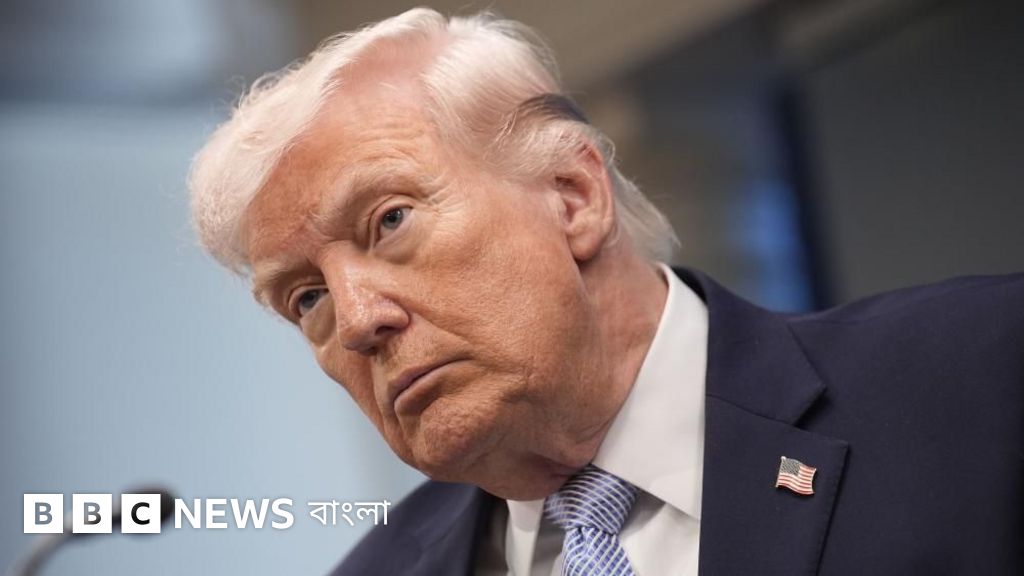
At 6:32 p.m. Washington time, US President Donald Trump wrote on his social media that the US and Iran are “very close” to a “final” peace deal and that he has agreed to a two-week ceasefire to advance negotiations.
It’s not like this announcement comes at the last minute. But if no deal is reached by 8 p.m., the U.S. will launch a massive strike on Iran’s energy and transportation infrastructure — a deadline Trump announced was fast approaching.
All of that depends on Iran ending its hostilities and fully opening the Strait of Hormuz to commercial shipping — something the country’s ruling elite has said it will do. At the same time, however, they insist on maintaining their “dominion” over the waterway.
The deal gave Trump the chance to walk away from a dangerous decision—either he would escalate the conflict by pledging “an entire civilization will die tonight,” or back down and undermine his own credibility. But the US president may have bought only temporary relief.
Now the US and Iran will hold talks for the next two weeks, giving them some time to try to reach a permanent deal.
The journey may not be smooth, but now oil prices have dipped below $100 a barrel for the first time in days and US stock indexes have rallied.
The worst is over—there’s a sense of optimism.
Such progress was far from certain even as of Tuesday morning; That’s when Trump threatened that Iranian civilization would die—and said it would “never be brought back”.
Whether such a dramatic threat from a US president pressured Iran to agree to a cease-fire is uncertain. Although they had been rejecting it repeatedly before.
What is clear, however, is that Trump’s highly provocative announcement, just two days after his shocking message on Truth Social, has never been heard or even hinted at by any modern US president.
Even if the two-week truce turns into a lasting peace, the Iran war—and Trump’s recent rhetoric—may fundamentally change how the rest of the world views the United States.

image source, Reuters
The country that once projected itself as a force of stability in the world is now shaking the foundations of the international system. The president who seemed keen to break norms and traditions in domestic politics is now doing the same in the global arena.
Democrats were quick to condemn Trump’s remarks on Tuesday; Some even demanded his removal.
“It is clear that the president’s position is deteriorating and he is not fit to lead,” wrote Congressman Joaquin Castro at X.
Chuck Schumer, the top Democrat in the US Senate, said any Republican member who does not vote to end the Iran war will “bear responsibility for any consequences of this whole thing”.
Although many in Trump’s own party stood by him, the kind of universal support he often received was not seen this time.
Austin Scott, a Republican congressman from Georgia and a senior member of the House Armed Services Committee, criticized Trump’s threat of ‘the death of a civilization’.
“The president’s comments are counterintuitive” and “I don’t agree with them,” he told the BBC.
Senator Ron Johnson of Wisconsin, generally known as a close supporter of Trump, said the bombing campaign would be a “huge mistake”.
Texas Congressman Nathaniel Moran wrote on social media that he was not in favor of “destroying an ‘entire civilization'”.
“It is not us,” he writes, “and it is inconsistent with the principles that have long guided America”.
Alaska Senator Lisa Markowski, who is often estranged from the president, also bluntly wrote that the president’s threat was “unforgivable even as an attempt to gain leverage in negotiations with Iran.”

image source, Getty Images
However, the White House may argue that the pressure worked.
And it could ease the way out of the conflict for a president who faces falling opinion polls, growing critics within his own party and an economy strained by high fuel prices.
In a Truth social post announcing the ceasefire, Trump said the US had “met and exceeded” all of its military objectives.
Iran’s military capabilities have eroded significantly. The Islamic fundamentalist regime is still in power, but many of its top leaders have been killed in bombings.
But at the moment, many of the goals announced by the United States are still uncertain.
The location of Iran’s enriched uranium—the basis of its nuclear weapons program—is unknown.
The country still has influence over regionally close groups such as Yemen’s Houthi rebels.
And even if Iran were to fully open the Hormuz without tolls or other payment conditions, their ability to control this important geopolitical strait would be clearer than ever.
In a statement following Trump’s cease-fire message, Iranian Foreign Minister Abbas Araghchi said Iran would suspend its “defensive activities” and ensure safe passage through Hormuz “in coordination with Iran’s armed forces.” He added that the US had accepted the “general framework” of Iran’s 10-point plan.
The plan includes withdrawing US regional military forces, lifting economic sanctions on Iran, paying reparations for war damages and maintaining Iranian control over Hormuz.
Trump would actually agree to these terms—it’s hard to imagine; Which indicates, the next two weeks of negotiations could be dangerous.
But for now, it’s a partial political victory for Trump. He made a dramatic threat and got the desired result. But this ceasefire is not a permanent solution, it is only a temporary respite.
The long-term value of the president’s words and actions, and the consequences of the entire war, have yet to be fully assessed.

