

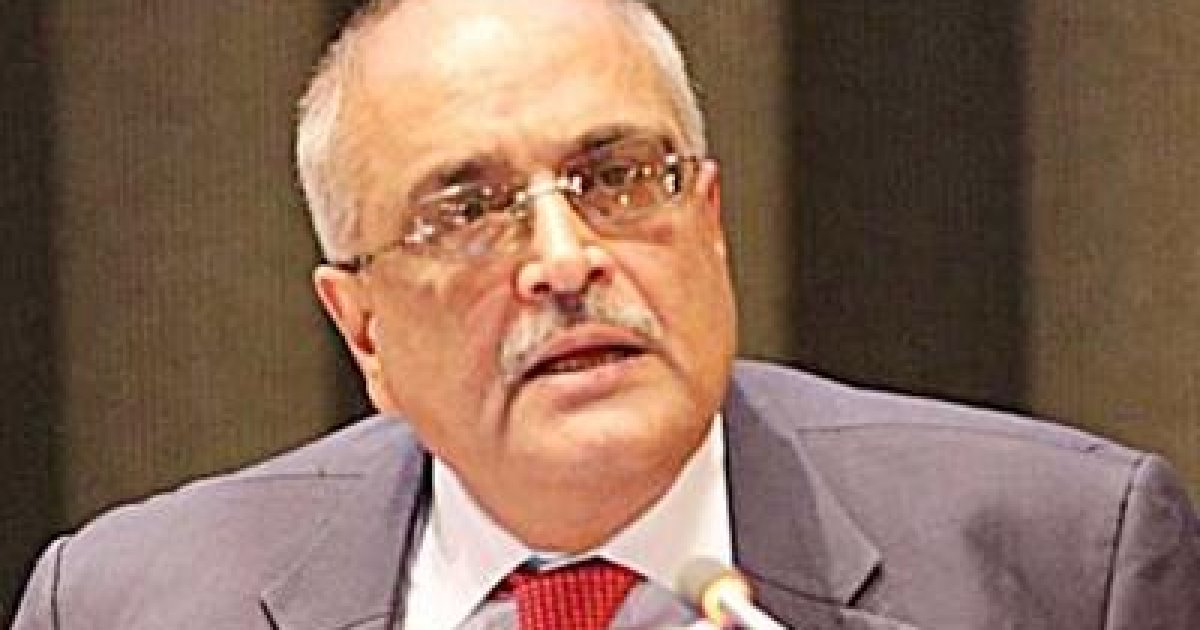
Chief economist of the white paper drafting committee. Debapriya Bhattacharya said, wealth has been built through corruption and looting. Why are they not confiscated? He said, 'What is a revolution if people's wealth cannot be brought back from the mountain of wealth that has been built up through corruption?'
The head of the white paper drafting committee said these things in a dialogue held at EREF office of economic journalists' organization in Paltan of the capital on Thursday (November 28).
This information was informed in a press release sent from ERF on Thursday.
In the event, the results of the survey on the current economic situation and the openness of the budget, jointly organized by ERF and private research institute Rapid, were published.
Debapriya Bhattacharya said, 'Government has initiatives in various matters including the financial sector, but why does the concern not end. Explaining the reason for this, putting questions to the government, the head of the white paper drafting committee said, 'The initiatives taken by the government are not getting results, people are not able to be patient. Or there is a crisis of confidence.'
Earlier, during the Awami League government, this eminent economist had said 'dal mein kuch kala he' in an ERF function. Referring to this quote again, he said, 'Next Sunday I will be able to say – some dal was rotten, and some dal was good. Bank and energy sector are the two lungs of the country. Referring to the major irregularities in these two sectors, Debapriya Bhattacharya said, 'There has been more looting in the banking and energy sectors. These will be highlighted in the report.
Talking about corruption, Debapriya said, 'Economic situation is more complicated than what the common people think. In such an economic situation there is nothing a legacy government can do. The problem was more in the banking sector. Efforts are underway to remove it immediately.'
He further said, 'If the government is not able to manage the enthusiasm after the fall of the Awami League government efficiently, then the people of the country will be disappointed. For this, at the end of the year, the government has to present a 5-month evaluation—what has been done by the government. These should be combined and published. Plans for the next six months should be disclosed in the ongoing situation before the budget. In this, inflation, investment, government expenditure, revenue income and foreign sector management plan should be highlighted. If you can form an inclusive sustainable development forum for economic assurance about the future in January, you can be involved with the next budget. Debapriya said, 'Reformation will be difficult if financial relief and security are not ensured.'
Research and Policy Integration for Development (RAPID) chairman Abdur Razzak said in the main article in the program, 'The Awami League government has left it like this – we are counting its losses. Recklessness was about many policies. As a result there has been inflation.'
He said, 'Now the robbery and theft of money from the bank has stopped. Its benefits will be available. Bank deposit collection and exports increased. I see the whole in line with the policy taken at present. But financial management will be difficult. Because the next six months will be very difficult. The reserve should be increased. If reserves do not increase, it will not be possible to reduce inflation.
Expressing the results of the survey, the executive director of Rapid, Abu Yusuf, said, “People are very little able to know whether the government's spending is being done with transparency.” He said, 'Transparency in budget expenditure is 37 percent. Which is not enough. In this regard, India is lagging behind Nepal and Sri Lanka. Ahead of only Pakistan. Common people's participation in the budget is 11 percent, and budget implementation supervision is 37 percent.
General Secretary Abul Kashem presided over the program under the chairmanship of ERF President Refayet Ullah Mirdha.

