

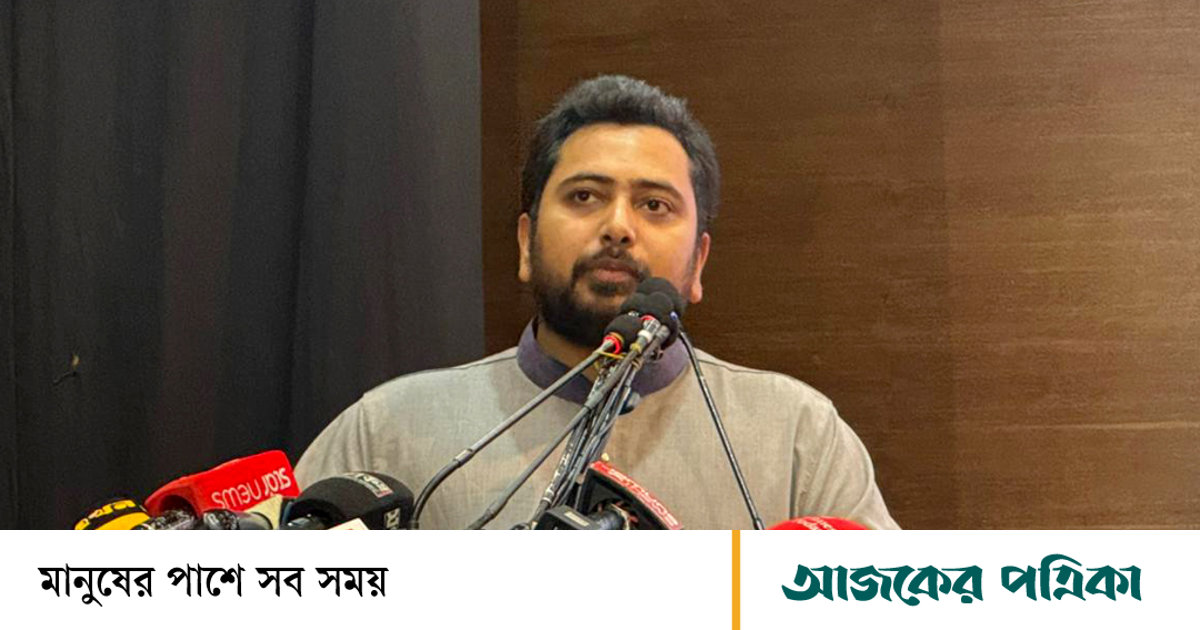
National Citizen Party (NCP) convenor and opposition chief whip Nahid Islam said, ‘Government people have said earlier that foreign investment will start pouring in when the elected government comes. But we saw, Dr. As much as Yunus has shown the ability to establish international relations and bring money to Bangladesh, this government has not received an invitation from any country so far. The IMF loan has stopped them.’
Nahid Islam said this in a discussion program titled ‘Bangladesh Budget in Global Uncertainty: Priority in Employment, Investment and Reforms and a Prosperous Bangladesh without Discrimination of People’s Expectations’ on Thursday evening. He said, ‘We want a reform-oriented, investment-oriented and employment-oriented budget.’
NCP’s top leader Nahid Islam said, ‘The government could have faced the current economy of the country very well, if they had maintained at least national unity. Economic reforms are closely related to political reforms. As we have seen, the government in the first session did not keep the promises of political reforms in the July charter and referendum. As a result, we took two steps back from where our economic reform journey was supposed to begin in a big way.’
Opposition Chief Whip said, there has been unprecedented looting and corruption in the banking sector in the last 16 years. Some individuals, groups and families have been given huge loans and they have smuggled the loan money abroad, they have become defaulters.
Nahid Islam added, ‘We have little hope from the present government that this culture will not happen again in Bangladesh. But looking at the situation in the government, it seems that a competition has started – who will be S Alam in the government, who will be Salman F Rahman in this government.’
The leader of the opposition party said, ‘Trust cannot be gained by keeping businessmen in their own advisory committee. But the economy of Bangladesh needs to earn the trust of businessmen. Loans to traders who do business a little honestly; We have been talking about the industrial expansion of those who are small traders. But the big groups, the corporates, are given loans, which they get through political lobbying. And that debt is not repaid.’
Dhaka University (DU) Health Economics Department Professor Syed Abdul Hamid said that in addition to increasing the budget allocation for the country’s health sector, it is necessary to make it convenient for the common people to get services easily and at low cost. Currently a positive political will and momentum has been created in this sector. The Prime Minister expressed willingness to spend 5 percent of GDP on health sector, which is a positive aspect. But implementing this opportunity requires a realistic strategy.
Senior Joint Convener of NCP Ariful Islam Adeeb, Joint Convener Sarwar Tushar and Additional Director (Research) of Center for Policy Dialogue (CPD) Toufiqul Islam Khan, Professor of Economics Department of Dhaka University participated in the discussion meeting. Rumana Haque, President of International Science Research Foundation Zahidul Bari and others.

