

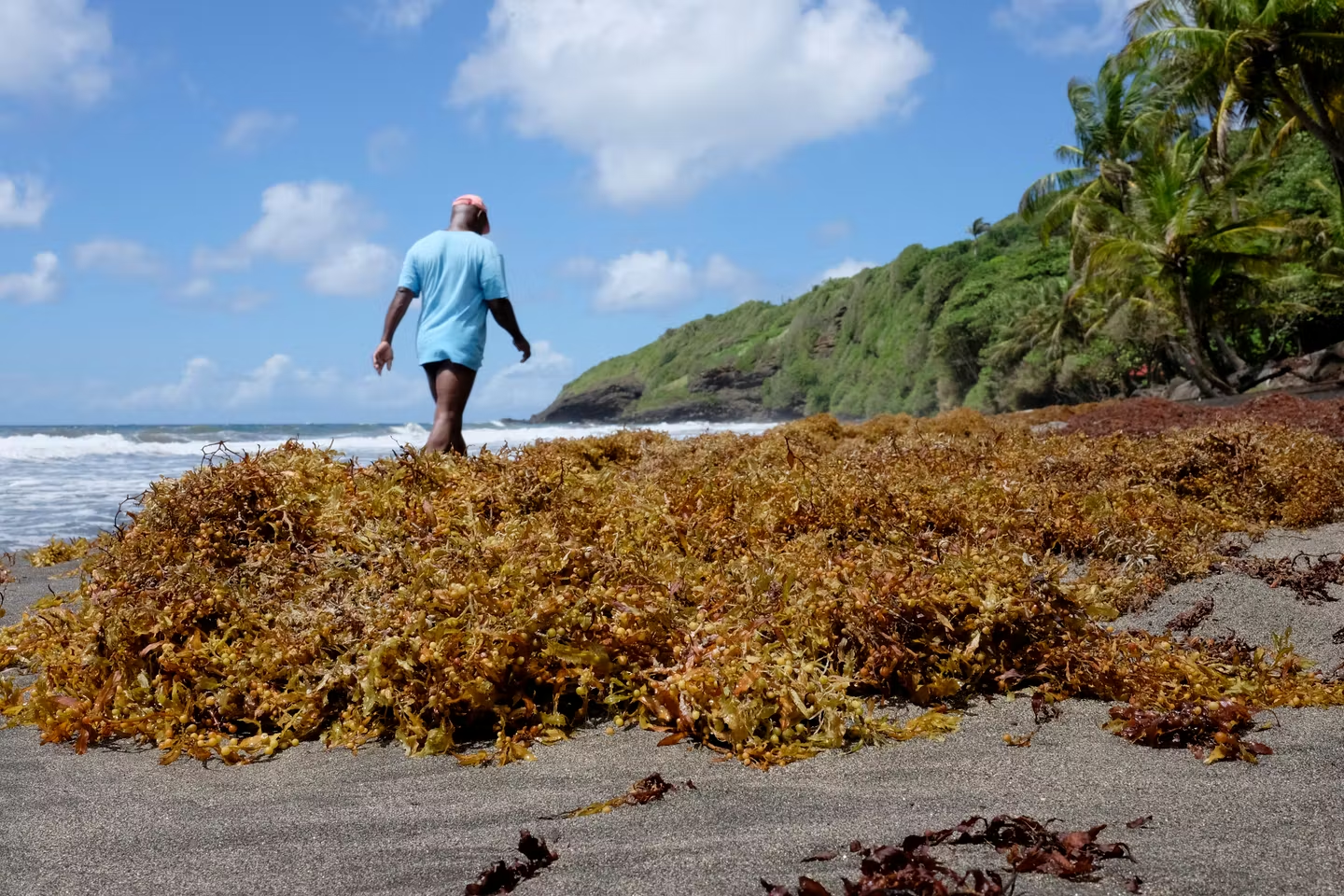
Si the accumulation of sargassum (brown algae of the family of Sargassaceae) in the sea of the same name has been known for centuries, as evidenced in particular by Christopher Columbus’s logbook, their first episode of massive stranding on the coasts of the French West Indies dates from 2011. Since then, although interannual variations have been observed, this phenomenon has established itself until reaching a scale still unequaled in 2025. Of multifactorial origin and with consequences as varied as harmful, the massive stranding of these pelagic algae (Sargassum floating et Sargassum swimming) on the West Indian coast puts the applicable law to the test.
This article is taken from “World Report, 2026 edition”January-March 2026, on sale at newsstands or online at our store website.
The causes of the phenomenon are the subject of numerous national and international scientific studies. They show the cumulative role of, on the one hand, the supply of nutrients carried by the large equatorial rivers (Amazon, Orinoco, Congo), or deposited by sand mists, and on the other hand climate changes, which stimulate algal proliferation by warming waters and modify marine currents, now driving algae to the West Indian coasts. This multiple, diffuse and transnational origin does not facilitate the reaction of public authorities, which is nevertheless required given the numerous and deleterious disadvantages linked to groundings.
Although rafts of sargassum floating at sea present no danger and are even considered a habitat of great ecological wealth, once stranded on the coast where the algae decomposes, they produce health, environmental and economic disadvantages. Thus, in addition to the dangers that sargassum rafts can present for swimming and nautical and leisure activities, the decomposition of the algae releases gases (mainly hydrogen sulphide (H2S) and anhydrous ammonia (NH3)) extremely nauseating and likely to become toxic or even fatal beyond a certain concentration and a certain duration of exposure. Exposed populations suffer in particular from eye and respiratory irritations, and neurological disorders (headaches, nausea, etc.).
You have 65.63% of this article left to read. The rest is reserved for subscribers.
https://www.lemonde.fr/idees/article/2026/01/17/aude-farinetti-universitaire-le-droit-a-l-epreuve-de-l-echouement-de-sargasses-aux-antilles_6662971_3232.html

