

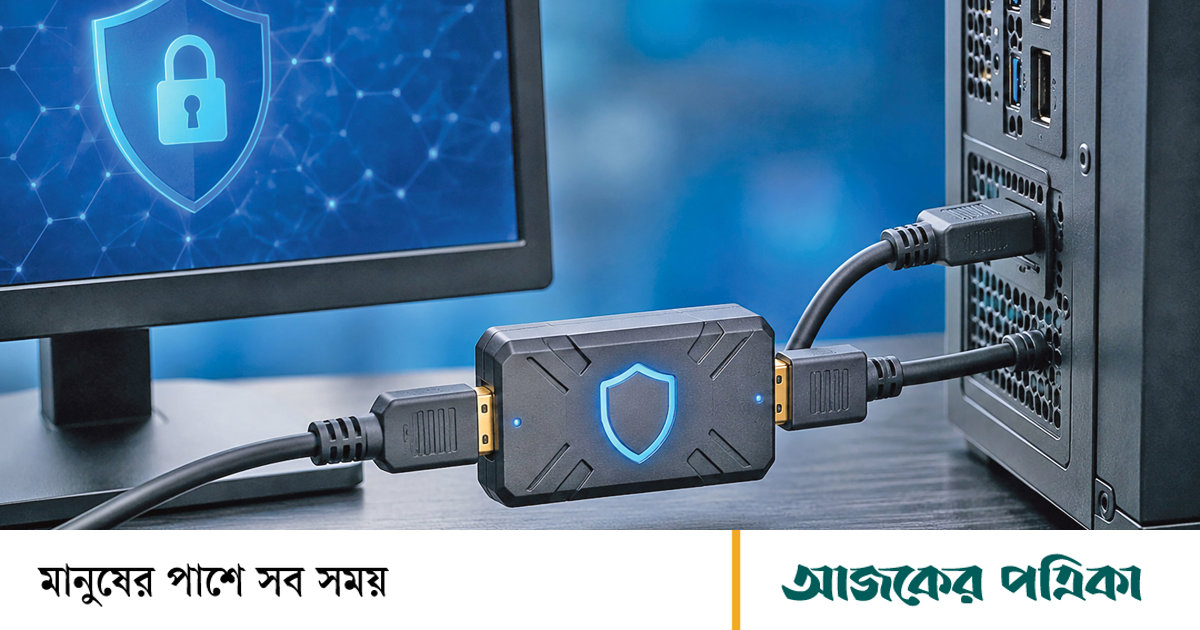
A new cyber security device from the UK’s cyber intelligence agency recently attracted global attention. UK’s Government Communications Headquarters recently launched a gadget called ‘SilentGlass’ through the National Cyber Security Centre. It is designed to block malicious traffic traveling between the display and a PC. According to the company, this plug-and-play device is manufactured and designed to protect government assets and is ‘approved for use in high-risk environments’. This design has been licensed by Goldilocks Labs, a UK-based cyber security company. The company specializes in creating hardware that limits potential damage to networks by automatically disconnecting physical connections during cyber attacks. They have partnered with Sony UK Technology Center to make the product available globally. The product is not yet open to the public.
SilentGlass is not like any conventional antivirus software. It works at the hardware level. It sits between a computer and its monitor and blocks suspicious or malicious traffic coming through HDMI and Display Port connections. As most people think, cyber attacks happen through e-mails, files and websites. But security researchers are increasingly warning that hardware connections can also become avenues of attack. Modern monitors and display systems often contain firmware, USB hubs, and communication channels that hackers can exploit. Monitors are a target for hackers. Because they are directly connected to sensitive systems and valuable information.
SilentGlass prevents the risk of computer hacking by preventing unauthorized or unexpected communication between the screen and the computer. The device is touted as plug-and-play. Users can connect it without any complicated setup.
The SilentGlass security device looks like a simple adapter placed between a computer and monitor. But its internal design will bring a big change in hardware security. SilentGlass acts as a ‘data firewall’ for display connectivity. Instead of allowing free communication, it also controls the filter of exactly what kind of traffic is allowed between the monitor and the computer.
Source: Thomas Hardware.com, Info Security Magazine

