

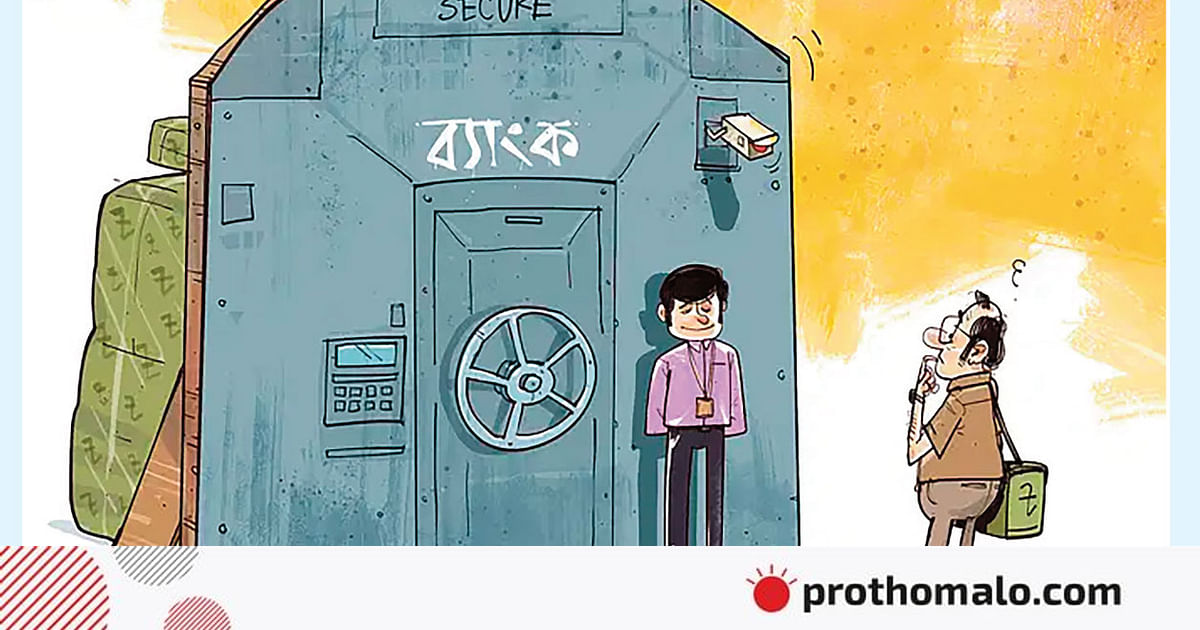
Every day, the depositors are able to withdraw very little money from the bank compared to the amount of checks or debt claims that they appear in the bank. Unpleasant conditions are being created in bank branches in different parts of the country. The question is, how will these banks in liquidity crisis pay off temporary, short-term loans?
All concerned should know that collection of new deposits and disbursement of new loans are equally important in the management of commercial banks. Interest rates on deposits should preferably be lower than the interest rates offered by commercial banks. It is said that these commercial banks in crisis do not collect new deposits; Rather, the depositors are desperate to withdraw the accumulated money from these banks at a mass rate.
On the other hand, new loan disbursement is near zero. Whatever old loans or investments are called, most of them fall under the category of bad debt. Many borrowers of these banks have fled, some have migrated. Many of those borrowers are the top defaulters of the bank and recovery of loan money from them is almost impossible in the present reality.
Bangladesh Bank's liquidity-support guarantee scheme has therefore given rise to fresh concerns for weak banks. They currently have no idea how they will repay these loans.

