

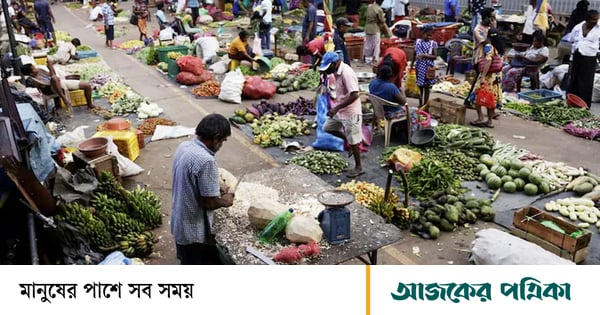
Economically fragile Sri Lanka's annual inflation rate fell to negative 2.1 percent this month. This is the highest negative inflation record since 1961. This information is known from the official statistics of the country.
Inflation refers to the rising trend in overall prices of goods or services in a country or region. But economic contraction causes the opposite, known as negative inflation.
For example, the price inflation in Bangladesh last October was 10.87 percent. This means – the price of the product or service which was priced at 100 taka in October last year, has increased to 110 taka 87 paisa this October.
On the other hand, Sri Lanka's negative 2.1 percent inflation means that the price of a product which was priced at 100 rupees in November last year, has come down to 97 rupees 90 paise.
Sri Lanka fell into an unprecedented financial crisis in 2022. Acute shortages of consumer goods and inflation reaching nearly 70 percent. Later, the country began efforts to revive the economy with a $2.9 billion International Monetary Fund (IMF) bailout and tax increases and austerity measures.
Sri Lanka's inflation was at negative 10.5 percent last September as well, which dropped to 10.8 percent in October. This November it reached negative 2.1 percent.
Sri Lanka's central bank said inflation could remain negative for the next few months due to a sharp fall in fuel and food prices. But it is expected to increase soon to reach the desired target of 5 percent.
President Anura Kumar Dissanayake, elected in September, has pledged to fully implement the IMF's bailout program. This includes tax increases and cuts in government spending.

