

India and the United States can solve controversial non-fee obstacles by signing alleged contracts (side letters) other than the proposed bilateral trade agreement. A senior government official said on the condition of anonymity, “Many side letters can be signed between India and the US under mutual understanding between the two governments. These will mainly be related to non-fee obstacles. '
In the context of the free trade agreement, side letters are different documents, which are interacted with the main agreement to remove specific concerns or make special arrangements between the two sides. They are legally binding but are valid only among those countries that sign it.
For example, while completing the economic cooperation and trade agreement, the Australian government agreed to amend its domestic laws to prevent Indian information technology companies working in Australia from levying taxes. This resolved the concern related to the double taxation prohibition treaty raised by the Government of India. Although it was not a part of economic cooperation and trade agreement, it was formally given by the business ministers of the two countries to write a letter to each other, underlining the mutual understanding.
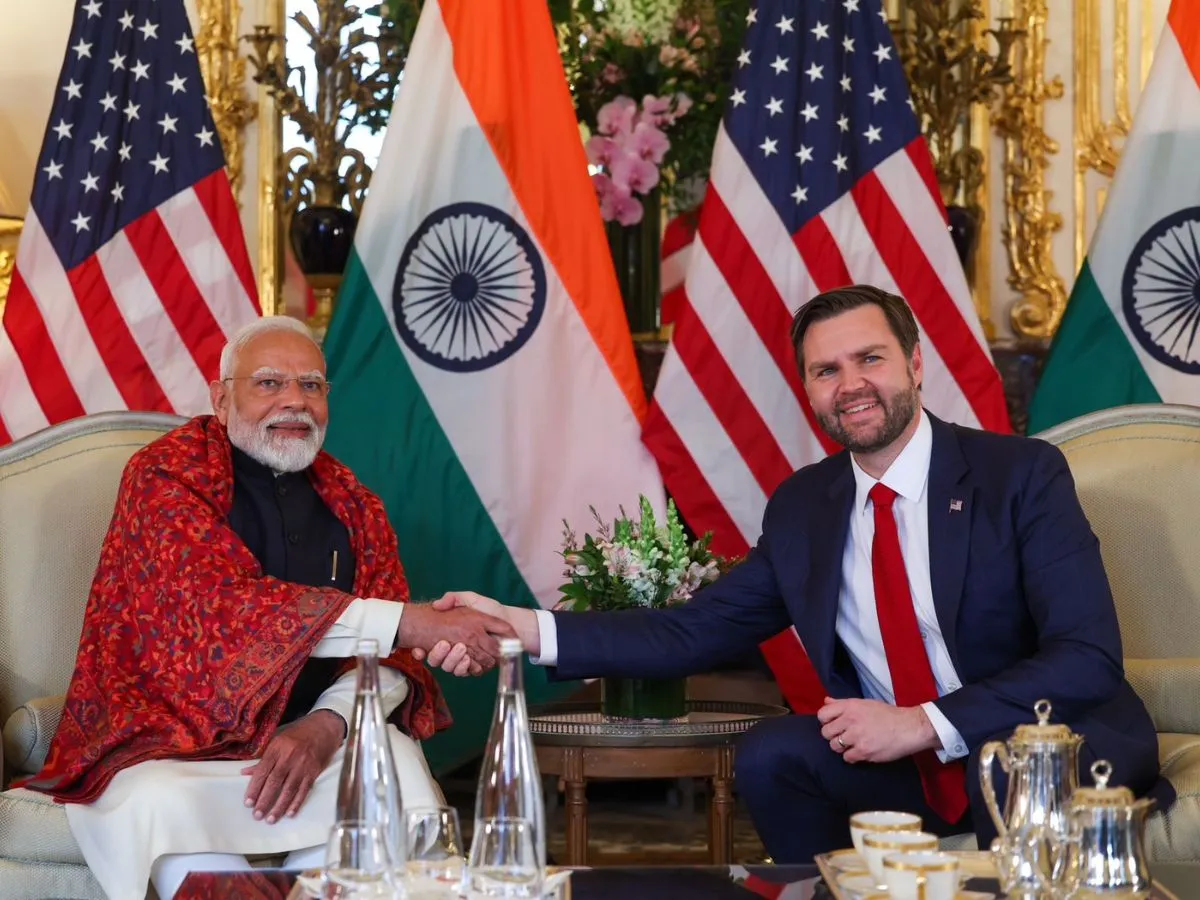
In recent times, the US has expressed serious concern over the non-fee obstacles faced by American businesses in India. US Vice President JD Vance, who recently visited India, also emphasized on removing non-fee obstacles and providing more market access to American companies.
The US Trade Representative (USTR) expressed concern over the draft rules of India's Digital Personal Data Protection Act (DPDPA) in the National Trade Estimate Report released on foreign trade obstacles earlier this month.
In the presentation given to the USTR, Coalition of Services Industries (CSI), an organization of companies like Google, Amazon, MasterCard, required local material requirement and unified payment interfaces (UPI) and RuPay cards, giving unfair benefits to RuPay cards, giving data localization, mandatory testing and certification of telecommunications equipment, discrimination in tax, discrimination on tax, boundary duty on tax, IT products etc. US companies have also expressed concern over the quality control orders given by the Government of India.
Senior partner Sanjay Notani at Economic Law Practice said that both countries need to adopt a separate approach to each region to understand non-fee obstacles. He said, 'Currently such non-fee barriers are available in many areas including metal, chemicals, industrial products, capital goods and telecommunications. We first need to assess the nature of these obstacles because there may not be a solution for all. '
First Published – April 27, 2025 | 10:17 PM IST
Related post

