

The birth of Jesus Christ is an important event in the Bible. Western artists have presented this phenomenon to the world through innumerable paintings. Basically they helped to develop a global perspective on this phenomenon.
It can be said that the western influence is so dominant in these works of art that outside cultures have hardly had the opportunity to present this religious phenomenon from their own perspective.
But over the centuries, Indian artists have tried to express the birth of Jesus and other Christian themes in their own style. Sometimes consciously, sometimes subconsciously, they created a body of art that added new life and meaning to the story of Jesus' birth. They also gave the opportunity to see the Christian faith from a new perspective.
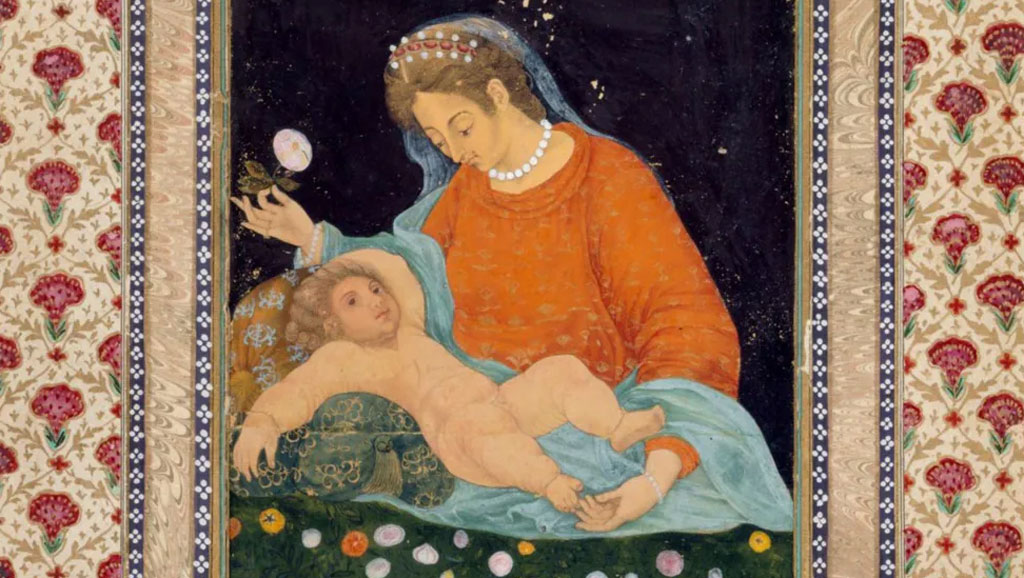
According to a BBC report on Wednesday, Mughal Emperor Akbar invited missionaries to introduce Christianity to North India. Missionaries brought with them biblical texts and European works of art on Christianity. These works of art deeply influenced later Mughal court artists.
Consistently, Akbar and his successors ordered various Christian paintings to be hung on the palace walls. Mughal court artists added Islamic ornamentation to these paintings.
As South Asian historian Neha Vermani points out, a Mughal court painting included Emperor Jahangir with Mary, the infant Jesus and Joseph in a nativity scene.
He said, 'Mughal rulers used to show their ability to maintain communal harmony in their states to present themselves as just rulers. For them the coexistence of different religions was an essential part of their system of governance.'
An 18th century painting shows many characteristic elements of Mughal art such as artistic ornamentation, bright colors, naturalism and fine ornamentation.
But not only Islamic decoration, modernity is also reflected in the thinking of Indian artists about Jesus in the later period. Jamini Roy, born in West Bengal in 1887, depicts Jesus as a figure representing the Indian Santal community. Jamini created a new artistic language by combining the folk art of Bengal and the famous Kalighat pottery of Calcutta.
Ashish Anand, CEO of 'Indian art firm DAG' said, 'The simplicity of Jesus' life and his self-sacrifice deeply appealed to Jamini Roy. His Christian paintings are as important as his Hindu mythological works.'
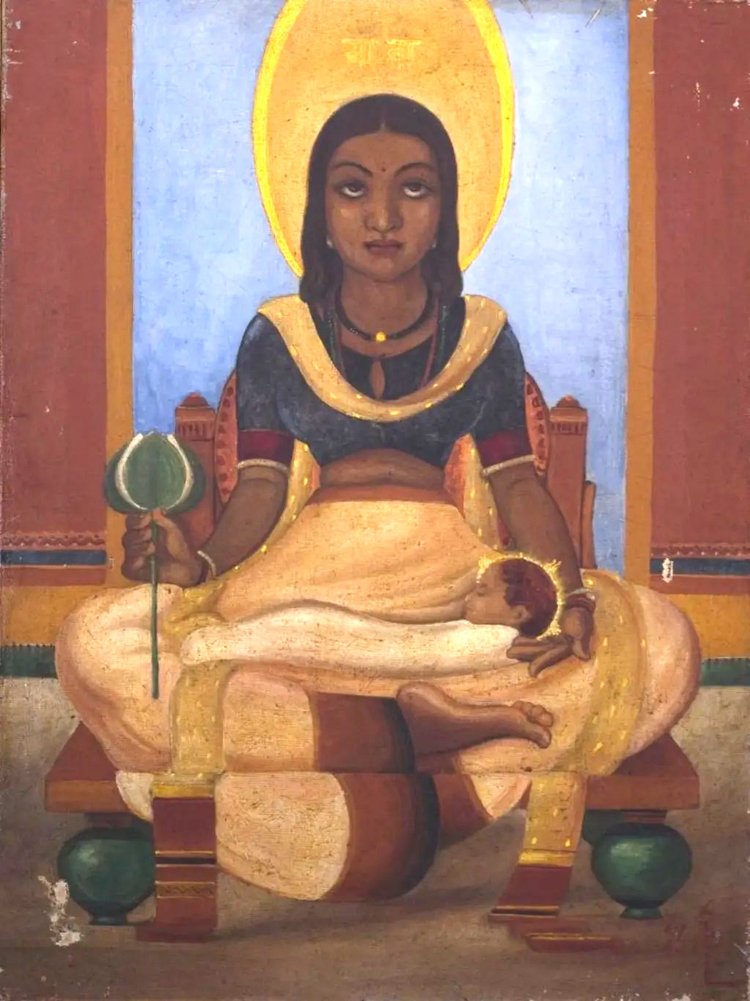
Born in Goa in 1902, Angelo de Fonseca created a unique fusion of Eastern and Western styles in Christian art. His painting depicts Mary as an Indian woman rather than a Western woman in a blue gown. Mary's complexion is brown, she wears a sari and a mangalsutra.
His paintings depict biblical events in the local environment of India and contain elements that easily connect with Indian audiences.
Rinald D'Souza, director of the Xavier Center of Historical Research in Goa, said, 'Fonseca wanted to connect Christianity, seen as a Western religious tradition, with the Indian subcontinent. His watercolor paintings presented this religion anew.'
The work of these artists is not only limited to visualizing the birth of Jesus from an Indian perspective, but also helped to move Christian art towards a global and inclusive framework. In this way, they presented the eternality of a religious event in a new way.

