

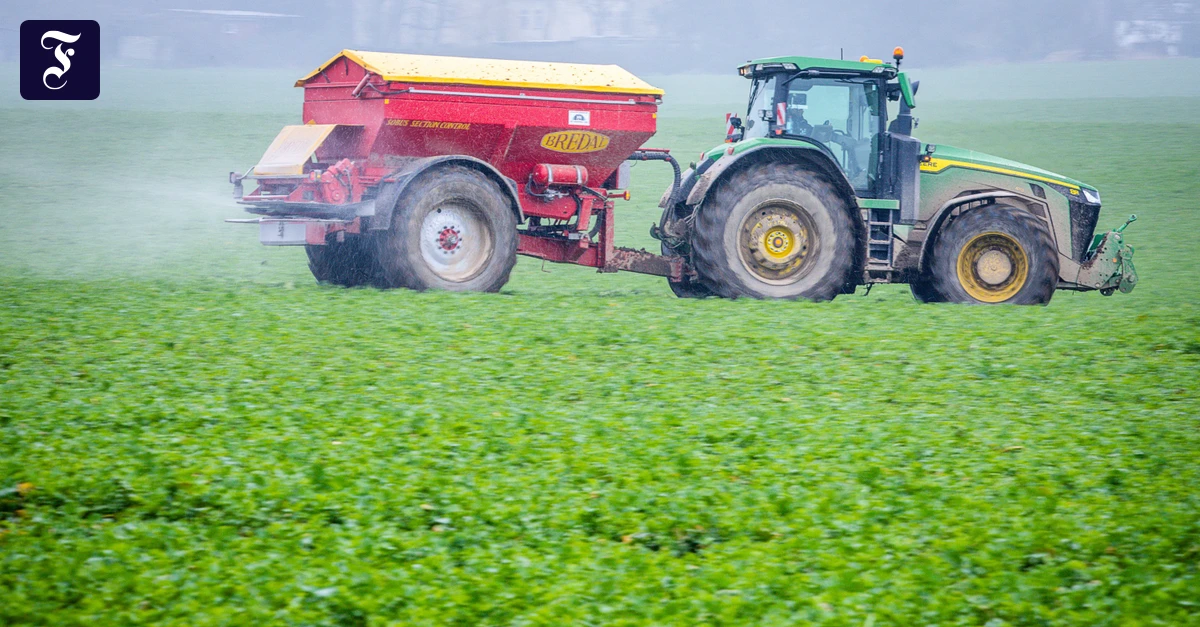
Henrik Wendorff, farmers’ president in Brandenburg, spoke of a “dramatic situation” on the fertilizer markets. Fertilizer is as expensive as it is rare and hardly available, he said. He expects price increases of up to 50 percent, which would inevitably have an impact on production costs. The crisis that is the Iran war and the blockade of the Strait of Hormuz have triggered, is still far from over for agriculture. On the contrary: the real consequences are yet to come, according to those in the industry.
The World Bank expects global fertilizer prices to rise by more than 30 percent in 2026. And the Dutch Rabobank assumes that consumers will also feel the consequences. Towards the end of the year, according to the forecast, food prices in Europe will rise again as sustained energy price increases impact operating costs along the entire value chain.
Even though fertilizer prices have recently fallen somewhat and there are signs of a slight easing in June, the long-term warnings are getting louder. On Tuesday, the Director General of the Food and Agriculture Organization (FAO), Qu Dongyu, spoke of a “systemic shock to the global agricultural and food system”. The decisions made now will determine whether the crisis remains manageable or develops into a deeper global food security crisis. The biggest impacts may not yet be visible: they could occur in the coming months when farmers harvest less because they planted less, fertilized less or simply could no longer afford production. The FAO appeals to avoid export restrictions, keep trade channels open and support vulnerable countries through targeted safety nets.
Price shock and export restrictions are having an impact
The background is the structural vulnerability of the market. About a third of the world’s seaborne fertilizer trade passes through the Strait of Hormuz. As refined natural gas, fertilizer is energy-intensive to produce. On the supply side, export restrictions are also increasing. China, the world’s largest urea producer, has cut exports to secure domestic supplies. Russia and Belarus, which are jointly responsible for a significant portion of the global potash and nitrogen supply, are effectively cut off from the European market by sanctions and EU tariffs and are redirecting their supply flows to Asia and America. The combination of price shock and export restrictions could seriously threaten food security, warns the FAO.
And yet there is no way around synthetic fertilizer. Svein Tore Holsether, head of the Norwegian manufacturer Yara, one of the largest companies in the industry worldwide, says this clearly. “Fertilizer is not just any commodity. About half of what is produced worldwide Groceries is due to mineral fertilizers.” Mineral fertilizers are the foundation of food security. The fact that it pollutes soils, endangers groundwater and fuels nitrate problems is always part of the debate. But there are no quick alternatives. Yara is benefiting from the volatility for the time being: the adjusted operating result (Ebitda) was recently 40 percent higher than in the same quarter of the previous year. The company has built flexibility into its production and can continue to supply European customers. The fertilizer manufacturer K+S has also raised its annual forecast.
Structural rethinking of fertilization
For German farmers, the situation is still manageable for the time being. Many people stocked up on fertilizer at a cheaper price last fall and therefore hardly noticed the price increases. In some places, farms switched to less fertilizer-intensive crops. Fertilization for the current season has been completed and the focus is now on autumn.
To help farmers, the EU Commission presented a fertilizer action plan last week. In addition to immediate support measures, it contains longer-term plans to strengthen domestic production and promote bio-based, circular fertilizers. Farmers’ groups largely welcomed the plans, but some in the industry doubt that they will make a difference. This is different from Brazil or Australia EU are not dependent on imports from the Middle East, at least not for their existence.
In the medium term, the German Farmers’ Association is calling for a structural rethink, including towards greater efficiency in fertilization. A farm that needs ten kilograms less nitrogen per hectare is a little less vulnerable to any future shock, says Johann Meierhöfer, head of the arable farming department. He also calls for strategic fertilizer reserves similar to compulsory mineral oil stocks as well as easier access to commodity futures markets, which are hardly accessible to farmers because entry hurdles are too high. Businesses with animal husbandry or biogas plants that can partially replace synthetic fertilizer should be supported rather than hindered by requirements. Organic farmers tend to have an advantage anyway because they avoid using synthetic fertilizer.
Meanwhile, researchers are working on alternatives to fertilizer. On the one hand, there is hope for a reform of the energy-intensive Haber-Bosch process, for example through green hydrogen. On the other hand, processed manure is coming into focus as an organic alternative: new processing processes turn manure into a product similar to artificial fertilizer. Researchers estimate that it could still take five to ten years until that happens.

