

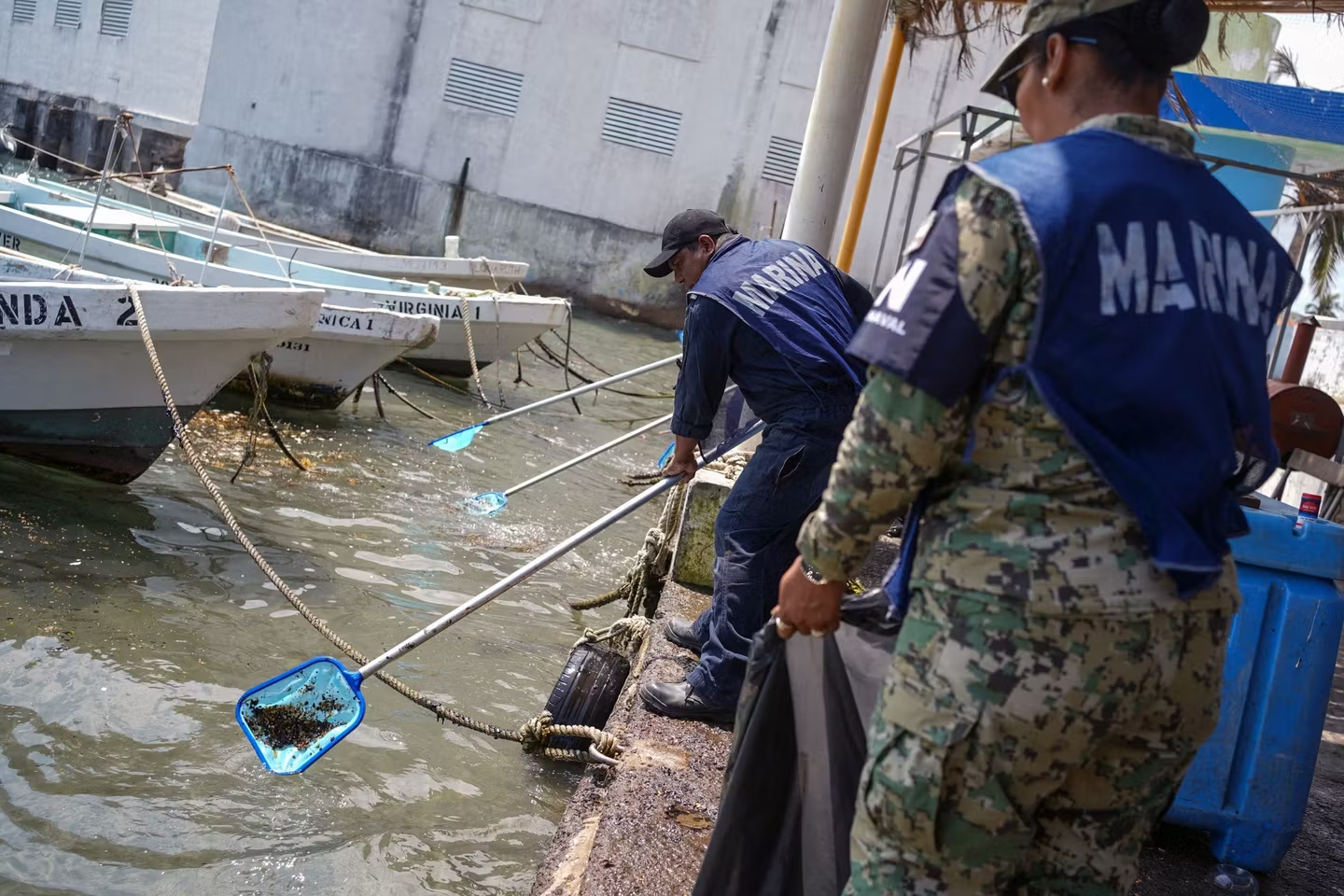
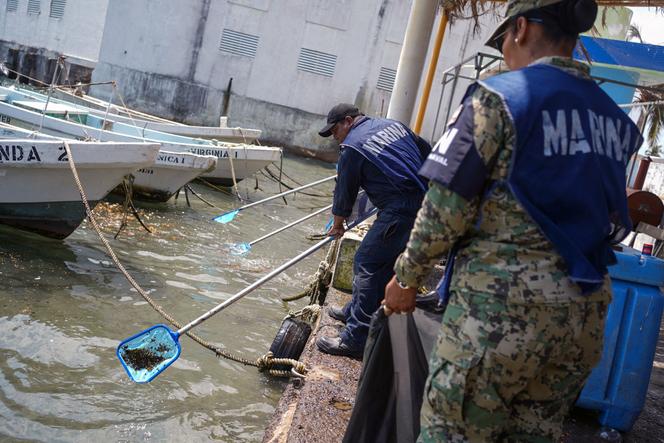
For more than three weeks, Esteban Hernandez has seen black and slimy tongues weighing several kilos washed up on the seven kilometers of Los Arrecifes beach. This village, located in the coastal area of the state of Veracruz, Mexico, is one of approximately 630 kilometers of coastline in the Gulf of Mexico affected by an oil spill, which began reaching the coast in early March. Mr. Hernandez explains that the oil has been partly covered by the sand from the beach, the same sand in which sea turtles will lay their eggs in mid-May, but its presence remains palpable: “If you walk on the beach, you still feel burning in your legs, as if someone rubbed them with chili”he said.
For this manager of a small tourist complex, who watches over sea turtles during nesting, as for many neighboring communities, the oil spill is a disaster: in addition to its effects on the environment, it scared away tourists, a few weeks before the Easter holiday week, which began on Saturday March 28. “There is no one, we are in a critical situation, we are totally dependent on fishing and tourists, and if they don’t come, we gain nothing”Mr. Hernandez is alarmed.
You have 76.04% of this article left to read. The rest is reserved for subscribers.
https://www.lemonde.fr/planete/article/2026/03/29/au-mexique-une-maree-noire-souille-les-plages-et-provoque-la-colere-des-defenseurs-de-l-environnement_6675261_3244.html

