

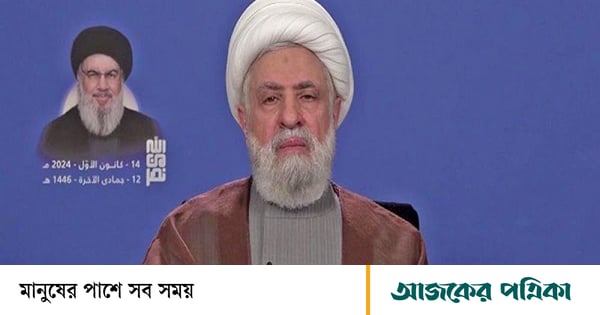
Sheikh Naim Kassem, the head of the Lebanese Shiite armed group Hezbollah, said that arms shipments through Syria have been cut off. According to news agency Reuters, this is his first statement since the fall of President Bashar al-Assad at the hands of rebels last week.
During Assad's regime, Iran-backed Hezbollah used to import weapons and military equipment from Iran through Syria. This route would cross the borders of Iraq and Syria and reach Lebanon. But on December 6, insurgents seized the border with Iraq and two days later captured the capital, Damascus.
In a televised speech on Saturday, Naeem Kassem said, 'Yes, at the moment we have lost the way to supply weapons through Syria. But this is only a minor issue in our ongoing resistance movement.'
He also said, 'If the new government comes to power, maybe this road will be active again. Otherwise we will find another way.'
The Hezbollah group took part in the Syrian war against rebels in 2013 to support the Assad regime. But as the rebels neared Damascus last week, Hezbollah withdrew its fighters.
Hayat Tahrir al-Sham (HTS), a rebel group led by Ahmad al-Shara alias Abu Mohammad al-Jolani, has ousted Syria's longtime ruler Bashar al-Assad. Through which the harsh rule of the Assad family in Syria for five decades has come to an end.
Naeem Qasem said, 'We cannot comment on them until the new Syrian government is stable. But we hope that the people of Lebanon and Syria and their governments will continue to cooperate.
He also said, 'We hope that the new regime will consider Israel as an enemy and will not normalize relations with them. And the nature of our relationship with Syria will depend on this issue.
Hezbollah's conflict with Israel has been going on for almost a year on Lebanon's southern border. The conflict started in the context of the Gaza war.
In September this year, Israel carried out a large-scale operation that killed Hezbollah's top leadership and more than a thousand fighters. In addition, hundreds of thousands of ordinary people of Lebanon were also killed in this conflict. Israel wreaks havoc in various parts of Lebanon. Finally, a US-brokered ceasefire came into effect in late November.

