

image source, Getty Images
-
- Author, Abul Kalam Azad
- Role, BBC News Bangla
-
Published
-
Reading time: 6 minutes
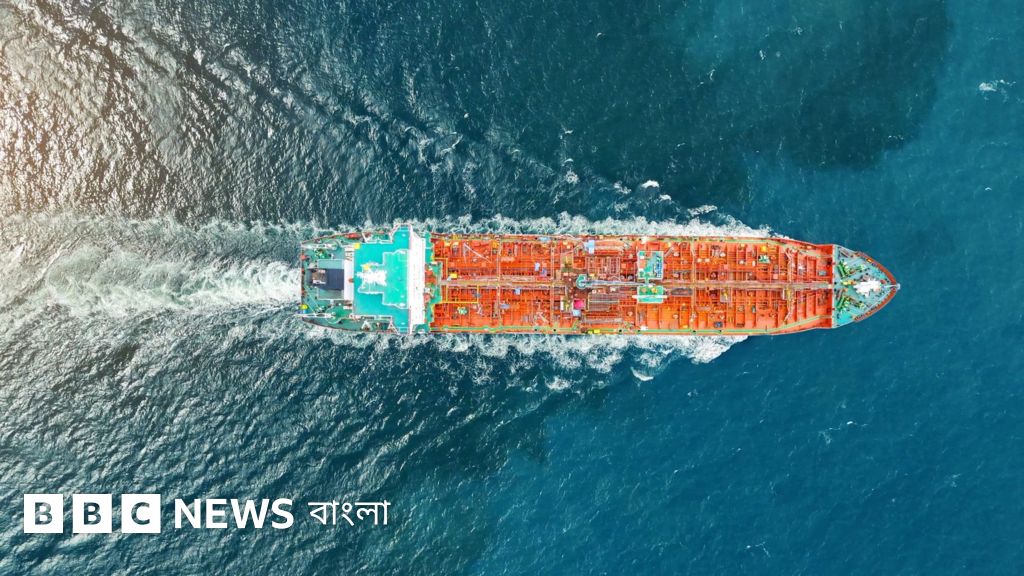
To solve the fuel oil crisis and increase oil reserves on an urgent basis, the Bangladesh government allowed 12 companies to supply oil through the DPM (Direct Purchase Method) system outside the traditional system, none of which could supply oil till mid-May.
According to BPC data, the companies that received the mandate are from the United States, Dubai, the Netherlands, Hong Kong, Kazakhstan, Malaysia and Japan. These companies were supposed to supply diesel, octane and crude oil urgently.
Only two companies who got work order under direct procurement method have given PG (Performance Guarantee) or security. A company has promised to provide PG.
The government took the initiative to buy oil without a tender during the oil crisis in March due to the Iran war.
Energy Minister Iqbal Hasan Mahmud told BBC Bangla that the government took this initiative to solve the crisis caused by the war. In order to prevent people from panicking and buying oil to create a crisis, direct purchase method of oil import is allowed with the aim of increasing reserves.
“My problem was with Qatar, they are sitting with force majeure. Saudi Arabia is sitting. I have to bring the oil from other places. When it is needed, naturally we have to go to the spot. We know how many will not come or will come, so we are working. We are giving a fair chance to everyone. Among them, how many will come, our oil reserves will increase.”

During the oil crisis in March, more than half a hundred companies offered to supply oil to BPC. There is a difference in the price of oil offered by the companies that have received work orders. For example, Dubai-based Petrogas’ offer for diesel supply was $175 per barrel, Netherlands-based AP Energy Investments Ltd’s offer was $221.
Again, an American company called A&A Energy got approval by offering to supply diesel for only 75 dollars. This price offer was unusual considering the price of oil in the world market during the crisis.
The energy minister said that the proposal has been accepted after scrutiny.
“Then you will say that the price was so low, the higher price is being accepted without accepting it. That’s why I accepted the lower price but PG could not pay. Naturally, we have to protect all sides.”
In this regard, Bangladesh Petroleum Corporation BPC said that the price at which the proposal was passed is not important, because if oil can be supplied, the price will be determined according to the statutory formula.
Chairman of BPC. Rezanur Rahman said, “This is a tentative price. The main thing is the valuation that will happen when they give the supply. That is, the average of the five-day Platts rate (Platts Arab Gulf) two days before and two days after the loading date will be the main price.”

Regarding the initiative of importing through DPM system, BPC chairman said, the main period of the war was in March when we had a little uncertainty. At that time there were 17 parcels out of which seven parcels were deferred. We confirmed those seven parcels in April and May.
“After the onset of the crisis in March, since we had several cargoes deferred and force majeure declared, in the context of that, we embarked on source diversification. As part of that, we took up an initiative of DPMA for some time. That is already closed.”
Rezanur Rahman said, we have some stock matters. Basically one of the issues with DPM was we wanted to identify the sources. It is fairly identified with us. Various sources have approached us that they can supply fuel from here. And secondly, we wanted if we had a major disruption in the supply chain for any reason, we could cover that with DPM.
The BPC chairman also said that the import initiative has been taken by inviting a new tender for three months now.
“We have been asked by the ministry to ensure ninety days of stock. Considering these, we have gone for a short purchase. We have made this tender targeting the three months of June, July and August. It is additional. In the open tender process. We are not going to DPM now.”
Method of importing oil
Oil is regularly imported into Bangladesh in two ways. Half through direct contracting in the JTUG process. And the remaining half is through international open tenders known as OTM. DPM or Direct Purchase Method is used without tender if special circumstances arise. BPC ensures the import of fuel oil by assessing the demand for the whole year in two phases from January to June and July to December every year.
Chairman of BPC. Rezanur Rahman told BBC Bangla that the government has given instructions to ensure 90 days stock, in view of which it is proposed to give direct work order on DPM system on an urgent basis.
The Chairman of BPC also said that out of 12 companies of DPM system, three companies are in due process.
“After the approval of the Economic Affairs Committee and the Purchase Committee, we give the Noa (Notification of Award). After the Noa, they give us the PG. If the PG is given, we open the LC. Once the LC is opened, they supply the product.”

Highlighting the current status of the companies approved by DPM system, BPC Chairman said that two companies have given PG. A company has said that it will give PG. These three companies have responded to us so far and are proceeding with due process.
“We have responded to get a lower rate. Now four companies have declined due to time bound. One has expired. One said we will not give PG. And two said we will not give supply. And four companies have time.”
BPC chairman says, we got less time. We have done as much verification as was necessary at our level. We have seen the company and its volume and its capacity.
“It’s not really for normal times. If we didn’t do it, if the supply chain failed for some reason, you or someone would not have left us and asked why you didn’t look for different sources, didn’t take the initiative to bring to different sources. I couldn’t answer this question. What we succeeded in is a success. More importantly, we found out that many sources are supplying oil to different places.”
On the other hand, it is believed that there are traders and intermediary companies as well as mid-level suppliers among the companies that have received work orders for supply without tender. Very little time has been taken in vetting and selecting the work order for these companies. Local media reported that there were companies that received work orders within a week of making the proposal.

Executive Director of Transparency International Bangladesh TIB. Iftekharuzzaman said that the government can directly purchase in case of emergency. If the Government feels that the circumstances make it imperative to go for direct purchase method without due process, it can do so.
“For the reason that X or Y companies or institutions have been selected, it is essential to ensure that the responsibility has been given due process and whether they have the proper credibility and the ability to deliver the commitment that we got from them. If there is a delay in this case, the question is whether it has been done for some special benefit.”
Iftekharuzzaman said, it must be accepted as a huge crisis. International crisis. In which the government had no jurisdiction. There was no countermeasures. It was almost like an emergency. So there was an obligation.
In times of such calamity, the government has the power to bypass open competition, subject to due justification, if necessary, so that the national interest is protected. In this case, that is what happened or was expected to happen.
“One is that some organizations have failed to deliver, over time we have to learn from this experience. From this experience we feel that since the government had a specific commitment to ensure transparency and accountability in all procurement processes – we feel it is imperative to give more importance to these issues.”
https://www.bbc.com/bengali/articles/crrp24g0191o?at_medium=RSS&at_campaign=rss

