

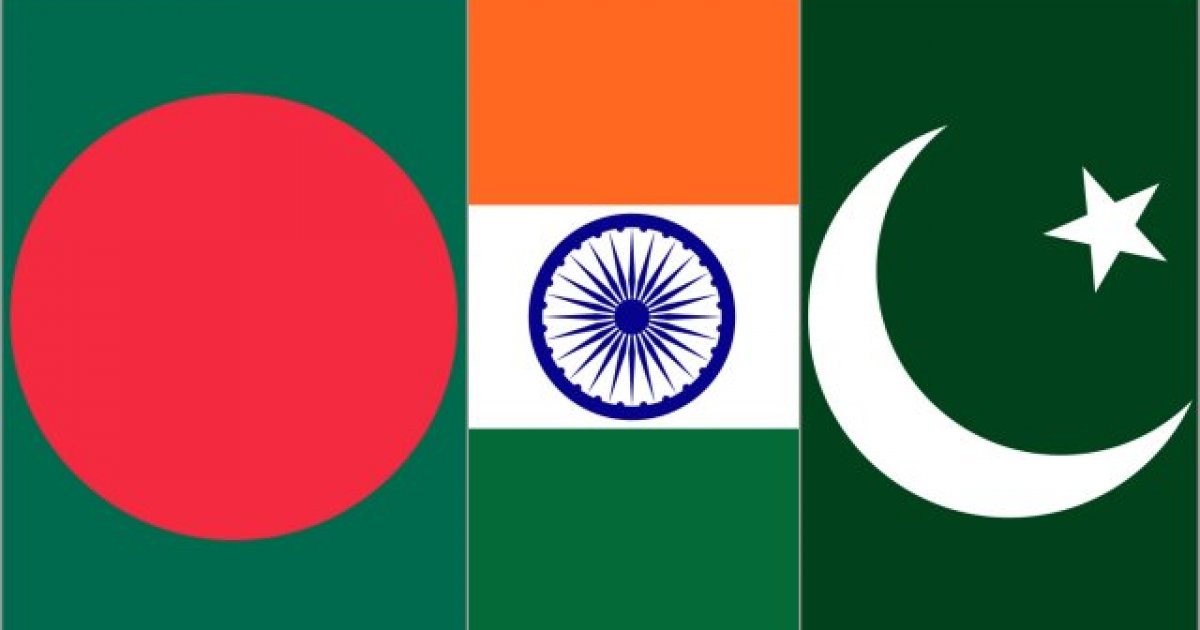
Military tensions between India and Pakistan have taken an extreme shape. Panic has spread throughout South Asia since news of full -scale conflict began at the border. This has had a direct impact on the stock market of Dhaka – on Wednesday (May 7), a large price has been seen at the beginning of the day. But not only in the capital market, the wave of this conflict has taken a surge in various sectors of Bangladesh's economy.
According to experts, the conflict of the two countries in the war and if it lasts is long -lasting can lead to major challenges in Bangladesh's trade, investment, inflation, remittance and diplomatic balance. Economists say strategic plans for government and policy makers are essential at the moment. If the war will not be prepared to deal with the multi -faceted pressure that will come in advance, the economy of Bangladesh will be under pressure.
At risk
Although there is tension between India and Pakistan, both countries have commercial relations with Bangladesh. India is especially one of the major importer of Bangladesh. In the war situation, border trade, transit and transportation of goods on South Asian ferries are suspected.
The export of garments, drugs and light engineering products made in Bangladesh and the possibility of suspension of order will not be dismissed.
Uncertainty in foreign investment
Foreign investors can identify the region as a 'high risk zone' if political unrest in South Asia increases. This can reduce the existing and possible direct foreign investment (FDI). Many projects on infrastructure, textile, information technology and renewable energy sectors can stop.
Trample
Economists believe that if the situation is prolonged, the economy of Bangladesh will have a negative impact on multiple sectors. In particular, foreign trade, investment, goods transport, export order and supply system can be disrupted.
Especially because Bangladesh's commercial relations with India are extremely close, any military tension can directly affect export and import. Besides, if India is forced to increase their military expenditure, the importance of internal development projects and regional cooperation activities can be reduced, which will hinder the economic progress of Bangladesh.
Private research agency Center for Policy Dialogue (CPD) is a honorable fellow and economist Professor. Mostafizur Rahman said, “The existing war between India and Pakistan is not a major cause for the trade and commerce of Bangladesh, but there is considerable concern. Tensions between the two atomic powered countries can have a negative impact on regional stability and cooperation. '
“India is an important commercial partner for Bangladesh,” he said. A large part of Bangladesh's export of goods goes to the Indian market with duty -free facilities. Increasing military costs can affect India's economic priorities, which will have adverse reactions in Bangladesh's export. '
The war between India and Pakistan, not only in those two countries, but also the economy of the surrounding states, will have a negative impact on the economy of the surrounding states, said Mohammad Hatem, president of BKMEA, organization of Net garment owners.
At a discussion meeting at Sonargaon Hotel in the capital on Wednesday (May 7th), he said, “If the war situation arises, the path to import and export will be disrupted.” We have to import different raw materials, including yarn and cloth, from the outside world. The war will disrupt the chain due to the war, which will directly affect the garment industry. ' He said, 'War is not auspicious for any country. Border countries like ours will also be economically damaged if the fire is spread. '
Emergency experts say that in this crisis situation, Bangladesh will have to strengthen the discovery, versatility and diplomatic preparation of the commercial alternative market. In addition, it is time for the export -based industry to adopt a systematic strategy in the international market, keeping an eye on the demand for the product and prices.
Big collapse in the stock market
In the wake of the tensions of the Indo-Pakistan war, the country's stock market has collapsed on Wednesday (May 7th). At the end of the day, the main index of the Dhaka Stock Exchange (DSE), DSEX, fell by 5 points or by about 5 percent to 5,212 points – which is the lowest position in the last five years.
This fall in one day is the highest after October 28, 2021. There has been widespread panic among investors in the market, causing widespread sales pressure. On Wednesday, the share price of only 5 companies has risen, the decline of 5, and the price of 5 companies remained unchanged.
Ashikur Rahman, Managing Director of Midway Securities, told the Bangla Tribune, “The Indo-Pakistan war situation has created severe instability in the market. Geopolitical uncertainty has terrified investors. Many people are selling shares for security. '
He said a letter came from the Financial Institution Department (FID) on Wednesday morning, where a high -level meeting will be held at the chief adviser office on May 7. Finance adviser, FID secretary and BSEC chairman will be present there. The meeting will discuss what to do to stabilize the market.
However, this positive message could not immediately bring back confidence in the market.
Fuel crisis and inflation
Possible warfare is likely to increase fuel prices in the international market. If the price of crude oil and LNG imported from the Middle East increases, the country's power generation cost will increase. This will create a risk of huge inflation at the industrial sector and consumer level.
Especially if transportation costs and agricultural production costs increase, food prices may also go beyond control.
Remittance
Concerned that there are large numbers of Bangladeshi expatriate workers in the Middle East and Malaysia. The politics there can also be affected by the tensions of India and Pakistan. If the war situation is prolonged, the labor market may be stagnant, so there is a risk of reducing remittance income.
Bangladesh may be under diplomatic pressure
Bangladesh and Pakistan have political and diplomatic relations with both countries. In the context of the war, Bangladesh may have to take a vigilant position, so that one party does not have to be disturbed by the other party. In this case, maintaining balance with regional and international allies can be the main strategy.

