

For weeks they have been the talk of Türkiye. The new Fenerbahçe president’s joint conversations with a well-known television presenter; the mirror-covered room in which a prominent journalist, the son of a radical Islamist, allegedly organized orgies with other colleagues; the secret chamber, supposedly to get up to speed, of the Bebek hotel, famous private meeting house of the jet set Istanbul; the arrest of such an actor or such a singer in the latest anti-drug raid. It is said among friends, at dinners, waiting for the children at the school door, in a low tone, with a certain blush, but evident morbidity, gloating in the fall from grace of this or that celebrity at a time when the country is going through a tough economic crisis. The rich—the very rich in Turkey—are also crying. Pure schadenfreude.
In principle, they might seem like exemplary arrests in a country where drug possession, even for personal use, is punishable by between two and five years in prison (although there are alternative measures for those without a record). But in which, in recent years, consumption – especially of cocaine and synthetic drugs – has skyrocketed, as a status symbol and as the country has become at the gateway and distribution of merchandise destined for the Middle East.
However, not everything adds up. The first of these large raids ordered by the Istanbul Prosecutor’s Office, dubbed by the press as “Operations against celebrities”, took place in October. The target was a couple of acquaintances influencerDilan and Engin Polat, and their entourage, previously investigated for money laundering. Of the 19 detainees, eight tested positive for drug use. In December there were three new major raids; So far in January there have been four others. Dozens of artists, singers, actors, models, presenters and businessmen have been detained in hotels, clubs and discotheques. They have been taken to the police station and blood, hair or urine samples have been taken to check for drug use.
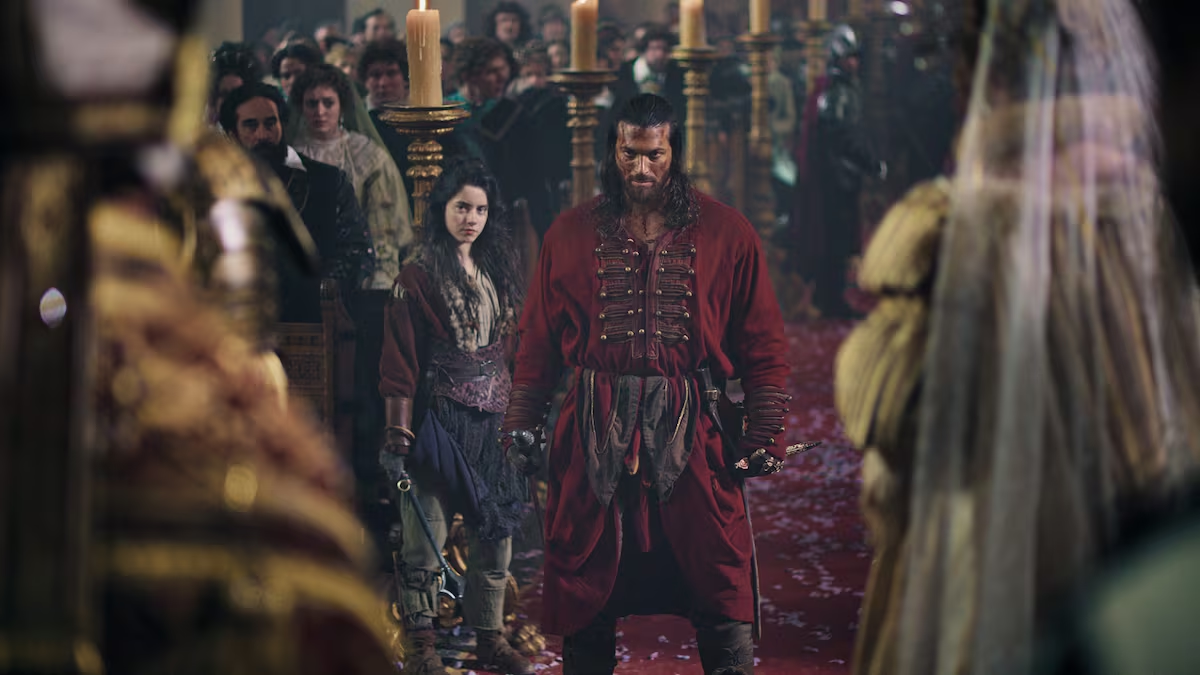
Some have been sent to preventive detention accused of “possession of narcotics”, “providing drugs” and “incitement to prostitution”. However, the majority have been released, some awaiting trial, others without charges (for example, the famous soap opera heartthrob Can Yamanwho, after a brief detention last weekend, has returned to Italy, where he resides). Which has not prevented their names from making headlines for days and being dragged through the mud.
Because the names of the detainees, their testimonies and even their private conversations are being leaked to the press and on social networks. “What messages do they want to give? Who is leaking these images? This must be investigated,” complained former pro-government deputy Mücahit Birinci after, despite the secrecy of the instruction, the closed circuit television recordings of the Bebek hotel and excerpts of police interrogations were published that point to the presence there of important businessmen close to the Government of Recep Tayyip Erdogan, linked to the world of football and the media industry.
The fact that a good part of these leaks appear in pro-government media, like the newspapers Sabah y Yeni Safak, or the fact that the detained presenters and journalists are from channels loyal to the Islamist Executive, feeds the theory of friendly fire and fights between the various factions that support the Government, fighting to improve their position in the face of an eventual succession of President Erdogan. Another hypothesis, points out political scientist Selim Koru, has to do with bringing the the successful Turkish audiovisual industry, which exports series to the whole world: “(Erdogan) has indicated that he wants more control over the cultural industries, and to do so he needs something to hit with, to show the famous people who make up this industry that the State can come after them at any time and without the need for too much evidence.”
At the moment, while this rear window opens and Turkey seems to become the set of Temptation Island, there is no talk of other things – says a source from the financial sector -, for example, that the negotiations between the Government, employers and unions have given rise to a disappointing increase in the minimum wage, below the inflationary increase.
https://elpais.com/internacional/2026-01-17/sexo-drogas-y-ajustes-de-cuentas-en-turquia-la-cuna-de-las-telenovelas.html

