

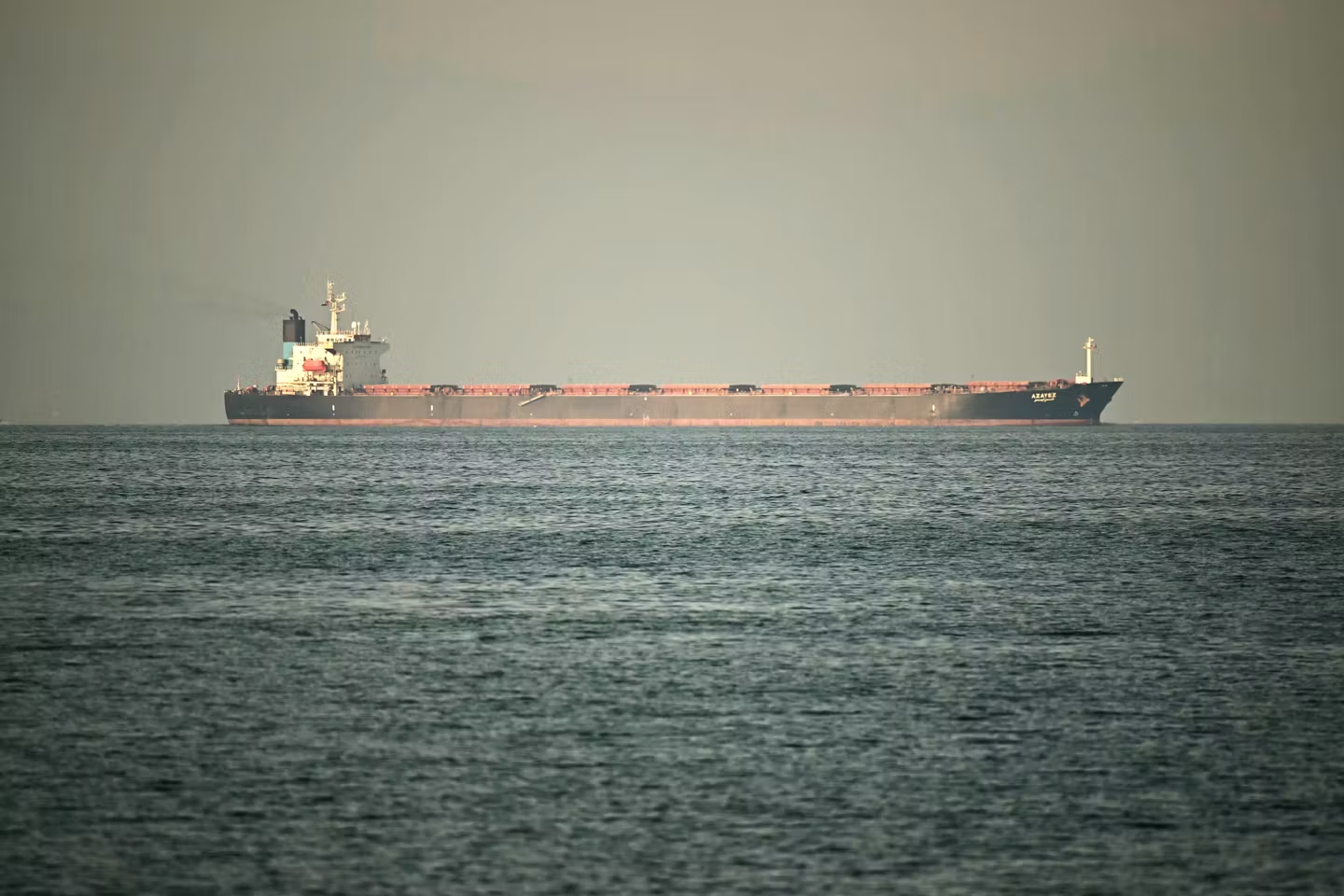
Saturday February 28 evening, in response to the American-Israeli strikes in the morning against several cities in Iran, tension rose a notch in the waters of the Strait of Hormuz. According to the European Union Naval Force, mentioned by Agence France-Presse (AFP), the Iranian Islamic Revolutionary Guards are now blocking this eminently strategic point in the global oil trade. However, Iran has not yet made any official announcement on this subject, noted the American agency Bloomberg on Saturday evening. Earlier in the day, the Iranian Tasnim agency described a strait already « de facto ferme ».
“Hapag-Lloyd suspends all vessel transits through this waterway until further notice”declared the German shipowner Hapag-Lloyd on Saturday evening in a press release cited by AFP. The British agency Reuters already reported, earlier in the day, the suspension of several shipments of crude oil and fuel, without mentioning the oil companies in question by name.
Barely fifty kilometers wide, bordering the coasts of Iran and those of the Sultanate of Oman, the Strait of Hormuz connects the oil-producing countries of the Persian Gulf with the rest of the world. “Tensions in Iran threaten global energy security”wrote Bridget Payne, for the consultancy firm Oxford Economics, in a note published on Friday February 27. And for good reason, About one-fifth of the world’s oil (crude and other products) sold each day typically passes through this narrow, shallow passage. That is, a daily circulation in these waters of around 20 million barrels in the first quarter of 2025, according to figures from the American Energy Information Agency..
You have 56.08% of this article left to read. The rest is reserved for subscribers.

