

There was some relief in September this year as inflation came down to single digits. But that relief could not be sustained. The next month, in October, the price inflation reached double digits.
According to Bangladesh Bureau of Statistics (BBS) data, average price inflation rose to 10.87 percent in October from 9.92 percent in September.
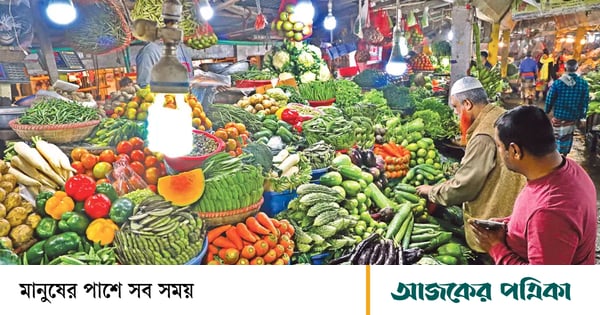
Food inflation rose the most in October. Food inflation rose to 12.66 percent in the month, which was 10.40 percent in September. And in August it was 10.49 percent.
The government is not able to rein in the rise in commodity prices, especially the prices of daily necessities. Due to this, inflation is increasing, say those concerned. And consumers say they are struggling to meet household expenses with limited income in a high-priced market. There is no relief in the market of daily commodities, whether in the city or the village. Food prices are higher in villages than even in cities.
The BBS data also says that the price of rice, pulses, oil, salt, fish, meat, vegetables, spices and tobacco products has increased and the rate of food inflation has increased. At the end of a meeting on inflation in the secretariat, Finance Advisor Dr. Salehuddin Ahmed said, inflation has increased, but it is not unusual. Such is the trend globally. Floods in Bangladesh have increased due to not controlling the base of wages, rising wages, and inflation. But it is temporary. He said that inflation and product prices cannot be viewed as one. Inflation has eased in some cases but commodity prices have increased.
Former Research Director of Bangladesh Institute of Development Studies Dr. Zayed Bakht said, price inflation increases and decreases based on demand and supply. Government cannot control demand. Again supply is not able to normalize. Due to this inflation has increased again.
Zahid Hossain, the former chief economist of World Bank's Dhaka office, said that besides the supply system not improving, the cost has increased. Hence food inflation has increased.
Bangladesh Bank is increasing the policy interest rate to control high inflation. In this, the interest rate of bank loans is gradually increasing. Meanwhile, the interest rate has risen to around 16 percent. In less than a year and a half, interest rates have increased by about 7 percent. There is increasing concern among small and big businessmen.

