

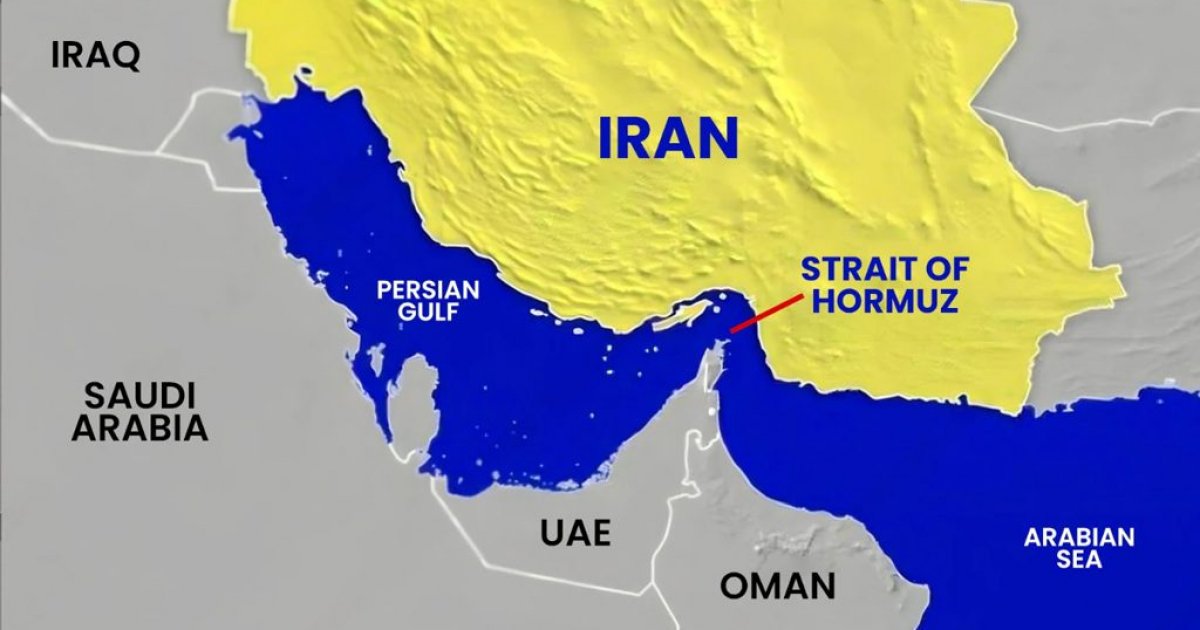
The ongoing military tensions between Iran and Israel in the Middle East and the direct participation of the United States have created new instability in the international energy market. The price of crude oil is increasing in the world market in fear of disruption in the supply chain, which will have a direct impact on the countries of the import -dependent economy. Bangladesh is not beyond that.
The ongoing turmoil around the world has raised concerns over a proposal adopted in Iran's parliament. The proposal has been given a strategic vote for stopping the Hormuz system. Although the final decision has not yet taken the final decision of the country's highest national security council, oil prices are increasing in the meantime.
In the international market, oil prices are rising
According to the BBC report, the United States has crossed the dollar of Brent Crude Oil for a barrel of barrels soon after the United States launched an attack on three nuclear establishments – which increased by about 5 percent in a day. This is the price of the price from the fear of disruption of the supply of the hormuz system.
According to analysts, about 2 million barrels of oil and oil products are supplied every day around the world through the Hormuz system. It is about one-fifth of global supply. At the same time, 25 percent of the LNG (LNG) is supplied with the waterway. As a result, the shutdown of this route will be deep and versatile in the global economy.
Potential impact on the economy of Bangladesh
Bangladesh mainly imports crude and refined fuel oil from Saudi Arabia, Kuwait and the United Arab Emirates. This import is entirely dependent on the hormuz system. As a result, if the route is closed, Bangladesh may have to deal with the situation such as disruption, inflation, foreign currency crisis and increase in production costs.
According to experts, if the price of oil per barrel in the international market increases $ 5, then the annual import cost of Bangladesh will increase by about $ 1 million. And if the hormuz system is completely closed, the cost may be doubled or more.
Pressure
About half of the power generation in Bangladesh depends on gas, diesel and furnace oil. If the prices of these fuels rise in the international market, the country will directly disrupt the power generation, the cost will increase. In that case, the government has to give large sums of subsidies, or to increase the price of electricity and pressure on the shoulders of the people. As a result, there is a possibility of reducing industrial production, increasing loadshedding and increasing business costs abnormally.
Inflation
If the cost of energy increases, it is the first impact on the transport sector. As a result, the prices of all types of products, including agricultural products, consumer goods, drugs, started to rise. Food and non -food – in the case of inflation, inflation is accelerated. Which can lead to a new danger for consumers in the country already under inflation.
At risk of foreign trade and remittance
Experts believe that if the hormuz system is stopped and the price of fuel rises, the foreign exchange reserve will be pressured to highlight the expenditure, the trade deficit will increase. At the same time, the demand for the dollar increases as the value of the money will be more weak. As a result, import costs and internal inflation may increase.
In addition, a large portion of the about one crore Bangladeshi immigrants in the Middle East are working in the war-torn region. If the conflict is prolonged, there may be uncertainty in their employment, which is likely to be a big push in the remittance flow.
Executive Director of South Asian Network on Economic Modeling (Sanem), a private research institute. Selim Raihan told the Bangla Tribune, “Although the Hormuz system is closed for temporary time, the price of fuel in the world market will increase rapidly, whose shock will create multi -dimensional crisis in Bangladesh.”
“Bangladesh is a fuel import -dependent country,” he said. The power, agriculture, industry and transport sectors here are directly dependent on oil prices. If the price of oil increases, the price of the goods will increase, the export sector will increase the pressure and the quality of life of the common people will be damaged. '
Calling on the government to prepare in advance to deal with the situation, he said, “Finding alternative energy sources, long -term agreements on LNG imports, investment in renewable fuel and alert strategies in reserve management.”
Just 5 days of fuel
If the Iran-Israeli conflict is concentrated, the fuel security of Bangladesh can be at great risk if it becomes a full-scale war. Because of the refined and crude, the Bangladesh Petroleum Corporation (BPC) has the capacity of only 1 lakh tonnes of fuel oil, which is capable of meeting the country's maximum 7 -day demand. There is no alternative management beyond that.
According to experts, a small disruption of fuel supply can create instability in the market. Although the price of oil in the international market is suddenly reduced, it takes time to reach Bangladesh. Again, if any obstacles are created in the global supply system, the crisis is immediately created in the country – which has an impact on power generation, public transport, agriculture and industrial sectors.
At present, about 5 percent of Bangladesh's power generation and 5 percent of public transportation depend on fuel oil. In addition, a large portion of the irrigation in the agricultural sector is operated by the diesel -powered irrigation pump. In view of this dependency, it is important to have adequate fuel storage in the country.
The potential impact on Bangladesh can be stopped when the hormuz system is stopped –
Disruption in Fuel Supply: If the hormuz system is closed, the cost and transport time will increase.
Disruption of Power Production: If the price of furnace oil and diesel increases, the cost of power generation will also increase.
Load shedding and inflation: If the subsidy is not increased, the load shedding and the price of the commodity prices are inevitable.
Risk in export: If the shipment is delayed, the risk of canceling the purchase in the garment sector.
Remittance Reduction: Remittance may be reduced if the labor market is shrinking during the Middle East war.
Falling in Reserve Pressure and Money Fall: Extra dollar demand can have a negative impact on foreign currency reserves.
The impact of the Iran-Israel conflict is still limited to: BRAC-EPL analysis
Although the impact of the ongoing Iran-Israel conflict is still limited in Bangladesh, the top domestic brokerage house BRAC-EPL Stock brokerage seems to have some negative impacts in the long run.
In a special analysis, the company said that the initial impact of this texting situation in the Middle East has already been reflected in the stock market. However, if the conflict is intensified, the price of energy and food products in the world market can be re -inflation pressure on Bangladesh and the balance of the foreign sector can be disrupted.
BRAC-EPL said if any obstacles arise in the hormuz system, or security risks increase, the cost of import and export will also increase as international ship fares increase. This can delay the supply of productive industries, especially export -dependent sectors.
The company also said that if the tension in the Gulf region forced the export route to change, the export of the garment sector could be damaged in the competition. Although Bangladesh's direct commercial relations with Iran are not very high, extreme uncertainty like India is not seen in Bangladesh.
The brokerage house analyzes the impact of the previous seven global events, saying that Bangladesh's stock market has been relatively stable.
The DSEX index increased by 2.5 percent or 5.5 points in the five -day span of Myanmar on May 7, 2021.
The index of Russia-Ukraine war on February 26, 2012, fell 5.25 points on the start of the war, and a total of 12.12 points fell in five days, which is considered as the biggest negative impact.
Sudan Civil War, Israel-Gaza conflict and ethnic violence in Manipur, India in 2021, did not have a significant impact on the DSE index.
In May this year, the Index of India-Pakistan and the Iran-Israel conflict in June this year, the index was initially reduced to five points in the span of five days.
Especially on the Indo-Pac conflict on May 5, the index fell 5.5 points, but in the next five days it recovered 5.5 points.
According to the BRAC EPL, the current Iran-Israeli war is intensified if the market may be new. However, the market has been cautiously reacting so far.
They also said that it would be possible to maintain some balance through remittance flow and ongoing foreign financing. However, this situation is gradually evolving and the position of different parties can be determined if the full impact can be determined.

