

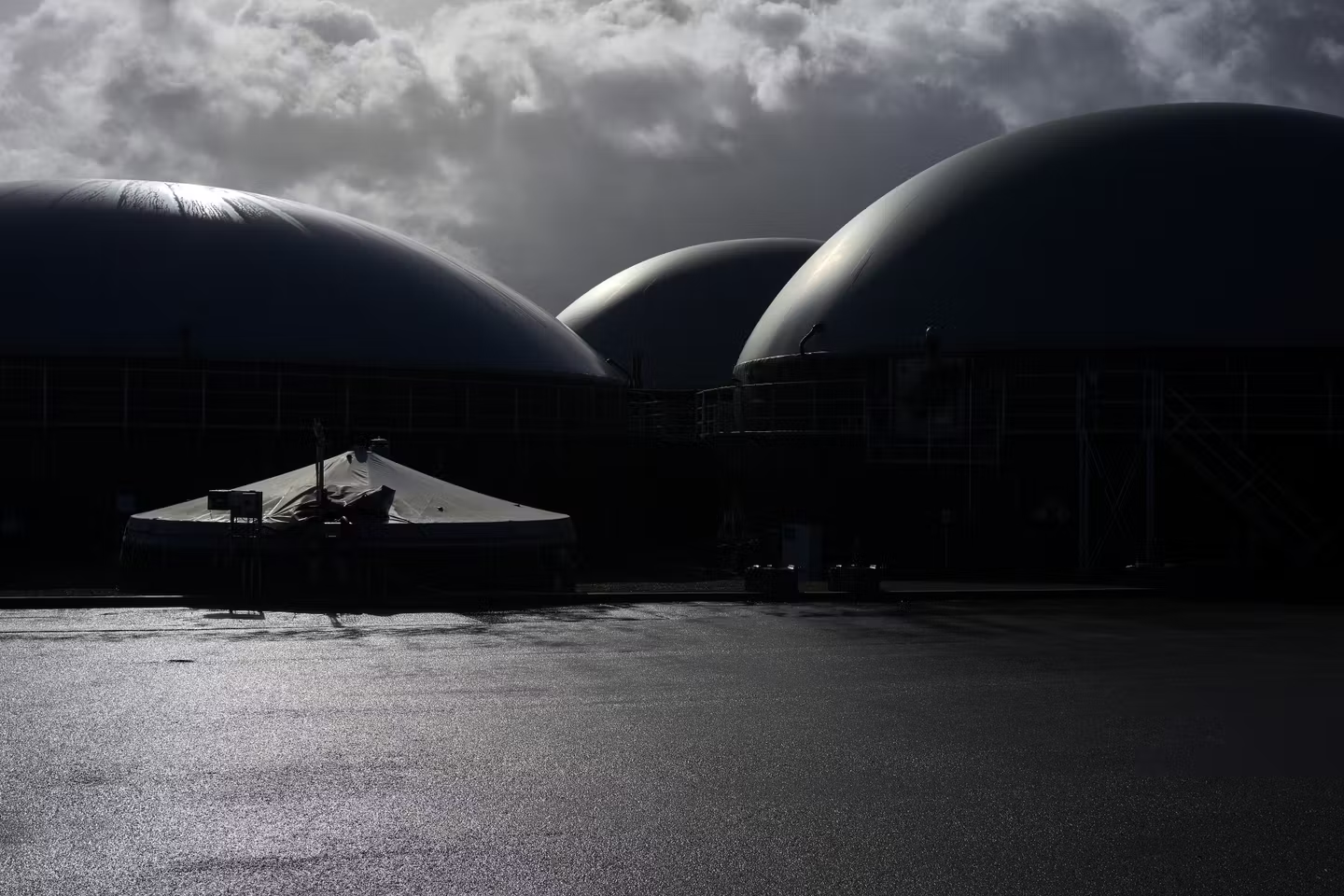
Every day, Thomas Leroy nourishes and cares for « passion » its approximately 200 dairy cows. But these black and white prim’Holsteins are not the only object of his attentions. Since 2023, it is also necessary to feed the methanizer built a stone’s throw from the barn, on this farm located just outside Alençon, in Orne.
Three pearl gray bulbs resembling a yurt, two of which are “digesters”, swallow around 60 tonnes of biomass daily, mainly livestock effluent (manure and slurry) and intermediate crops, planted to cover the land during the fallow period. There is nothing contradictory between his two professions, assures the farmer: “We make a ration for the cow and one for the methanizer. Moreover, on a biological level, the methanizer is like a big cow. Except that for one, the transit lasts twenty-four hours, while for the other it is a hundred days. »
Thanks to fermentation, he explains while giving a tour of the control room of his installation, entirely controlled by computer, organic matter is transformed into “biogas”. Purified, odorized with THT (tetrahydrothiophene) and put at the right pressure, it becomes biomethane, injected into the GRDF network to supply the equivalent of 2,000 homes in the town of Alençon. By producing renewable energy which emits 80% less carbon dioxide than fossil gas, Thomas Leroy is participating in the energy transition in its own way. But the thirty-year-old sees it above all as a way to perpetuate his farm despite and against the crises which regularly shake the agricultural world.
You have 84.69% of this article left to read. The rest is reserved for subscribers.

