

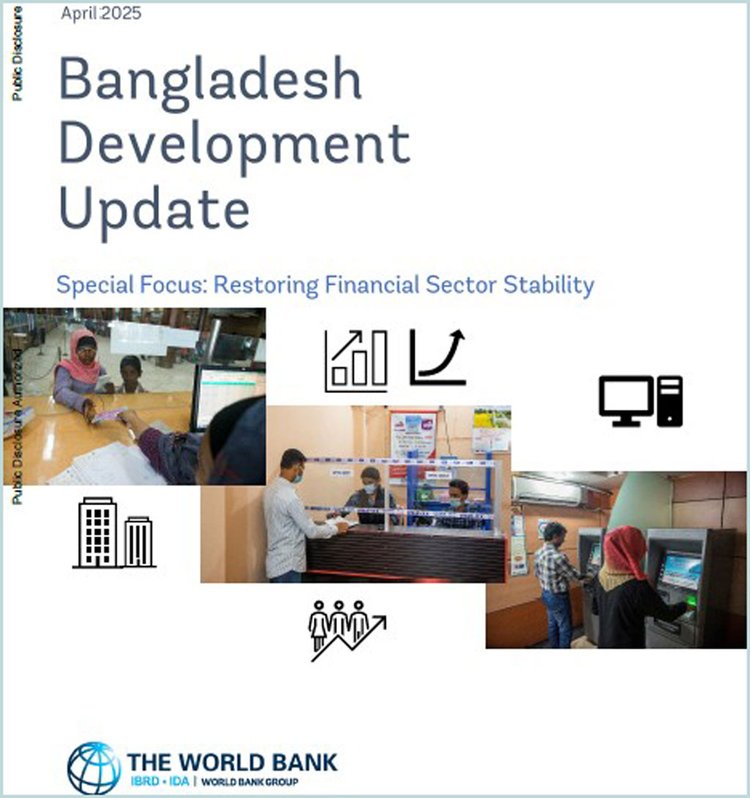
The actual GDP growth of Bangladesh in the current fiscal year may fall to 5.5 percent, which is significantly lower than in the last few years. At the same time, the World Bank has predicted that the average inflation rate exceeded by 5 percent will remain high at the end of the financial year. The forecast was presented in the report titled 'Bangladesh Development Update', the world's top lender on Wednesday.
The World Bank has highlighted stagnation in investing in economic growth, political unrest, disruption of global trade and high loan and production costs. However, the financial sector, the revenue collection and the renovation of the business environment are expected to increase the growth in the middle term.
As the World Bank, the lowest growth has increased after the epidemic in the fiscal year 2021-27. At this time, the GDP of Bangladesh has increased at a rate of 8.2 percent, which was 5.7 percent in the previous fiscal year. One of the main reasons for the decline in growth in the last financial year is the export sector downturn and the fall of public and private investment.
According to the report, political violence, curfew and internet shutdown were severely hampered by the first quarter of the current fiscal year, in July-October, 2021. In addition, the agricultural sector was severely damaged in the first quarter due to the severe floods.
Although economic speed is slow in this fiscal year, the World Bank has shown hope for some improvement in the long term. According to the report, if the desired reforms are implemented in the financial sector, revenue collection and business environment, the economic growth of Bangladesh in the mid -term may increase.
Consumers of Bangladesh are upset by the pressure of inflation. In the first eight months of this fiscal year (July-February), the average inflation has reached 5.7 percent. As a result, consumers have severely reduced the purchasing power. The World Bank has highlighted the increase in import costs as a result of the high prices of food and fuel and the increase in money.
Bangladesh Bank has chosen the 'strict monetary policy' path to control this situation. From July 2021 till now, the policy interest rate has been increased to 5 Basis points by 5 percent. The World Bank sees the central bank's move as a positive.
The World Bank's April update report highlights the weakness of the banking sector as a worrying. The banking sector has been mentioned.
Until December 2021, the defaulted loan rate has reached 22.2 percent. Bangladesh Bank has already broken the board of directors of weak banks and appointed a new board. The World Bank also highlighted a wide range of action plans for structural reforms in the banking sector.
The World Bank has warned that uncertainty, geopolitical tensions and internal political unrest in global trade could be a major risk for Bangladesh's economy. The World Bank has emphasized on creating investment -friendly environment, renovation of financial sector and increase revenue collection in order to speed up economic growth.

