

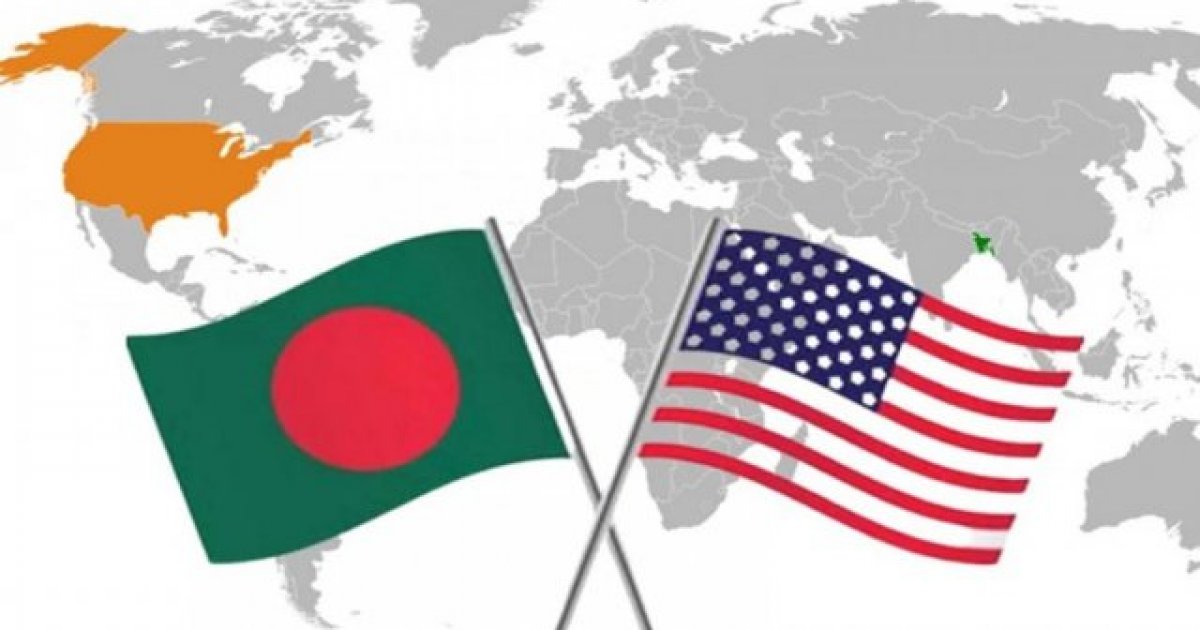
US President Donald Trump has announced the imposition of additional tariffs on export products from six countries including Bangladesh. He also sent a formal letter to Professor Muhammad Yunus, the chief adviser to the interim government, deciding to impose an additional 5 percent tariff on Bangladeshi products as a counter duty. If the new tariff announced by Trump is effective, Bangladeshi exporters will have to pay a total of 5 percent of the current tariff, including 5 percent of the current. Traders are worried about this.
The US White House announced a 7 -day tariff break is about to end. Because of this, the new tariff rate is going to be effective from August 7. However, according to the previous announcement, it was supposed to be effective on Wednesday (July 7). If the US administration can negotiate with the administration during this period, there is a possibility of reduction of tariffs, otherwise the declared rate will be effective. Earlier in March, the United States imposed at least 5 percent counter duty on export products of all countries.
According to the US International Trade Commission, the average tariff rate on Bangladeshi products was 5 percent in 2021. If the new tariff is implemented by 5 percent, the total tariff rate will be 5 percent. That is, to send products from Bangladesh to the United States, you will now have to pay a tariff of 5 rupees per 5 rupees.
According to analysts, the imposition of this tariff will be severely disrupted in Bangladesh's largest export market (the United States). Exporters say the situation has been created due to lack of rapid and fruitful discussions with the United States.
Chittagong Denim Expert Limited Managing Director Mostafiz Uddin told the Bangla Tribune, “US buyers will lose interest in buying Bangladeshi clothing with 5 percent tariff. It can lead to big collapse in export. Not only in the United States, it can also affect the European market. Because, then, many buyers in Europe will put pressure on the price to reduce prices. '
Due to the lack of progress in trade talks with the United States, dissatisfaction is increasing in the exporter. The UK and Vietnam have already signed an agreement with the United States. India has also reached the agreement, Washington said. But Bangladesh is only in the formal discussion. Currently, trade adviser Sheikh Bashiruddin is staying in Washington.
The context of the letter is said that after the announcement of the imposition of tariffs, Professor Muhammad Yunus wanted time to write a letter to Trump. The trade adviser also expressed his interest in the discussion to Jemison Greer. Then in May, the USTR sent a written proposal to Bangladesh. However, there was no effective solution.
What is the negotiations with the United States then fail?
Under the US counter -tariff or Resipural tariff policy, the announcement of imposing 5 percent tariff on export products of Bangladesh has raised concerns and disappointments across the country. The question arises – did Dhaka's diplomatic effort failed? Analyzing these three main reasons – the shortage of effective lobbying and strategic foresight – the end of the discussion indicates that the beginning of the discussion was as hopeful as the end.
The United States suspended it for three months after announcing the imposition of tariffs on April 2, which created an opportunity for bid for Bangladesh. Although the letter was initially held in the procession and virtual meetings, the discussion came from Dhaka in June-July. Multiple government sources say that after receiving some 'positive messages' from Washington, Bangladesh captures – there is time, the agreement is still possible. This super-confidence stops the discussion.
What is the benefit of Dhaka?
Although Bangladesh has announced duty -free facilities in six US products, the list has not been sent on time. However, the rival Vietnam quickly and clearly started the bargain with duty -free facilities. The delayed step in Dhaka raises questions about Bangladesh's interest and preparation to Washington.
The US proposed mutual tariff agreement had some conditions that contrary to the rules of the World Trade Organization. For example, the products on which the United States will be exempted, cannot be given to any other country. In addition, if the United States sanctions on a country, Bangladesh has to follow it as well.
Former member of the Bangladesh Trade and Tariff Commission. Mostafa Abid Khan said, “The hope of getting extra benefits from the United States by the LDC (underdeveloped country) is unrealistic. The United States has never shown special sympathy for LDCs in history.”
Lobbying
According to the BGMEA's proposal, the government's disobedience in the appointment of a close lobbyist of the Trump administration has also played a major role in the failure of the discussion. Bangladesh Chamber of Industries President Anwar-ul Alam Chowdhury Parvez said, “It is difficult to succeed in any trade discussion without lobbying in the United States.
In this reality, where Vietnam has already taken a tactical position, Bangladesh has fought almost single -handedly on the diplomatic front – it also lost time.
On June 25, Washington informed the Bangladesh Embassy in Bangladesh – if there was no agreement by July 1, the tariff could be effective for one year. By relying on this information, Bangladesh reduces the pace of discussion. However, after July 7, the United States sent a letter to Bangladesh announced a 5 percent tariff, which is basically an indication of their confidence in the discussion.
There is still the possibility
Commerce Secretary Mahbubur Rahman said, “The imposition of 5 percent tariff is disappointing in the signing discussion of the agreement. We are still discussing.”
BGMEA President Mahmud Hassan Babu said, “We met with the US ambassador. He said Bangladesh has to be more serious and clear. This message shows that the United States has been in a difficult position since the beginning, but Bangladesh was a victim of confused tactics.
The export sector, especially the garment industry, is going to be at major risk as the United States announces the imposition of 5 percent counter duty on Bangladeshi products. BGMEA President Mahmud Hassan Khan said that if the tariff is effective from August 1, many factories will be in crisis, especially those whose large part of the US market dependent.
“From the beginning, the garment sector urged the government to take initiative with the United States,” he said. However, the government has not only assured that the businessmen have not been informed about the real image. ' 'We asked, which interests are being protected? No reply was received, 'he said.
Mahmud Hassan also said that efforts were underway to meet the interim government chief adviser Professor Muhammad Yunus on the matter. “There are still three weeks before the tariff effect,” he said. We want a lobbyist to be appointed quickly and the private entrepreneurs should be added to the bargain. '
He warned that foreign buyers could get negative messages about Bangladesh's disgrace if they do not take action right now. Traders want effective plans and transparency from the government to prevent export catastrophe.
Garment
The most affected by this tariff will be the garment, leather and home textile sectors. The United States is one of the major export markets in Bangladesh, where about $ 1 billion is exported a year. If 5 percent tariff is set up, many buyers can lean on alternative countries, such as Vietnam, Cambodia or Mexico.
Mohiuddin Rubel, former director of the garment owners' organization BGMEA, feared that the export sector imposed on Bangladeshi products in the United States could have had a serious impact on the country's export sector.
“The United States is the main export market of Bangladesh,” he said. Increasing the tariff in this market means employment in various sectors, including the garment sector, we are under threat. '
Emphasizing on taking immediate steps to overcome this situation, he added, “Dialogue with US importers should be in dialogue. They have to put pressure on positive changes in the policy through them. Besides, the high -level trade discussion has to start again and the importance of our product should be highlighted. '
He believes that if Bangladesh does not take timely diplomatic and commercial measures, its adverse effects will deepen the economy in the long run.
Alarm
The United States has imposed a 5 percent tariff on Bangladesh's export product in the US market. Asif Ibrahim, former president of the Dhaka Chamber of Commerce and Industry (DCCI), feared that the decision could have a serious negative impact on the economy of Bangladesh.
“The garment sector, especially the garment sector, which is the source of 5 percent of the country's export income and the basis of economic growth, can face major challenges.”
Currently the United States is one of the largest export destinations in Bangladesh. About 20 percent of the country's total garment export products are sent there. Analysts say Bangladeshi products in the face of competition will become more unusable due to the lack of free trade facilities.
As a result, many US buyers-dependent factories will be at risk in addition to decreasing export income. These factories can be difficult to survive, which will have a direct impact on the workers. A significant number of female workers are associated with this sector, in many cases the only earner in the family.
Besides, the garment sector's auxiliary industries and local traders can also suffer the situation in this situation.
Asif Ibrahim believes that the government should sit in high level talks with the United States to deal with the situation, so that the imposition of tariffs can create special facilities or step by step.
He added, 'This crisis has explained the importance of our industry diversification deeply. Leather and shoes, pharmaceuticals, IT services, agricultural processing and investment in the Blue Economy sector are now demanded.
He also advised to emphasize bilateral and regional trade agreements. According to him, single sector dependence is risky. So it is important to adopt well -planned strategies for the sustainable economy.
Bangladesh's trade with the United States
Bangladesh's bilateral product trade with the United States stands at approximately $ 9.5 billion in 2021. The US Commerce Representative (USTR) said this.
According to the USTR initial, the United States has exported Bangladesh to $ 2.7 billion in that year, which is 5.7 percent or about $ 1 million less than the previous year. Bangladesh, on the other hand, exports to the United States $ 9.5 billion, which is 5.7 percent or $ 5.7 million more than 2021.
The garment products made in export of Bangladesh are the main – which is more than 5 percent of the country's total export. And the United States is the largest export destination in Bangladesh as a single country.
In addition, according to data from the Export Development Bureau (EPB) and the National Board of Revenue (NBR), Bangladesh exported about $ 1 million in the United States in the fiscal year, which is about 5 percent of the country's total export earnings. More than 5 percent of them are made of garments. In addition, exportable products include home textiles, leather shoes, hats, wolves and other leather products.
However, recently US President Donald Trump's administration has imposed new high tariffs on six countries. In the case of Bangladesh, about 5 percent of the tariffs on exports to the United States have been set up, which is seen as a major push for the garment industry. Although some other countries have been exempted from this tariff till August 5, Bangladesh is not on that list.
According to analysts, these additional tariffs can have a negative impact on both export capabilities and market competitions. Traders fear that leather products and other sectors will be threatened by this tariff.

