

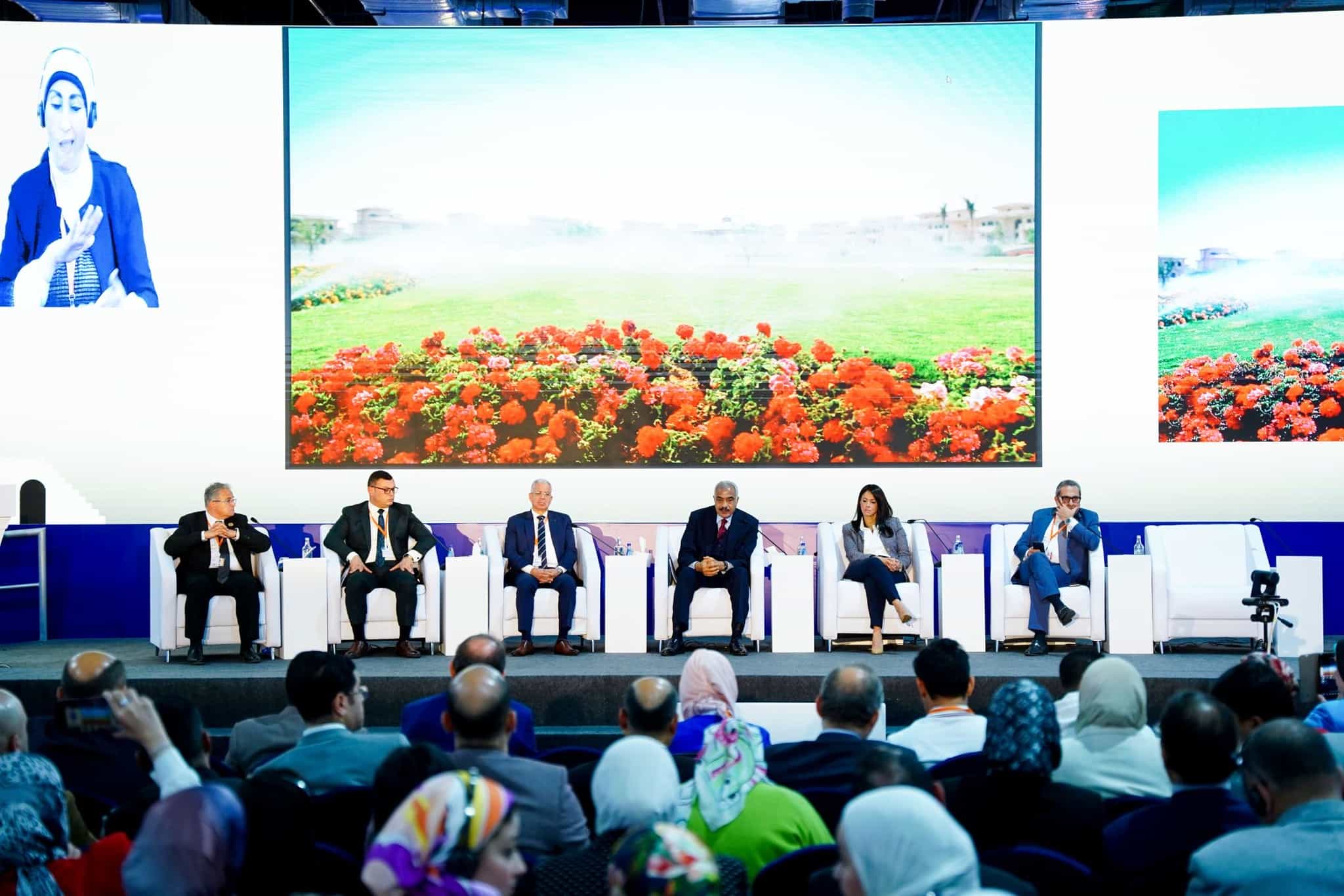

Arab Finance: Dr. Rania Al-Mashat, Minister of Planning, Economic Development and International Cooperation, participated in a discussion session entitled: Financing sustainable urban development for all“, during her participation on the third day of the World Urban Forum in its twelfth session, where she stressed the importance of financing for development, pointing to the multiple sources of financing, including investment spending from the plan, which includes in the plan for the fiscal year 24/2025 allocating investments of about 37 % investments for infrastructure, 42% for human development.
20% for localities, which confirms the government’s interest in supporting urbanization through investment spending in roads, stations, sustainable transportation, and everything that provides the opportunity for rapid communication between cities, which is consistent with achieving the 2030 Sustainable Development Goals.
The Minister of Planning, Economic Development and International Cooperation indicated: To the Ministry's role in achieving integration between local resources and external financing in order to advance development efforts, pointing out that the Ministry is also working to attract external financing and low-cost soft financing, including cooperation with the World Bank in the Upper Egypt Development Program, the Comprehensive Social Housing Program, and the Dry Ports Project. On the 6th of October and the 10th of Ramadan, all of which fall under private sector financing through soft financing, which gives a different dimension to the cities in Egypt to work to attract local and foreign investments to those cities.
Dr. Rania Al-Mashat drew attention to the importance of water projects in these cities, noting the financing of the water station in Al-Jabal Al-Asfar with funding from the African Development Bank, and the Bahr Al-Baqar water station, which contributes greatly to agricultural development.
Al-Mashat stressed that financing from various international institutions is one of the main ways to bridge the gap in investment spending, pointing to blended financing as one of the financing methods, through which the private sector creates a balance between financing from commercial banks and international financing institutions, which is embodied in energy projects. New and renewable, pointing to the Ras Al-Hekma project and debt swaps as one of the innovative financing tools, as these projects depend on diversifying funding sources to pay for the urban part, as these initiatives contribute to alleviating financial pressures on developing countries and emerging economies, and supporting them in implementing development plans.
Related news

