

image source, facebook.com/IndiaInBangladesh
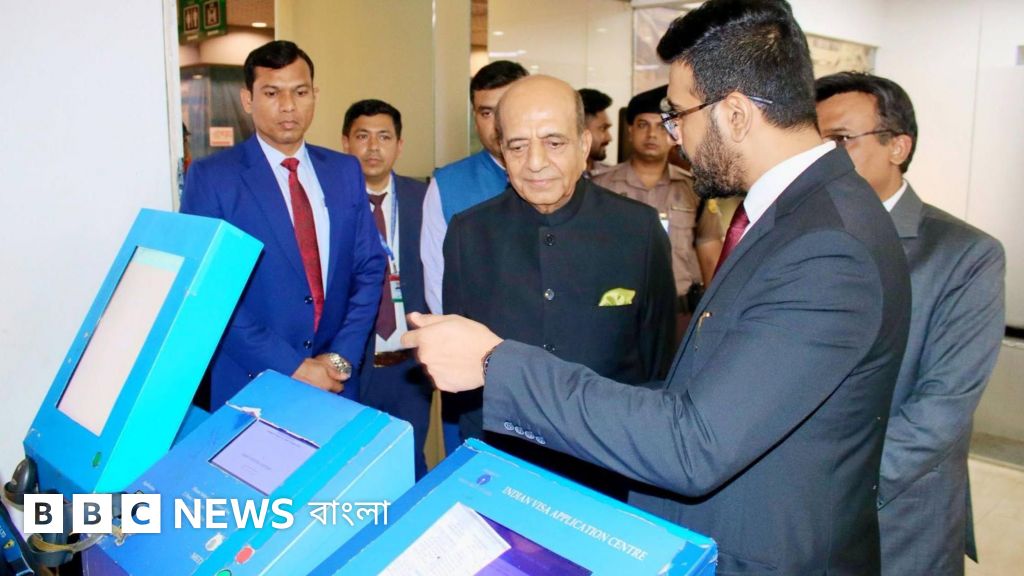
The Indian High Commission in Dhaka, Bangladesh has resumed normal visa operations from Sunday, as a result of which the tourist visa applications of Bangladeshis have started to be accepted after almost two years.
Even though the country has been issuing medical visas in a limited form, normal visa procedures, especially tourist visa applications, have been stopped.
As a result, apart from travel, Bangladeshis also faced problems in applying for visas of some third countries.
Even before the departure of the interim government of Professor Muhammad Yunus in Bangladesh, the Government of India had expressed interest in working with the elected government of Bangladesh.
But recently, Bangladesh expressed its displeasure over the harassment of an adviser to the Prime Minister of Bangladesh at the Delhi airport.
In such a context, when Bangladesh Prime Minister Tariq Rahman was on a visit to China, the Indian High Commissioner to Bangladesh Dinesh Trivedi announced the launch of tourist visa on June 25, which created curiosity among many.
Some analysts believe that India’s new high commissioner’s announcement of normalization of the visa process on the same day as India’s inauguration shows the country’s interest in developing ties with Bangladesh and will help create an environment for talks to remove obstacles to advancing a relationship.
Others say that though India has signaled the establishment of normal diplomatic relations with Bangladesh through the introduction of visas, issues such as push-in at the border, distribution of water in the Teesta and Ganga rivers may become major challenges in this regard.

image source, facebook.com/IndiaInBangladesh
What message is Visa on?
Bangladesh-India relations apparently deteriorated during the interim government that came to power in Bangladesh in August 2024 after the fall of the Sheikh Hasina-led Awami League government.
In addition to the suspension of the visa process on both sides, the uneasiness in diplomatic relations increased due to the counter-statements of some of the politicians of both countries.
Even then, in both the countries, there were cases of counter-summoning of the High Commissioners due to the protests in front of the High Commission.
After the BNP government came to power in February of this year, both countries began to show interest in moving towards the development or normalization of relations. The past four months have also seen various initiatives including the visit of the foreign ministers of the two countries and telephone conversations between the prime ministers.
However, recently the Prime Minister’s Advisor Zaheed Ur Rahman’s return to the country after being harassed at the Delhi airport brought the relationship between the two countries into discussion again.
Meanwhile, Bangladesh Prime Minister Tariq Rahman chose Malaysia and China for his first foreign visit after coming to power.
Mr. During Rahman’s visit to China, Dinesh Trivedi, the Indian High Commissioner appointed to Bangladesh, announced the start of the tourist visa program in Bangladesh from June 28 after presenting the identity card to the President on June 25.

image source, Getty Images
As a result, the discussion about whether this announcement of the start of the visa process has a different significance or not also came up in the political and diplomatic arena.
Mohammad Sufiur Rahman, a former ambassador and senior research fellow at North South University, however, says that India has normalized the process of taking normal visa applications as it has abnormally stopped it.
“The visa process is a very normal process between the two countries. Therefore, it is not a groundbreaking thing to relaunch it. It was their thing to do and they did it, which is positive,” he told BBC Bangla.
Mr. Rahman said that he thinks that although India’s visa program is a positive step, people’s views should be taken into consideration in normalizing the relations between the two countries.
International relations analyst and Dhaka University professor Dr. Niloy Ranjan Biswas says that the start of Indian visa program will advance the process of building trust between the people of the two countries.
“People-to-people movement is very important for the development of relations. It was expected since the elected government came to Bangladesh. It will play an important role in creating a space for regular dialogue between the two countries,” he told BBC Bangla.

image source, Getty Images
Challenges ahead
Analysts say that despite the apparent end of the stalemate in the normalization of diplomatic relations between the two countries as the visa process is not normal, the position of the Indian government on some important issues for Bangladesh may become important.
In particular, the Ganga water sharing agreement is expiring in December this year. India and Bangladesh signed the thirty-year agreement in 1996, more than two decades after the Farakka Dam was commissioned.
It is known that the technical teams of the two countries have started the initial preparation work in this regard, although there is no official announcement about whether the period of the Ganga water distribution agreement will be renewed or there will be a new agreement between the two countries.
Besides, Bangladesh’s interest in an agreement to ensure fair distribution of Teesta water is longstanding. In this, the Bangladesh government has announced to take up the Padma Barrage construction project.
In addition, push in issue has been discussed anew for the past few days. After the new government came to power, when the governments of both the countries are showing interest in developing bilateral relations, then suddenly there is so much push-in on the border of India’s West Bengal region with Bangladesh, which has also raised questions among many.
Mohammad Sufiur Rahman says that the basis of advancing the relationship between the two countries should be the common people and the basis of this relationship should be built around the people.
“The relationship between two countries is sustainable when the actions are people-centric. Also, the relationship is not sustainable or long-lasting. When the relationship is people-centric, minor issues do not get a chance to stand in the way,” he said.
Professor Dr. Niloy Ranjan Biswas says, push in or distribution of river water – everything has to be addressed through discussion, so that it is possible to improve the relationship between the two countries by increasing public trust.
“There are many challenges ahead in the relationship between the two countries. There is the issue of the Ganga water agreement. There is the push-in issue. Bangladesh expects a fair approach. There are various comments about Bangladesh in West Bengal. I think it is not good to make any comments that create discomfort between the two countries as a state or central government of India,” he told BBC Bangla.

