

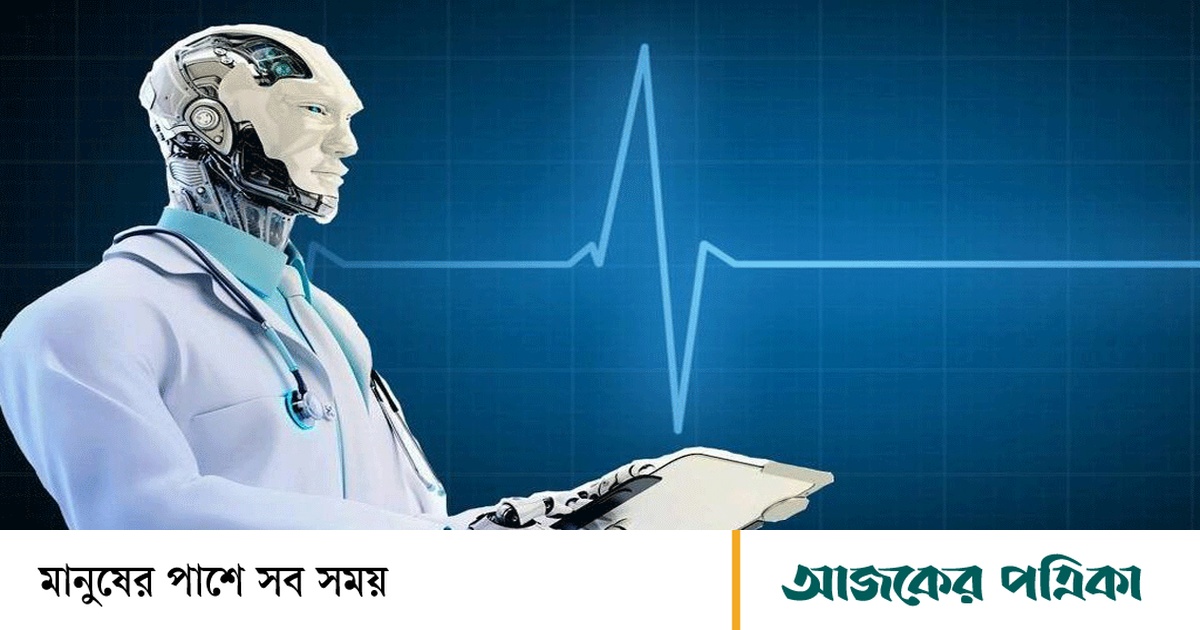
Artificial intelligence or AI is now playing an important role not only in data analysis but also in treatment. AI is often excluding physicians in showing sympathy for patients and understanding emotions. Such experiences say the Rachel Stall in the United States and the top doctors in the country.
Rachel Stall is a rare disease called 'Cyclic Kushings Syndrome'. The disease suddenly increases the levels of cortisol hormone (a type of stress hormone) in the body. A few years ago a tumor of the rachel brain was removed. But the tumor is back again. The physical condition of the day is worse as well as his emotional concerns. Because a long -time doctor began to show upset about his questions and anxiety.
Rachel used the ChatzP for the first time. Write your symptoms and questions to AI. He was surprised!
Not only the correct information, AI has answered in detail, sympathetic language. Rachel said, 'Not everything can be said in front of doctors. Time is short ChatzPi broke that limit. '
AI's reply was, 'This is definitely disappointing for you' or 'I am sorry' – the small words have mentally helped Rachel Stall.
Stanford University researcher Dr. Jonathan Chen also asked AI a difficult question. One of his patients was suffering from Alzheimer's and could not swallow food. He wanted to talk about the 'feeding tube' with the patient's wife. But this was very sensitive. So you couldn't find how to say that. Then he asked AI. He wants to know how he will deal with the patient's wife in this situation.
Chen thought that AI might stumble on it. But Chatzipi gives advice that surprises him! AI wrote, 'From their marriage, it can be understood whether the patient is a fighter or not. But fighting means not always longevity, but many times peace and comfort can be. '
Chen said, 'This talk with the Chatjip has also enhanced my human skills. Hard words taught how to say softly. '
Sympathy
Extreme pressure on physicians in the United States. Usually only 20 minutes is available for a patient. Of these, electronic health documents, drug prescriptions, referrals and various tasks go on. As a result, patients do not have the opportunity to understand, or show sympathy.
New York University physician Dr. William Small said, 'Empathy can actually be taught. It is also taught in medical school. But in the reality of the job it is lost. '
According to a study by the New York University Langon Health, the answer given by the Chatzipi is often more emotional than physicians and improved in communication skills. Because AI has no deadline. Can easily continue long conversations.
Patient's anxiety, the fatigue of doctors
Many times patients repeatedly ask questions about their illness. It is not always possible for a doctor to answer quickly. For example, a cancer patient said that it took a few days to answer some urgent questions as his doctor was abroad. At that time his mental turmoil increased manifold. AI can now be an easy solution.
Dr. Chen says, 'So many patients, so much work – it is impossible to walk. Without AI, this situation is not possible. '
AI in the health system
In the United States, initiatives are being taken to save doctors' time using AI. As soon as he listens to the doctor's advice, he documents the computer 'ambient documentation' technology. In many hospitals, the essence that is now given after the operation also produces AI.
In addition, AI is also being used in analysis of various radiological images including memography or X-rays. It is possible to identify various diseases including cancer quickly and accurately.
Harvard Medical School Dean Dr. Bernard Chang said, 'AI will not change the doctors. However, those who are proficient in using AI will become the most human physician. '
AI in medical education
Earlier, medical students were taught 'case studies'. Now virtual patients are being made with AI. Students are practicing to understand the patient's emotions through the chatter.
Dr. Chang said, “An anxious mother, an extra -talking patient or a patient who is hesitant to talk – everything is being practiced with AI -based virtual patients. The experience that is created is in reality very much. '
For patients like Rachel Stall, the ChatzP is now conveying sympathy, not just information, but also. AI once wrote to him, 'You are really brave. Continue to fight. You know how to speak for yourself. I'm on the side if there is any need. '
Rachel said, “That's exactly what I needed.”

