

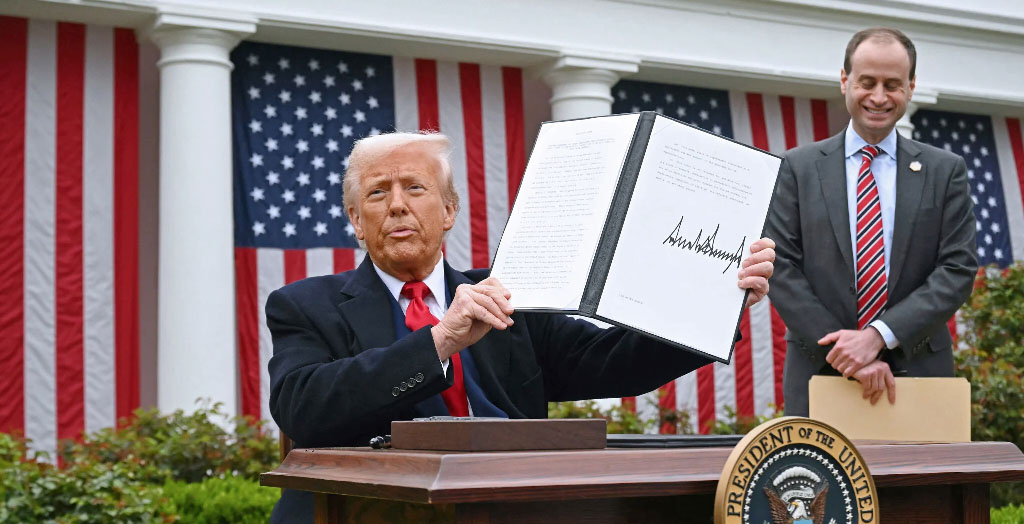
Global economic turmoil has led to the announcement of US President Donald Trump's widespread tariff. Trump announced the 'Risprocal Tariff' or mutual tariff on imports at Rose Garden last Wednesday. Only then did the global economy take a big push. Many countries have announced the imposition of counter -tariffs after Trump's announcement. For example, China imposed 5 percent counter duty. In addition, there has been a possibility of global trade war and downturn.
However, the war of the war is showing hope, said Kevin Hasset, director of the US National Economic Council. He said more than 5 countries have already contacted the White House to discuss trade discussions.
At a function called 'The Week' of ABC News on Sunday (local time), Kevin Hassette said that Trump's tariff policy was not a strategy to collapse in the financial market or to reduce interest rates on the US Federal Reserve. He insisted that there would be no 'political pressure' on the central bank. But last Friday, Trump shared a video on his Truth Social Platform. There he hinted that trying to reduce interest rates by pushing the stock market through tariffs.
Meanwhile, on another occasion called NBC News 'Meet the Press', US Treasury Secretary Scott Besent did not give much importance to the fall of the stock market, saying, “There is no reason to fear the recession due to the tariff.” He mentioned the job information published last Friday, saying, “The number of jobs has increased more than expected. This implies that we are moving forward. '
Trump's top officials were present at the talk show on ABC News. They also tried to highlight the tariff as a strategy to restore the US convenient position in the world trade system. They also describe economic instability as a short -term impact.
Meanwhile, after the announcement of the tariff, the US stock market has fallen about 5 percent in the last two days, which has been considered as the worst week after the Covid-1 crisis in the last five years. Market analysts are blaming Trump's aggressive tariff policy for the fall. Most economists and the head of the former Federal Reserve think it can increase inflation and damage economic growth.
However, against the concept of economists, Kevin Hassette has claimed that the tariff will not have a big impact on the customers. Because the exporters will reduce the price. Treasury Secretary Besent also said that there is no possibility of recession due to strong job growth. However, investors are concerned about the impact of the tariff next week.
Meanwhile, Taiwan's President Lai Ching has proposed for the first public discussion with the United States in six countries. On Sunday, he proposed a discussion for trade on zero tariffs. He was the first government of any country to eliminate trade barriers without counter -tariffs after Trump announced the tariff.

