

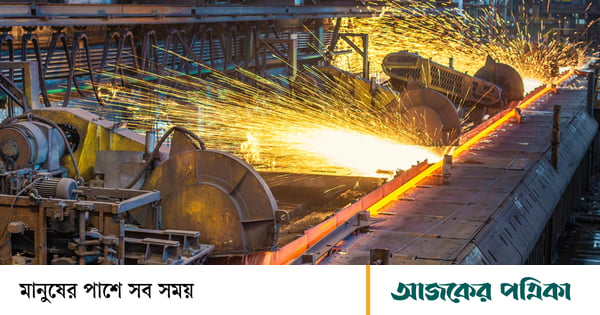
The country's domestic steel sales were supposed to increase at a time when India's construction sector is booming, with massive growth in jhan takte skyscrapers and multi-lane highways. But India's steel mills now have a huge stockpile of products waiting to be sold. An influx of cheap Chinese steel is forcing India's smaller steel mills to cut production and consider layoffs. The South Asian country has now been added to the list of those considering measures to curb imports.
India was once the world's second largest steel producer, but the country imported a huge amount of steel in the last financial year. This has raised concerns in New Delhi about future infrastructure projects and the safety of steel-dependent industries.
Small and medium-sized steel mills account for 41 percent of India's total steel production. More than 15 lakh people work in them. But capacity utilization at these mills has fallen by about a third in the past six months, officials at more than a dozen mills said.
In Punjab's Mandi Govindgarh, known as the 'Steel City'—the mills there are unable to compete with Chinese imports. Chinese steel often sells for 10 percent less than Indian steel.
Adarsh Garg, chairman and managing director of Jogindra Group, a steel producer in Punjab, said, 'If we cannot compete in the market, it will not be possible to operate our factories at full capacity. If this situation continues, we will be forced to lay off 10 to 15 percent of our staff.' The Jogindra Group's sales have fallen by 30 to 35 percent in the last six months, even with product discounts. As a result, the production has to be reduced by one-third, said Garg.
Builders Association of India director general Raju John said, 'Construction and engineering companies are turning to Chinese steel for affordable prices. Chinese steel sells for $25 to $50 less per metric ton, sometimes as low as $70.'
Finished steel imports from China rose to record levels this year, up 30 percent. These include hot-rolled steel used in the construction sector and galvanized steel used in the automobile industry. These imports have hit domestic sales and Indian exports have also suffered due to lower Chinese prices.
China alone produces more steel than the world's steel production and the country has been widely criticized by various countries for supplying steel at a low price to the world market. This production is likely to continue in 2025 as well. A crisis in China's housing sector has boosted exports as demand in the domestic construction industry has weakened, unsettling foreign steel markets, even for countries with strong domestic industries.
The Indian Steel Association, in a report presented to the government, said that low prices, increasing import and shrinking export opportunities are currently major concerns for the survival of the Indian steel industry. Steel companies are struggling to initiate expansion plans as profit margins fell from 68 percent to 91 percent in the current fiscal, the association said. Prices also fell, with prices for hot-rolled coil used in construction falling to a three-year low earlier this year.
Smaller steel companies have been hit the hardest. But big Indian firms such as JSW Ispat and Tata Ispat are also concerned. They supported the association's efforts to impose restrictions on Chinese imports.
The process of imposing an import ban—which can take four to six months—depends on the submission of necessary documents by the industry and subsequent investigation by the government. The probe will determine whether Chinese imports are hurting Indian steel mills. India is keen to avoid massive layoffs in this industry of 2.5 million workers. Because, the country is already facing a challenge in the employment of the growing population of the country.
Steel is critical to India's rapid development—from new housing projects to massive infrastructure projects needed to sustain the world's fastest-growing major economy. A top government official involved in the matter said that steel companies need to ensure financial stability to meet future demand.
India's steel mills are under pressure due to imports from China. Sagar Yadav, senior general manager of Goodluck India Steel Mills in Uttar Pradesh, said, 'We did not get the export orders we were waiting for between July and September because we lost the trade competition with China.'
Neo Mega Steel in the western city of Pune has lost auto industry orders to Chinese rivals, managing director Vedant Goyal said. And Bhagyalakshmi Rolling Mill in western Maharashtra has been hit by a sharp decline in exports. The director of the mill, Nitin Kabra, said he plans to reduce production early next year. “Both our profits and morale have suffered due to Chinese imports,” he said. Prices have fallen so much that everyone is suffering.'

