

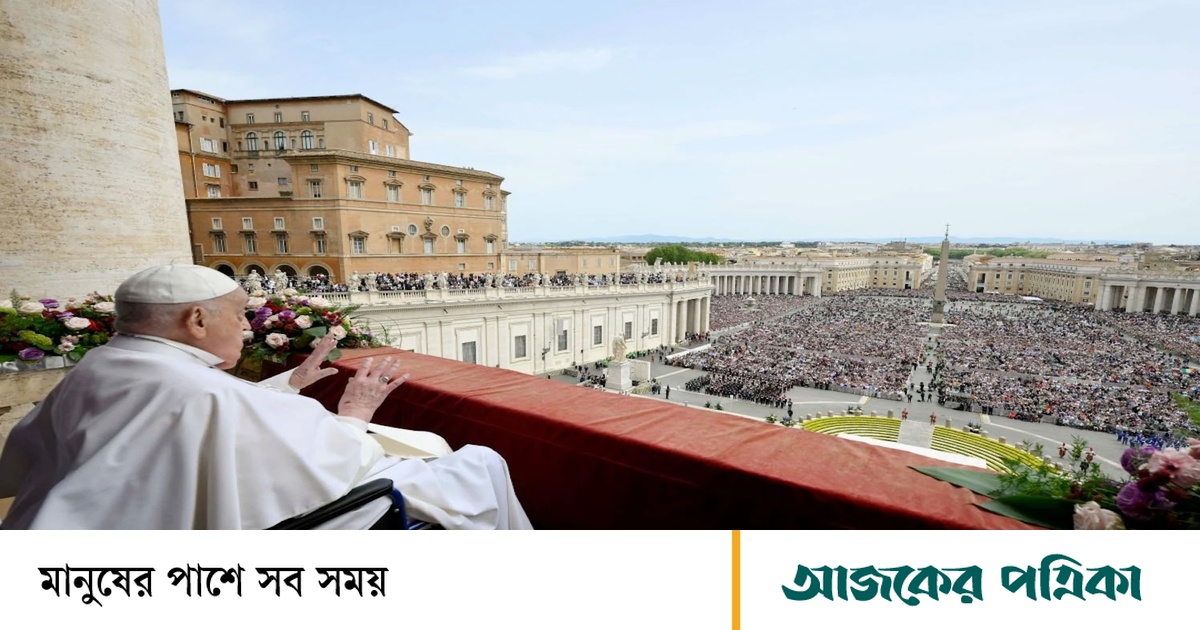
Pope Francis, the top priest of Christians around the world. An estimated 100,000 people gathered on the streets of Rome and Vatican City on Saturday to take part in his funeral. The chief adviser to the interim government of Bangladesh. World leaders, including Muhammad Yunus and US President Donald Trump, also joined the Vatican to say goodbye to Pope Francis.
After the funeral, Pope Francis was taken to Basilika in the fourth -century Roman church Santa Maria Magio, along with a depressed mourning on the road in Rome. Within a hundred years, he was the first pope, who broke the tradition and buried outside the four walls of the Vatican. Usually inside the Vatican City of the Popes, St. Peters are buried below Basilika. But Francis himself wanted him to be buried in the grave of “Basilika de Santa Maria Maziur”, known as St Mary Major, a short distance away from the city.
Francis Pope was elected in the 21st. Until then, he was the Arch Bishop in the Buenos Aires region of his hometown of Argentina. In addition to Argentina, in addition to Argentina to mourn for him, Catholic religions gathered in churches, cathedrals and open places in different parts of the world.
Cardinal Giovanni Batista Ray has rightly said that Francis wanted to build a bridge, not the walls among the people. He was the one who touched everyone's heart. And so there was not such a man gathered to say the last goodbye to any other pope. The rich, the poor, the influential and the marginalized-everyone gathered. Now who will be the president of the next Pope or Vatican City, everyone will be watching.
This Vatican City is another exceptional state within Rome, the capital of Italy. It is the highest symbol of Catholicism, which at the same time plays the churches and states of Christians around the world. The head of this state is the Pope, he is also the head of the church. As Vatican City is one of the smallest states in the world, it is the last of the ancient religious monarchy. It is a unique example of the balance of religion and state power even though monarchy and priest are united. Today's article is to know and inform these issues on how the political structure of Vatican City works and how the Pope is elected.
Ezer
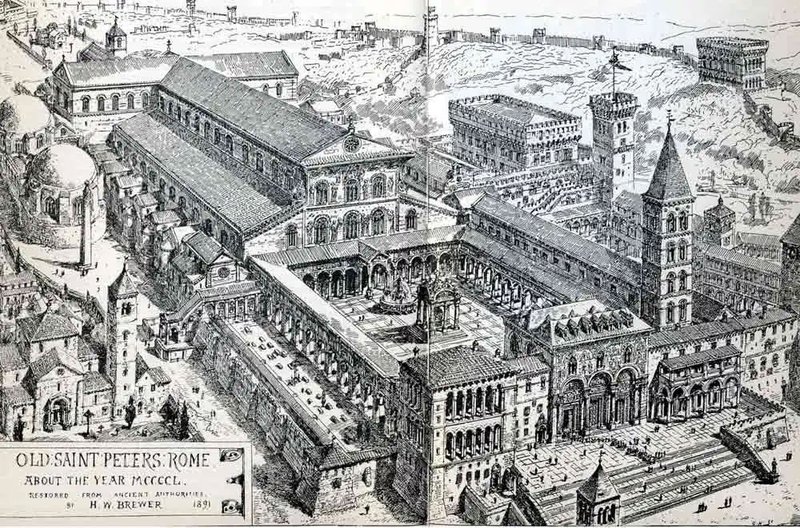
The Vatican City did not have the Pope's rule forever. At one time the name of this small state was not Vatican. Earlier, the region was called the Azer Vaticanus. The Rome Emperor Niru's circus, known as the Vatican Obelisk, was attracted here. That is the only remains in the modern city state of the Vatican.
In the area where St. Peters Square is now thought, St. Peters, the disciple of Jesus Christ, is believed to be crushed. When the Emperor Constantin was transformed into Christianity, St. Peters' Rogiza was formed on the alleged tomb of St. Peters in 125 AD. This church is the center of the Popantas, the Pope became the head of the Popian state. He is also a secular and religious ruler.
This Popian state was a large part of the Italian Peninsula from 7 to 8 AD. For almost a thousand years, a palace on the opposite side of Rome was the Pope's residence and workplace. For some time in the fourteenth century, governance was governed by Avinon, France. In 7 AD, the newly formed Italian Empire occupied the Popian state and the new king of Italy diminished the Pope's rule.
Thus, the Popantism was stuck between the four walls of the Vatican for almost three years. However, after 120 AD, the situation changed. Through the Latteran agreement, Italy's Prime Minister Benito Mussolini declared the Vatican City an independent state. Then the Popantism evolved, but the city's state is under the Holi C or the Pope. The Vatican's initiative as an absolute monarchy still continues.
The administration of the Vatican City
The Executive Department of the Vatican, the Law Department and the Judicial Department are under the control of Rome Bishop, known as Pope. Although this city state is a series of repetitions, Holi C is not equal to it. Holi C is the title of government, cardinal, bishop and pope. In addition to the state, Holi C can survive. This is the only entity to survive for more than a millennium of the Catholic Church.
The Vatican city-state is an area where the Holi C can rule the people. And people mean all Catholic religions. Pope's innocent power is in the Vatican administration and Holi C-Voye. However, like all the monarchy, the Pope administration does not nose all over the administration. He also handed over the power to other members of the government to serve as a representative.
The practice of executive power, legislature and judicial power is in the hands of some organizations in the Vatican government. However, theoretically, these institutions have to be held accountable to the main priest or Pope. However, several other members can work somewhat independently with the heads of each branch of the state that power as a representative of the Pope.
Pope and Vatican's executive branch
The Pope played the role of the Vatican's innocent king and religious leader. Several executive powers were also presented to the Governor's President or the head of the Vatican government. The Pope possesses the sovereign power of the Vatican. But he applied most of the powers through the Catholic churches or Holi Sir's governing body, known as Roman Curia.
The name of the Governor of Vatican City was renamed as the president of the Vatican Governor in 122. The top leader of the executive branch as a representative of the Pope is in charge of the management of the Vatican city-state. He is also the head of the Pontifical or Pastor Commission. This commission is the main law enforcement agency of the Vatican.
The Pope elected the Governor's president for a five -year term. Sister Rafaella Petrini has been in the post since October 2021. She is the first woman in this position in the history of Vatican. Whether or not the Vatican or the Holi Sir is directly related to the Vatican or the president, both the president and the president have the power to make decisions on all matters of the state. However, the decision was made on the basis of discussion with the executives on both sides.
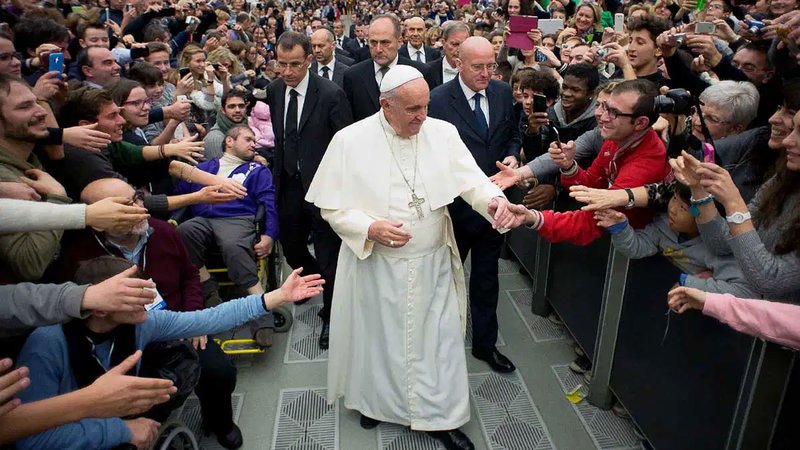
Although the Pope is the head of the Vatican city state, he is not a king of inheritance, elected king. Until death or retirement, the post of Pope continues. The Electro Body or the Selective Pope, the College of Cardinals or Popal Conclave, selects new popes. This electoral body is made up of the clergy of the Catholic Church worldwide. Until August 1, 2021, there were 25 cardinal clergy in the world, of which 122 were cardinal electricians. They can attend the Konklave or Pope election meeting.
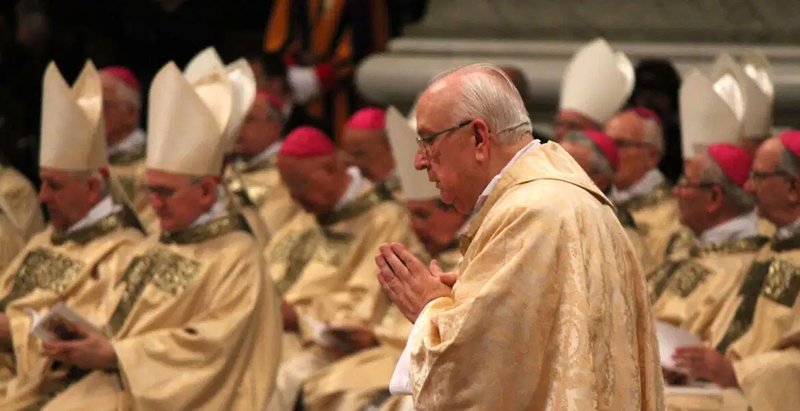
Cardinals sit in the Sistine Chape of the Vatican to select the Pope. They were detained in the Sistine Chapel until two-thirds of the vote was found in the majority. It is understood that the selection was over by the Chimney smoke of St. Peters Square from the outside. The ballot paper is burned with the chimney smoke. When the new pope is selected, the white smoke, the black smoke comes out of the chimney until then. The ballot paper burning is done twice in the morning and at night.
Vatican
The united Pontifical Commission enacts the law for the Vatican city state. The Commission, comprising seven cardinal, proposed new laws and policies for Vatican City and Holy Sir. Each of the commission of the commission is five years. The head of the Commission, the Pontifical Commission, also served as the executive head of the state as well as the head of the legislature.
If the new law is passed, it has to be approved by the Secretariat of State or the Foreign Department. The Secretariat of State is the main part of Roman Curia. It does all political and diplomatic acts for Holy Sir.
The head of this secretariat is a cardinal, the Secretary of State or the Foreign Minister. He operates three specific branches of dicustry or curiosity. These include the General Department, the Department of Foreign Relations and the Diplomatic Workers' Department. The current Secretary of State Cardinal Pieter Parolin has been in charge for 25 years. All the law secretariat of state applicable to the Vatican city state has to be approved. Because the law of the Catholic church is also the law of this state.
There are basic laws for the administration of the Vatican City. In the 21st, Pope II John Paul issued the civil law, in addition to the Vatican's new law, dismissing all the laws in conflict. Based on the Italian basic law of 9, the Vatican City's Penal Code and Civil Act were effective. Pope Francis came to amend the law to compact with the UN agreement and to incorpor the modern punishment of crimes such as money laundering and sexual intercourse.
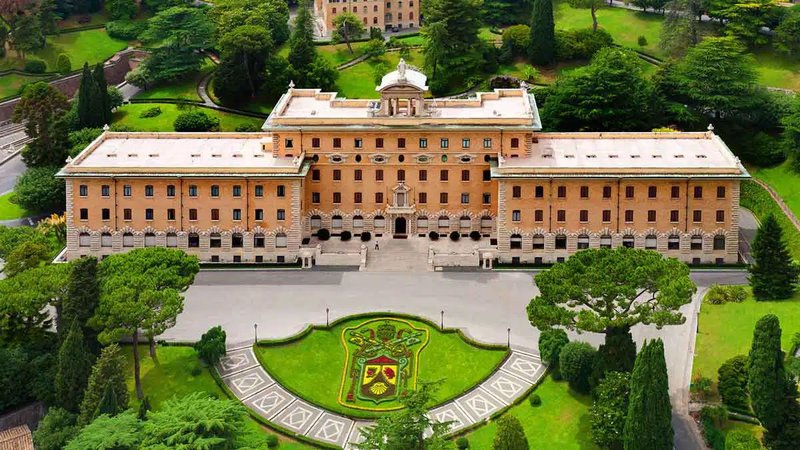
Earlier, the Roman Curia and Catholic Church were ruled by the Divine Constitution, known as Paster Bonus. In order to help the Pope governing the worldwide, rules and laws are enacted in accordance with this constitution. Pope Francis took Predict Evanjelium (Pritic the Gospel) as the Vatican's Divine Constitution in 2022. Also after 20, the Vatican did not automatically adopt the Italian government law. Rather, whenever a new law is introduced in Italy, the Vatican criticizes it and accepts it only when consistent with the values of the illusion. Otherwise, the Vatican has the right to reject the implementation of the law.
Vatican
The judiciary enforce the Vatican law. The Vatican tribunal is made up of a president and four judges. Pope Francis increased the number of a judge in 2021. The university selected professors and judicial racketeers became a member of the Tribunal. Although the pope selected and appointed them, they worked independently.
The reform of the Pope Francis of 2021 created the position of law officer of the state to assist in the trial. The accountability of the tribunal and the law officer is limited to the Pope only to keep them free from the intervention of other Vatican.
This law makes the Vatican's trial easier and stronger. This makes it possible to better prevent financial and criminal offenses. The rules and procedures are controlled by the law in conducting such crimes. It also has a provision of quality disciplinary system.
The city-state police forces used the Vatican law. Although it is a civilian forces, there is an obligation to age and height for recruitment. Members of this force have to practice Catholic religions compulsorily. The small force, comprising about 20 officers, acts like the general police of any other country. Besides, they protect the Vatican border.
The crime rate in the Vatican is low. The number of prisons in Vatican City is less than only. Therefore, according to the terms of the Latteran Agreement, the Vatican criminals are kept in the Italian jail.
At one glance
According to the rules, Pope, the ruler of a small state called Vatican City, is the elected king. Its government has several other issues that have sustained it as an effective system – such as the unique existence of the Vatican City (State) and Holi Sir (Church).
Although the Vatican serves as a Church government worldwide, it is a state where there must be a functional system. These include public service, judiciary and foreign relations.
A wonderful case study on how a religious minority is operated on the total. The religious state of the religious state, mixed with a secular state, depicts almost divine and unique on the past and future of the governance of the religious state.
Author: Masters in History, Eden College

