

image source, Getty Images
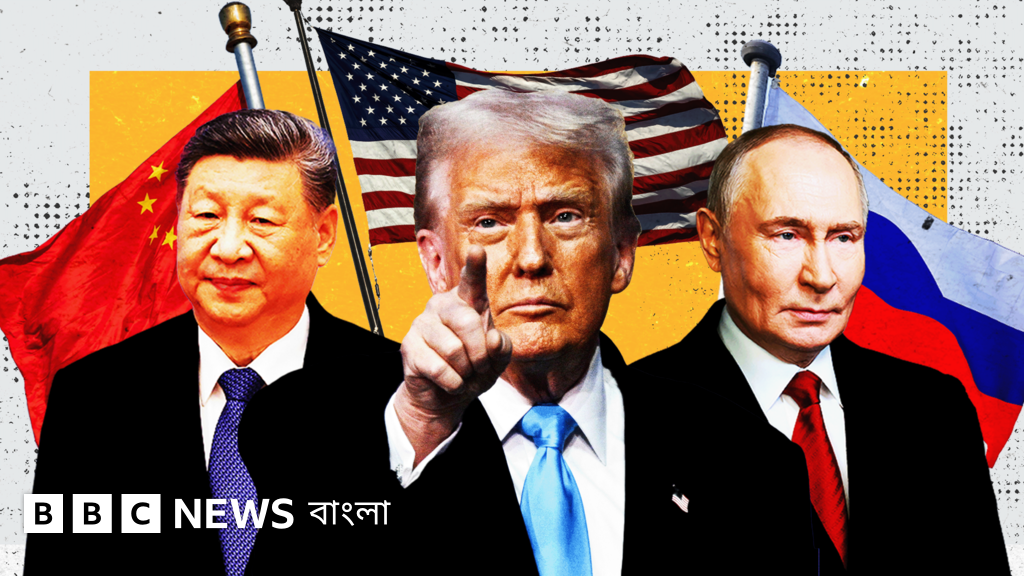
“The dominance of the United States in the Western Hemisphere will never be questioned” – this was announced by US President Donald Trump after the arrest of Venezuelan President Nicolás Maduro by the US.
And while Trump is projecting Washington’s might, China and Russia are also trying to consolidate and expand their own spheres of influence.
Many analysts believe that these three countries are trying to build a new global system, which may affect other regional powers, including Europe.
We analyze how the United States, China, and Russia are trying to influence not only neighboring states but also more distant countries through military, economic, and political influence.
A world ‘ruled by power’
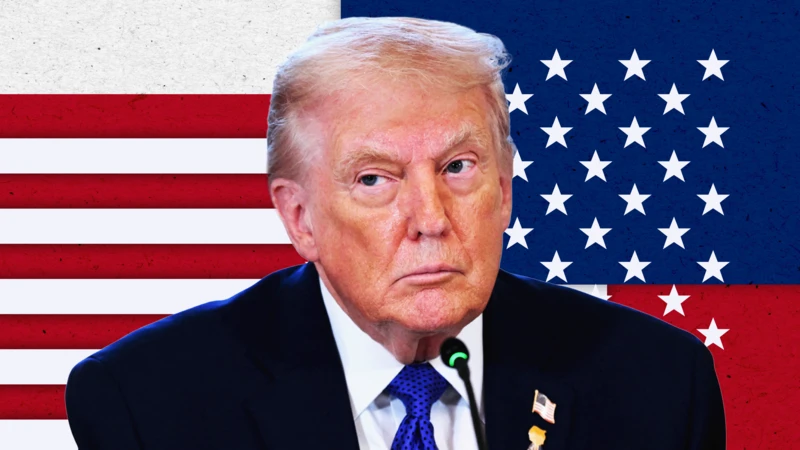
image source, Getty Images/BBC
Under the Trump administration, the United States is currently reframing and restructuring its foreign policy and national security strategy—with an emphasis on the Western Hemisphere.
There has been a significant shift in the perception of US presidents elected in recent years, both Democratic and Republican, who view US power and influence from a more global perspective.
Trump administration officials say it’s an implementation of the “America First” policy, which prioritizes issues — such as immigration, crime and drug trafficking — that directly affect the lives of American citizens.
Trump’s top adviser, Stephen Miller, said in recent comments that the world is now “ruled by power, ruled by influence, ruled by power”—which may draw comparisons to the pragmatic, non-ideological foreign policies of Henry Kissinger and Richard Nixon in the 1960s and 1970s. However, the most consistent with this may be the policy of expansion of the American empire of President William McKinley and Theodore Roosevelt at the beginning of the twentieth century.
Based on the ‘Monroe Policy’ of 1823, which called for the Western Hemisphere to be free from interference by European powers, Roosevelt demanded that the United States take an active role in maintaining security and order throughout the Americas.
During that time, the United States provided financial aid to countries such as Venezuela and the Dominican Republic, and deployed US troops to Haiti and Nicaragua.
Since his second term in office, Donald Trump has been showing keen interest in geographies and issues close to the United States.
The military operation to arrest Venezuelan President Nicolas Maduro is the most dramatic example of this; But this was preceded by US attacks on suspected drug vessels in the Caribbean, the imposition of tariffs on Latin American countries, support for certain candidates and parties in various national elections, and demands for the annexation of the Panama Canal, Greenland and entire parts of Canada.
The White House’s newly released National Security Strategy states,
“The United States must be at the forefront of the Western Hemisphere, which is the condition for our security and prosperity and which enables us to act with confidence on regional needs.”
Part of this new international strategy is to resist the efforts of foreign powers, especially China, to exert influence over America’s regional neighbors. This is where the new approach to US sphere of influence may come into conflict with global politics.
In addition, Trump has shown interest in making peace agreements in different regions of the world and has also shown special interest in strengthening economic and security relations with Arab countries such as Saudi Arabia, Qatar and the United Arab Emirates.
Trump and his close advisers insist that the United States is the defender of Western civilization against forces that seek to erode its culture and heritage.
All this suggests that while the strategic underpinnings of US foreign policy relate to a new ‘America First’ vision, Trump’s personal views and interests will continue to drive the US international agenda.
Over the 250-year history of the United States, its foreign policy has varied from isolationism to interventionism and back again, with varying degrees of idealism and pragmatism, and has depended on US military power and the interests of the people and leadership.
While the situation has changed significantly in Trump’s second term, there is no evidence that these cycles or changes in US foreign policy have ended in the long term.
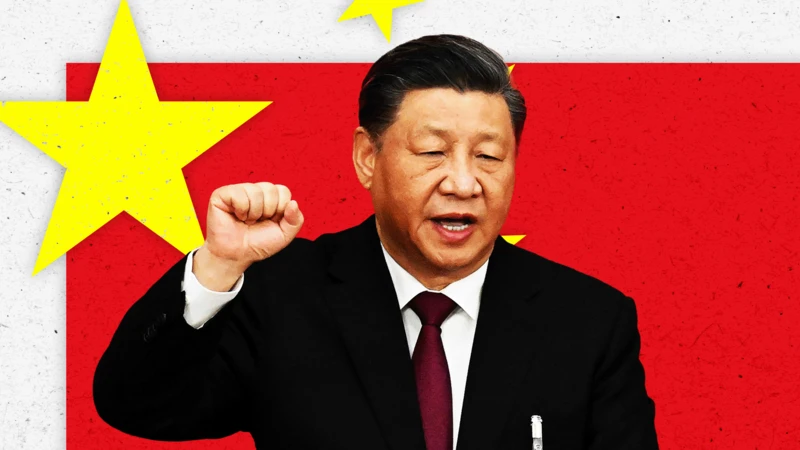
image source, Getty Images/BBC
China’s ‘Great Renaissance’
China’s global influence is not limited to any particular “sphere of influence” or region. From the South Pacific to South and Central Asia, the wider Middle East, Latin America, and even in between—Beijing’s presence is now felt in nearly every corner of the world.
China has used its core capability, productivity, in its pursuit of global dominance. About one-third of the world’s total manufactured goods are made in China, including the tech products in our pockets, the clothes in our closets and the furniture we sit on while watching TV.
Beijing has secured the largest share of the world’s ‘rare earth’ or rare minerals to keep the future in its own hands. These minerals are essential for manufacturing technology products, such as smartphones, electric cars, wind turbines and military weapons.
China processes about 90 percent of the world’s rare earth minerals and has recently used that influence against Donald Trump, limiting exports during last year’s US-China trade war. Perhaps this is why Washington has turned its attention to the mineral resources of Greenland and other places. The two superpowers seem to be competing for the protection of resources.
This is a huge change for the People’s Republic of China, which in 2000 was a relatively minor power in a world dominated by the United States.
Heading into 2026, President Xi Jinping has positioned himself as the emerging global leader, backed by trade, technology and investment, and an expanding military.
China’s rise from one of the world’s poorest countries to a leading power in industry and technology has paralleled that of many emerging economies. To them, this is an example of modernization without Westernization, where states and nations can pursue economic growth without adopting Western political systems or foreign policies.
This has also proven to be an effective strategy. In 2001, more than 80 percent of the world’s economies traded more bilaterally with the United States than with China. About 70 percent of the world’s economy now trades more with China than with the United States.
Beijing has also prioritized development and invested heavily in emerging economies as part of its Belt and Road Initiative. It is a massive global infrastructure project that aims to connect Asia, Europe and Africa by land and sea through Chinese-invested ports, railways, roads and energy projects.
As a result, several countries have become increasingly debt-dependent on Beijing.
One of the biggest questions after Donald Trump’s Venezuela campaign was, will it give China the idea to attack Taiwan?
But China views the self-governing island as its own internal affairs—a breakaway province that will one day be reunited with the motherland.
If Xi Jinping decides to attack the island, it will not be because the US has set a precedent. Rather, most analysts believe that China will continue with its current strategy. That is, to wear down the Taiwanese people by applying pressure, the goal of which is to bring Taiwan to the negotiating table.
Xi Jinping’s dream has always been the “great renaissance” of the Chinese nation. As he stood on a balcony overlooking the troops at last year’s military parade, he said, China’s rise was “unstoppable”.
He wants a world that respects and follows Beijing, and sees the global turmoil under Donald Trump as a “time of transformation”.
He will see this as an opportunity. His message is that the world is at a crossroads and China is best placed to lead the way.
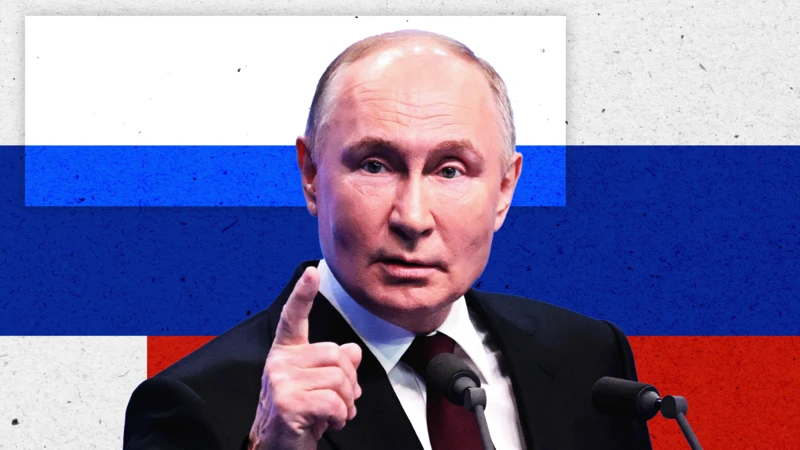
image source, Getty Images/BBC
Russia’s ‘Near Neighbourhood’
The quote can be interpreted in two famous or infamous ways – when Vladimir Putin called the collapse of the Soviet Union “the biggest geopolitical disaster of the 20th century”.
This gives an important indication of his views on the concept of ‘immediate neighbourhood’ prevalent in Russia regarding the former Soviet republics that became independent in the 1990s.
To many, this term implies that these states have less rights as independent states than the ‘far-neighbourhood’ countries.
This line of thinking, which forms the Kremlin’s ideology, creates a sense that Russia has legitimate interests in these countries and the right to protect them.
The extent of its sphere of influence is a vague concept and the Kremlin has deliberately maintained a vague position on it.
“There is no end to Russia’s borders,” President Putin once said, and to some supporters of his expansionist policies, Russia’s sphere of influence means all the territory that historically was part of the Russian Empire, and even more. This is why Moscow refers to the territories included in Ukraine as ‘historical regions’.
On paper, the Kremlin respects the sovereignty of former Soviet republics and countries in which it claims it has ‘interests’. But in reality, Moscow has a long record of applying economic and military pressure when these countries try to break out of Russia’s sphere of influence.
Ukraine has learned this the hard way. For more than a decade after the breakup of the Soviet Union, the country pursued policies that largely aligned with Kremlin interests, including a major Russian naval base on the Black Sea coast of Crimea.
Relations were smooth until Ukraine elected a reformist, pro-Western president, Viktor Yushchenko. During his tenure, Russia cut off gas supplies twice in 2006 and 2009.
After economic pressure and political intervention failed, Russia invaded Crimea in 2014 and took control of the region, followed by a full-scale invasion of Ukraine in 2022.
Similarly, Russia launched a war against Georgia in 2008 when the country was led by reformist President Mikheil Saakashvili. This established and expanded Russian control over nearly 20 percent of Georgia’s territory.
Since then, Russian troops have been slowly pushing border markers and barbed wire fences into Georgia in a process known as ‘creeping occupation’.
Putin’s belief that the ‘near neighborhood’ is an acceptable target for him is reinforced by the Western world’s lack of significant response to Russia’s aggression in Georgia in 2008 and Ukraine in 2014.
Notably, Ukraine and Georgia attempted to counter Moscow’s political hegemony with military intervention. But some of the former Soviet republics are still closely associated with Russia. Five of these countries – Belarus, Tajikistan, Kyrgyzstan, Kazakhstan and Armenia – still host Russian troops.
Ukraine and Georgia’s problems began when they elected governments that declared their desire to implement democratic reforms and break out of Russia’s sphere of influence by building closer ties with the Western world.
What happened next is nothing new. Many wars have been fought in history on the pretext of protecting interests or protecting ethnic minorities.
After World War II and the end of the Cold War, there was a major effort to transform the global community into an egalitarian geopolitical structure regardless of state size or armaments.
But the resurgence of spheres of influence could take us all back to darker times in the past.
https://www.bbc.com/bengali/articles/cgk8r4rxkp4o?at_medium=RSS&at_campaign=rss

