

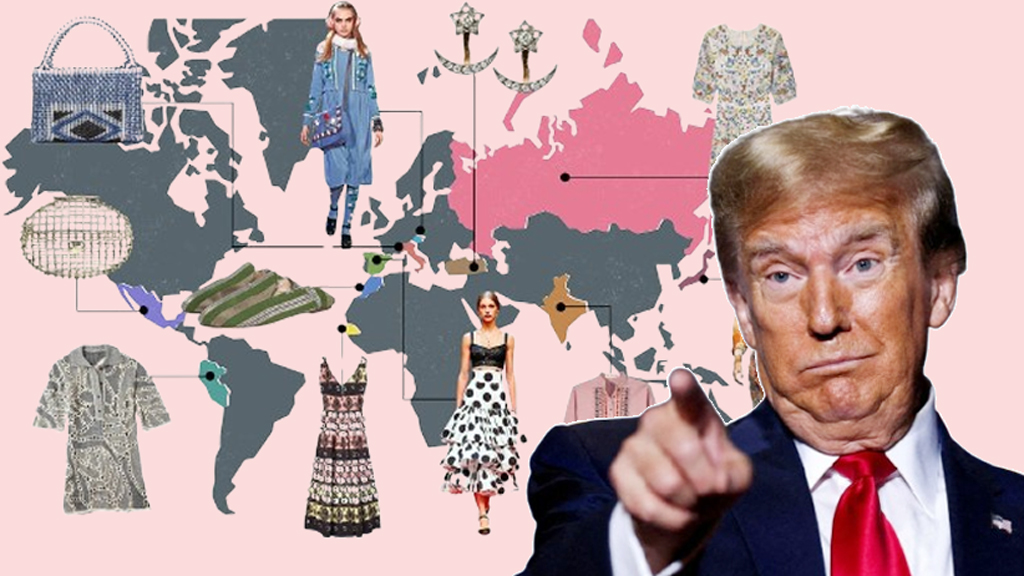
Donald Trump has made the global economy unstable by imposing one -on -one tariffs as US president. The global fashion industry was shocked to see the new tariff announced last Wednesday. Trump has imposed the largest and wide -sized tariffs in the last one century. The US president has dropped the customs sword on the garment producing countries. Big brands like Nike, LVMH, Tapestry have already suffered losses.
Last Wednesday, Trump announced from the White House Rose Garden that 5 percent tariffs on all import products would be set up. High tariffs have been set up in about 20 countries where there is a trade deficit in the United States. Many of these countries are the main production centers of the fashion industry. Trump said the day of the tariff will be effective from midnight.
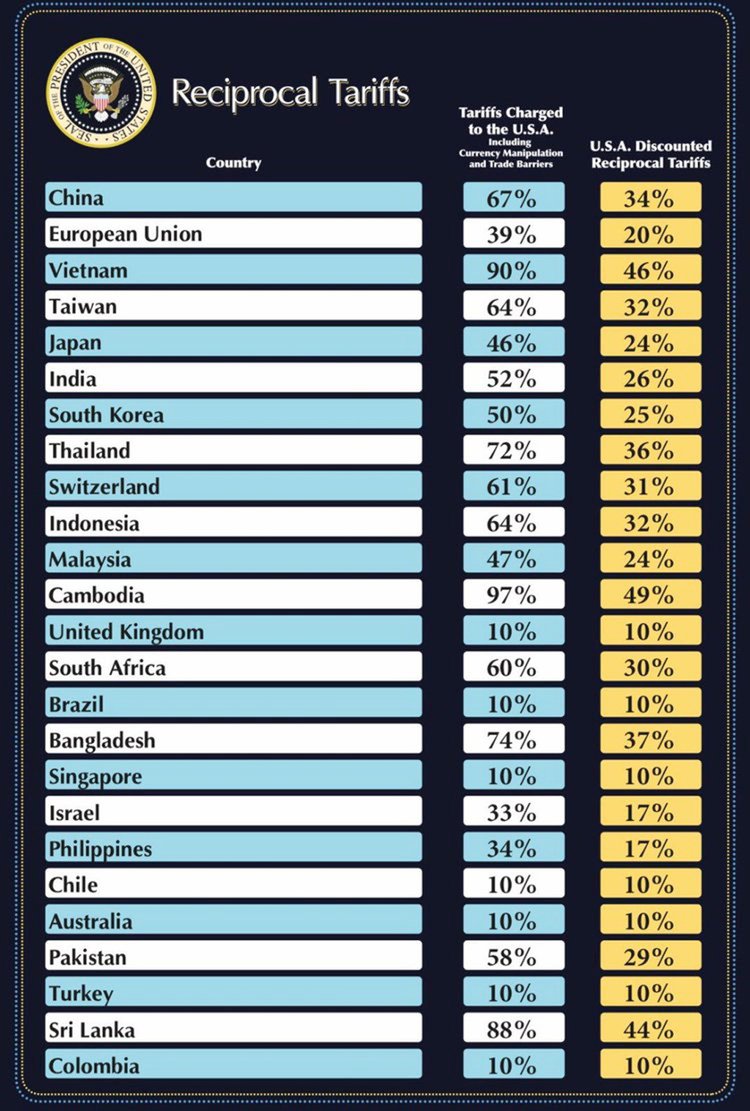
At the time of the announcement of the new tariff, Trump shows a large list of tariff rates prescribed for different countries. He said the tariff rate was almost half of the tariff and tariffs imposed on the United States by those countries.
Many analysts hoped that the tariff rate would be slightly lower, but in reality it was higher than expected. “We will open the foreign market and remove trade barriers,” Trump said. This will increase production in the country, increase competition and reduce prices for consumers. This will be the golden age of America. America will return again, very strongly. '
The tariff list provided by Trump shows that 5 percent of the tariffs on imported from Vietnam are going to settle. The tariff for Cambodia will be 5 percent and 5 percent for Bangladesh. China has added a new 5 percent tariff, which will be 5 percent, including the previous tariff. A 20 percent tariff on the European Union has been set up.
“We are very disappointed with the Trump administration's decision,” the United States Fashion Industry Association said in a statement on the imposition of the tariff. This decision will have a big impact on US fashion brands and retailers. '
Their statement is true in the stock market index. The new customs fashion company's stock market has given a large number of pushes. The shares of the Lululman brand have dropped by more than 5 percent. Shares of Nike and Ralph Loren are 5 percent and Tapestry, Capri and PVH corporation shares have dropped by about 5 percent. On the other hand, the S&P 1 Future index has also dropped by about 5 percent.
The United States is one of the largest clothing and shoe markets in the world. This country is very important for US and international companies. New tariffs will increase costs and disaster for many fashion traders. Almost all fashion products sold in the United States will be covered by new tariffs. Because the country imports more than 5 percent of the clothing and about 5 percent of the shoes.
Earlier, after Trump announced the increase in tariffs, companies like Walmart had already planned to negotiate with suppliers and requested them to reduce costs. However, many factories are on low profit, so the pressure to reduce the price will become more difficult for them.
However, the new tariff can be spread throughout the fashion supply chain. Textile makers and farmers will also look for ways to sell at low prices, so that the cost can be saved.
Many brands and retailers have to decide now – they will pay for this extra cost, or will they impose it on the buyers? Where many consumers are already spending a cautiously due to inflation, so if the price goes up, there will be extra pressure on them.
Before the announcement of the new tariff, there was uncertainty about how this plan would be implemented. Due to this uncertainty, the confidence of US consumers in March was reduced and reached the lowest level after the epidemic.
David French, executive vice-president of the National Retail Federation, said, “Additional tariffs mean more anxiety and uncertainty-this is not good news for the merchant business and consumers.”
New tariffs will affect various fashion businesses, but some sectors are particularly at risk. The United States was the most stable for the market for luxury products, especially when the global economic downturn. But most luxurious brands do not produce their products inside the United States. As a result, they will be forced to pay for additional costs due to new tariffs.
These brands have already raised prices in the last few years. Now the new tariff will increase their costs. LVMH launched their third factory in the United States in the 21st. Piral Daddhania, analyst of the RBC Capital Market, said in a research report that these factories provide about 5 percent of LVMH's total production in the United States.
Before Trump announced the tariff, Daddania assumed that the imposition of 20 percent tariff would reduce the net income of luxury brands. However, it was not imagined what could be imposed by 5 percent high -rate tariffs in that estimate.
Although high prices and economic conditions may not be forced to reduce the cost of rich consumers, those who occasionally buy luxury products will need to be more restrained. In the last few years, prices have reduced the demand for luxury products among these customers, and new tariffs can increase that trend.
Sports brands will also face the impact of this tariff. Many companies removed production from China, because Trump's first -round tariff fell on China. But they moved to countries like Vietnam and Cambodia, where new tariffs have now been set up. As a result, their expenses will increase again.
For example, Nike made 5 percent of their shoes in Vietnam in 2021, and the Swiss Sports brand on the brand on there was 5 percent. Now these companies will face new challenges. However, all fashion businesses will somehow be affected by this tariff.

