

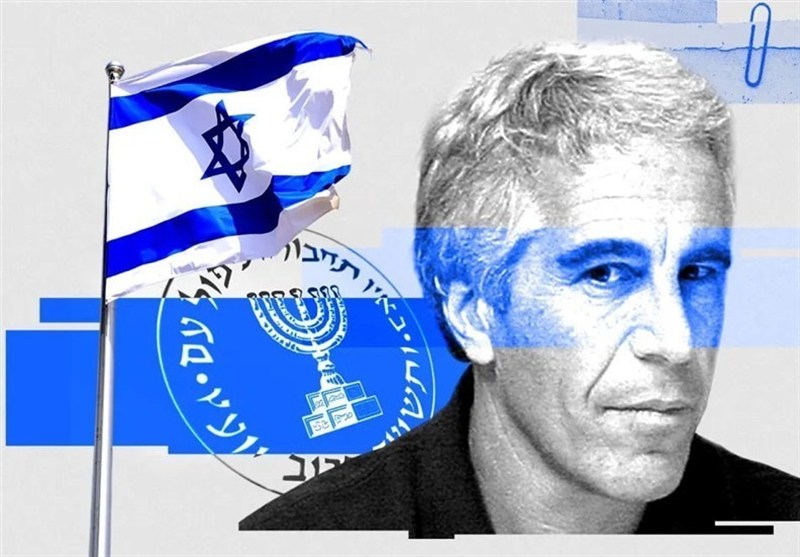
According to the cultural reporter Tasnim News AgencyCivilizations should be read not only in their masterpieces, but also in their scandals. Sometimes a name, a case, a sudden fall, becomes a mirror in which one can see the hidden lines of a historical order. The story of Jeffrey Epstein can be interpreted as an individual deviation at the edge of a free society; A simple narrative that calms the public conscience and reduces everything to an “exception”. But if we distance ourselves a little from the level of the incident, another question arises: was what happened, just the slip of a person, or did it arise from a deeper logic in the heart of a civilization that considers itself the cradle of freedom?
The issue here is neither defense nor accusation; It is a matter of understanding “structure”. Crime, when it is placed in a wide connection with networks of power, wealth and politics, no longer remains a personal act; It becomes a form of civilization. In late liberal capitalism, power does not function in a bare ruling body, but in the form of a network of interwoven relationships. Responsibility is distributed in this network, such that no one is fully responsible and yet everyone contributes to its reproduction. This is the situation that some modern thinkers, including Michel Foucault, have referred to as the dispersion and invisibility of power; A power that is not at the top, but in circulation. In such an order, capital is not merely a means of producing wealth; Logic is the organizer of the bioworld. Everything has the potential to become a commodity: time, knowledge, images, and finally the human body.
Classical colonialism captured geography; Late colonialism, desire and dignity. If in the past centuries, territories were mapped, now souls and bodies are the subject of mining. This transformation has created a softer but deeper face of domination. It is no longer necessary to raise a flag on the ground; It is enough to reduce the value of everything to its exchangeability. The Epstein case, on this horizon, is not just a list of moral charges; It is a hub where financial capital, political influence, media fame and closed elite networks meet. What is terrifying is not only criminal acts, but the possibility of their continuation and concealment in the heart of a structure that is apparently based on transparency and law. One must ask how it is possible for an order that calls itself the guardian of human rights to be so slow and hesitant in the face of such a complex network? The answer should be found in the internal tension between market freedom and moral responsibility.
Liberalism, in its theoretical foundation, is based on individual freedom; But when this freedom is reduced to the freedom of exchange and accumulation, man becomes a “value unit” unintentionally. Dignity, which should be the basis of rights, becomes a function of purchasing power. It is at this point that the gap between ethics and structure occurs. Morality remains a personal and conscientious matter; Whereas structure follows the logic of profit regardless of virtue or vice. The result is that even if people are well-intentioned, the network can be ruthless. Structural crime is born precisely in this gap: the gap between individual conscience and systemic rationality. In this situation, a person may fall, be tried, or be eliminated, but his reproductive logic remains intact. The focus of public opinion on figures sometimes helps the survival of the structure; Because by removing the symbol, it is assumed that the problem is solved. However, the structure, like an underground river, continues its course.
Epstein is not a “name”; It is a “sign”. A sign of a stage of western civilization where capital has included not only nature and labor, but privacy and the body as well. This stage can be called landless colonization; Human colonization by an order that defines value based on exchangeability. In such an order, even a scandal can become a media commodity; be consumed, forgotten and replaced by new news. But the main danger is in the normalization of this cycle. When a society gets used to watching successive scandals, its moral sensitivity wears out. Crime, instead of creating a rift in the collective conscience, becomes part of the rhythm newspaper becomes
This is the moment when the structure wins over the individual: the individual falls, the structure remains. If a civilization wants to go through this cycle, it must re-establish the broken link between power and morality. Freedom, without structural responsibility, becomes a privilege; And the market, without moral boundaries, to a mechanism for human extraction. The fundamental question is whether it is possible to have an economic and political order in which dignity is placed before exchange value? If the answer is negative, then it should be accepted that scandals are not incidents, but signs; They are signs of a deeper crisis in the meaning of man.
In sum, my philosophical reading of Epstein’s story is an invitation to change the perspective: from individual to structure, from incident to logic, and from temporary anger to civilized reflection. Crime, when woven into the fabric of an order, is no longer merely a violation of the law; It is a mirror that reveals the hidden face of that order. If we don’t dare to look in this mirror, the names will change, but the formation will remain. A civilization that considers itself a measure of progress must look at itself in this mirror before judging others; Because sometimes the most horrible colonialism is not the occupation of lands, but the occupation of people.
Note from: Muhaddeh Hakimzadeh
end of message/

