

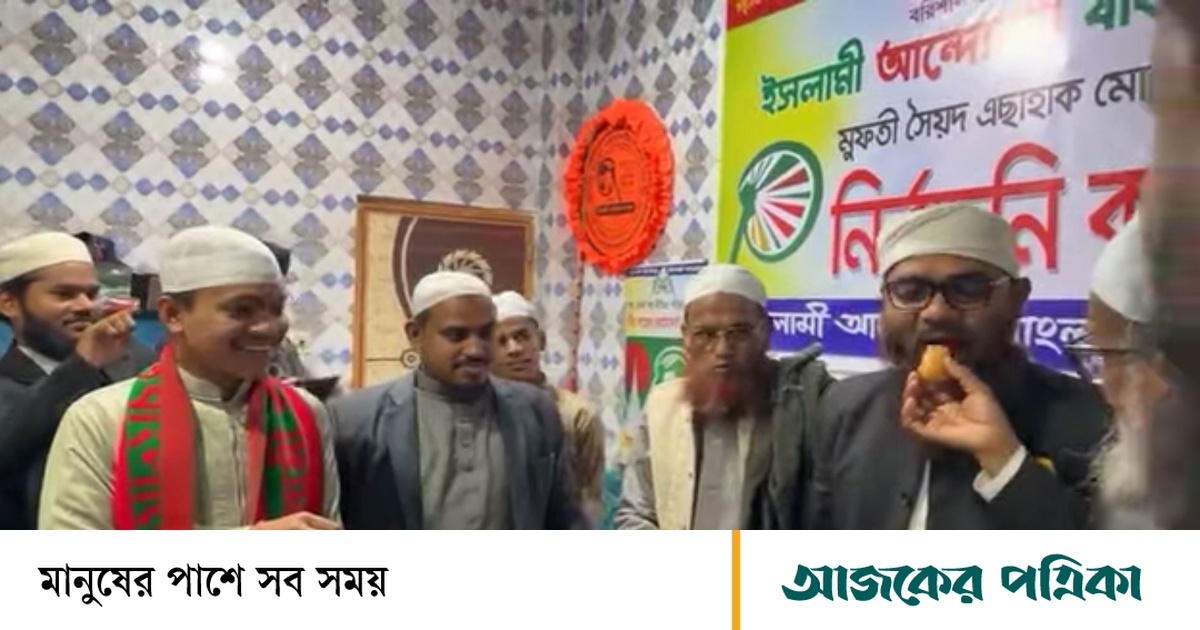
Efforts to ensure ‘greater unity’ or ‘one-box votes’ among Islamist parties are long-standing in the history of electoral politics in Bangladesh. The prospect of the 2026 election was heightened, but in the end it ended in extreme drama. As Islami Andolan Bangladesh announced the election alone, the power of the Islamists is now divided into three different streams. This division is not only seat-centric, but is the result of an invisible battle to establish leadership and supremacy in Bangladesh’s Islamic politics.
According to political analysts, the electoral field is now divided into three different poles as the ’11-party electoral unity’ has broken up:
Jamaat-led ’10-Party Electoral Alliance’: This front, led by Jamaat-e-Islami, comprises five registered and unregistered Islamist parties. Apart from this, joining the Liberal Democratic Party (LDP) and the NCP comprising the leaders of the July Revolution Front can be said to be a major strategic victory for the Jamaat. This is helping to dispel the ‘fundamentalist’ label attached to them. They have taken some Islamist parties including Mamunul Haque’s party to attract the votes of the Islamists, especially the Hefazat Islam section. Again, the NCP has also been placed as the power of the July mass uprising. Again, the secular party has also kept.
Islamic Movement Bangladesh (Charmonai): With a single candidate in 268 seats and strategic support in 32 seats, they are desperate to prove themselves as the second largest Islamic force in the country. Their aim is to break out of the Jamaat circle and emerge as a distinct ‘third pole’ or third force.
BNP-Ghesha Islami Alliance: Three parties including Jamiat Ulamae Islam have joined the electoral alliance with BNP. According to this year’s People’s Representation Act, these parties elected on their respective symbols can become the main rivals of the Jamaat in the Qaumi Madrasa-based vote bank.
After August 5, Jamaat-e-Islami took the initiative to build a common platform with the Islamist parties. They also held a meeting with representatives of all like-minded parties. However, several groups based in the Qaumi Madrasa were quick to voice their ideological differences with the Jamaat. They have chosen to be in alliance with BNP as it suits them.
However, a significant number of groups remained with the Jamaat. The alliance with the Islamic movement was almost ripe. However, the tension started after the joining of National Citizen Party (NCP) at the last moment. The Islamic movement repeatedly complained that they were being neglected and ignored. In the end, only ‘seat sharing’ is seen as the main reason for their separation, but there is also a deep psychological conflict. For example:
Seated Ego: The Islamic movement demanded 80 seats, whereas the Jamaat, considering them as its junior partner, was unwilling to give more than 30-35. Although the Jamaat later wanted to concede up to 45 seats, by then the crisis of confidence had reached its peak.
Ideological and Strategic Rifts: The Islamic movement has alleged that the Jamaat had made a secret agreement with the BNP to form a ‘national government’ before the elections. They fear, this election will be a ‘selection’ or trick game. On the other hand, the Jamaat had doubts whether the Islamic movement was trying to break the unity at the behest of some other quarters. Apart from this, Jamaat has made it clear in various forums that they will not implement Islamic Sharia law if they come to power. They are also making strong statements about women’s rights. The Islamic movement has always objected to these issues.
Complaints of neglect and disrespect: Charmonai Peer’s party sees the declaration of alliance seats by Jamaat in the absence of top leaders of the Islamic movement as a ‘huge insult’. In the words of the senior joint secretary general Gazi Ataur Rahman, ‘We have been discriminated against on the question of policy and justice.’
It should be noted that the Islamic movement has participated in almost all the controversial elections during the rule of Awami League. They were also victims of Awami League’s violence in the last Barisal City Corporation election. After the fall of Awami League on August 5, the scene of dharna of leaders of all political parties at Charmonai Pir’s court was a sight to behold. As a result, they have a logical reason to think of themselves as important. However, none of the recent polls showed any indication of getting more than 3 percent of the vote. Leaders of the Islamist movement say they now want to lead a genuine Islamist politics. According to them, against the ‘deviant’ Jamaat from Islam, they will join the movement to establish Islamic rule in Bangladesh.
But political analysts and observers say this triangular division could seriously damage the chances of Islamist parties getting votes. Among them, a large section of anti-Jamaat scholars (especially Hefazat Islam) may be active in stopping the Jamaat. In this situation Maulana Mamunul Haque and his party ‘Bangladesh Khilafat Majlis’ will act as a shield for the Jamaat to retain a share of the Qaumi vote. Mamunul Haque’s personal image is very popular in the community.
BNP or the main rival parties will directly benefit if the votes of the Islamists fall into three separate boxes. Especially in seats where the combined votes of Islamist parties were decisive for victory, they may lose seats due to separate candidates.
Jamiat Ulamae Islam’s alliance with BNP will undermine Jamaat’s singular influence. It is believed that this effect can become evident especially in areas like Sylhet and Chittagong.
This split is a big blow to all parties in electoral politics. The last-minute split has brought the divisions and conflicts within Islamist politics to the fore after long-standing alliances. In their obsession with proving leadership superiority, Islamist groups have rather weakened their collective strength.
Ahead of the 2026 elections, this division proved that Bangladesh’s Islamist parties have yet to unite on a common minimum program. Only time will tell who will ultimately benefit from this battle between the well-organized front of the Jamaat and the single might of the Islamic movement.
Author: journalist

