

New Delhi33 minutes ago
- copy link
CICS will have to keep the data updated on 7th, 14th, 21st and 28th of every month and till the last day of the month.
The Reserve Bank of India (RBI) released draft guidelines on November 26 to strengthen the country’s credit structure. These will come into effect from April 1, 2026.
Now you will not have to wait long for your credit score to be updated. All credit information companies (CICS) are required to update credit scores every 7 days. Currently the score is updated once in 15 days.
CICS will have to keep the data updated on 7th, 14th, 21st and 28th of every month and till the last day of the month. Banks will send the data by 3rd of every month.
New changes i.e. incremental data will be sent on these 4 dates. Data like account opening, closure, changes affecting credit score or change in loan status are included.
Understand this: 4 direct benefits of change
- The bank will have to inform CIBIL about loan or credit card closure on the same day. Earlier it used to take weeks-months. The customer faced difficulty in getting loan.
- Banks and NBFCs cannot access credit reports without the customer’s permission. This will not cause unnecessary drop in CIBIL score. Credit profile will remain safe.
- Heavy penalties have been fixed for wrong reporting, delay in rectification or unauthorized credit enquiry. This will force banks to keep credit data more accurate and updated and customers will get faster score improvement.
- Banks will get fresh credit reports, which will enable better risk assessment. You will be able to decide the price of the loan i.e. interest rate, amount and tenure correctly.
(If any bank does not send the data on time, CICS will have to report it on RBI’s Daksh portal)
Now know what is credit score…
Credit score includes an individual’s credit record along with information on loan accounts (credit cards and loans), bankruptcies and late payments (if any).
Meaning, this report tells you when you applied for a loan or credit card, from which bank or loan institution you got the loan or credit card and whether you paid the loan or credit card EMI and bill on time or not.
Another important information included in the credit report is the list of banks/NBFCs that have checked your credit report. Currently in India credit reports are issued by Licensed Credit Information Companies (CICS).
What does credit score depend on?
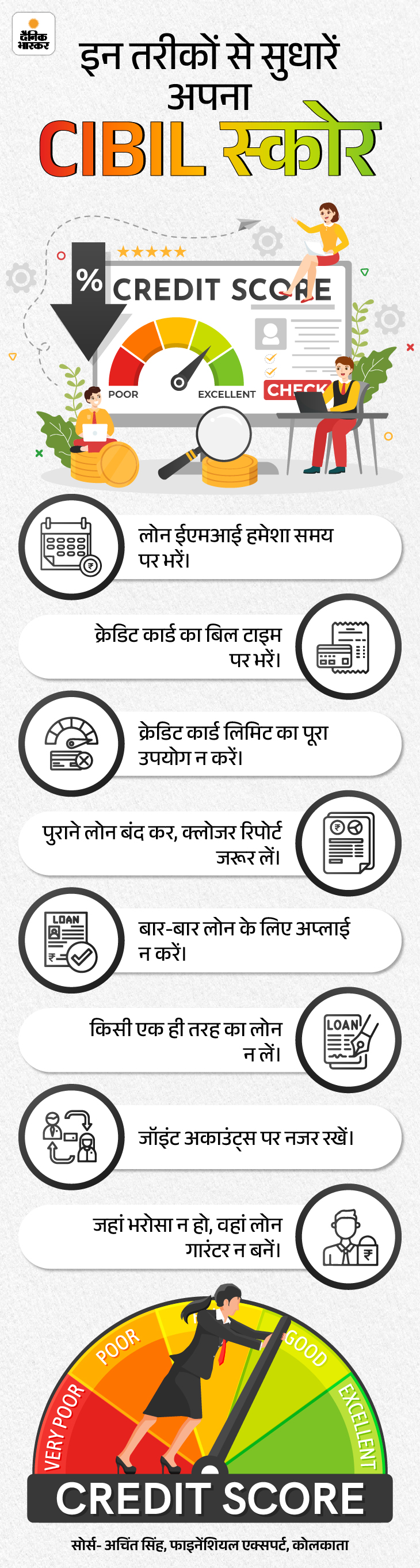
The credit score of any person affects his loan eligibility to a great extent. Credit score is determined by many specialized credit profiling companies. In this, it is seen whether you have taken loan before or how you have used credit card etc.
An individual’s credit score depends on repayment history, credit utilization ratio, existing loans and timely payment of bills. 30% of the credit score depends on whether you are repaying the loan on time or not. 25% depends on secured or unsecured loan, 25% on credit exposure and 20% on utilization of loan.
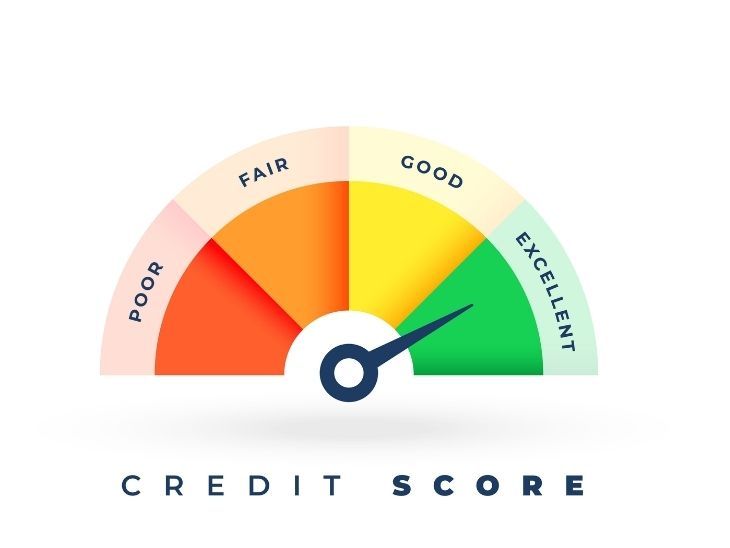
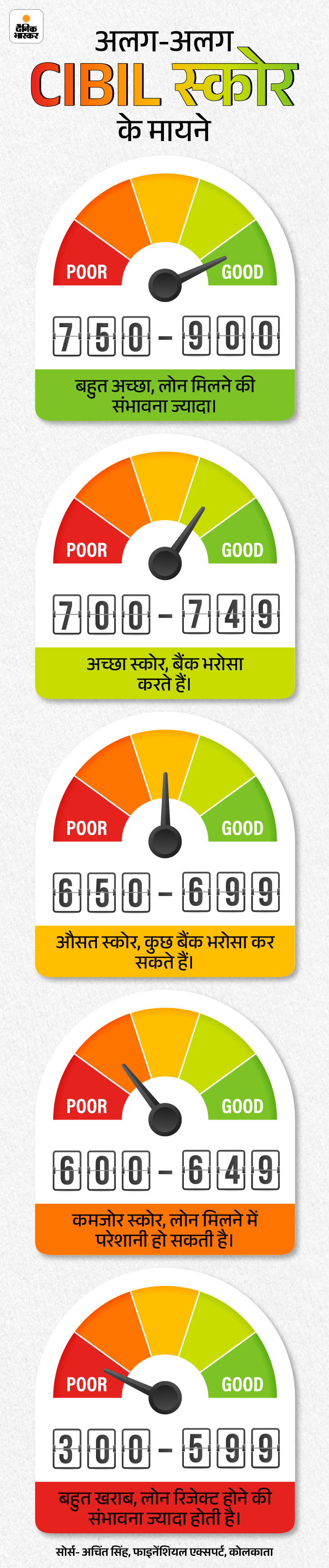
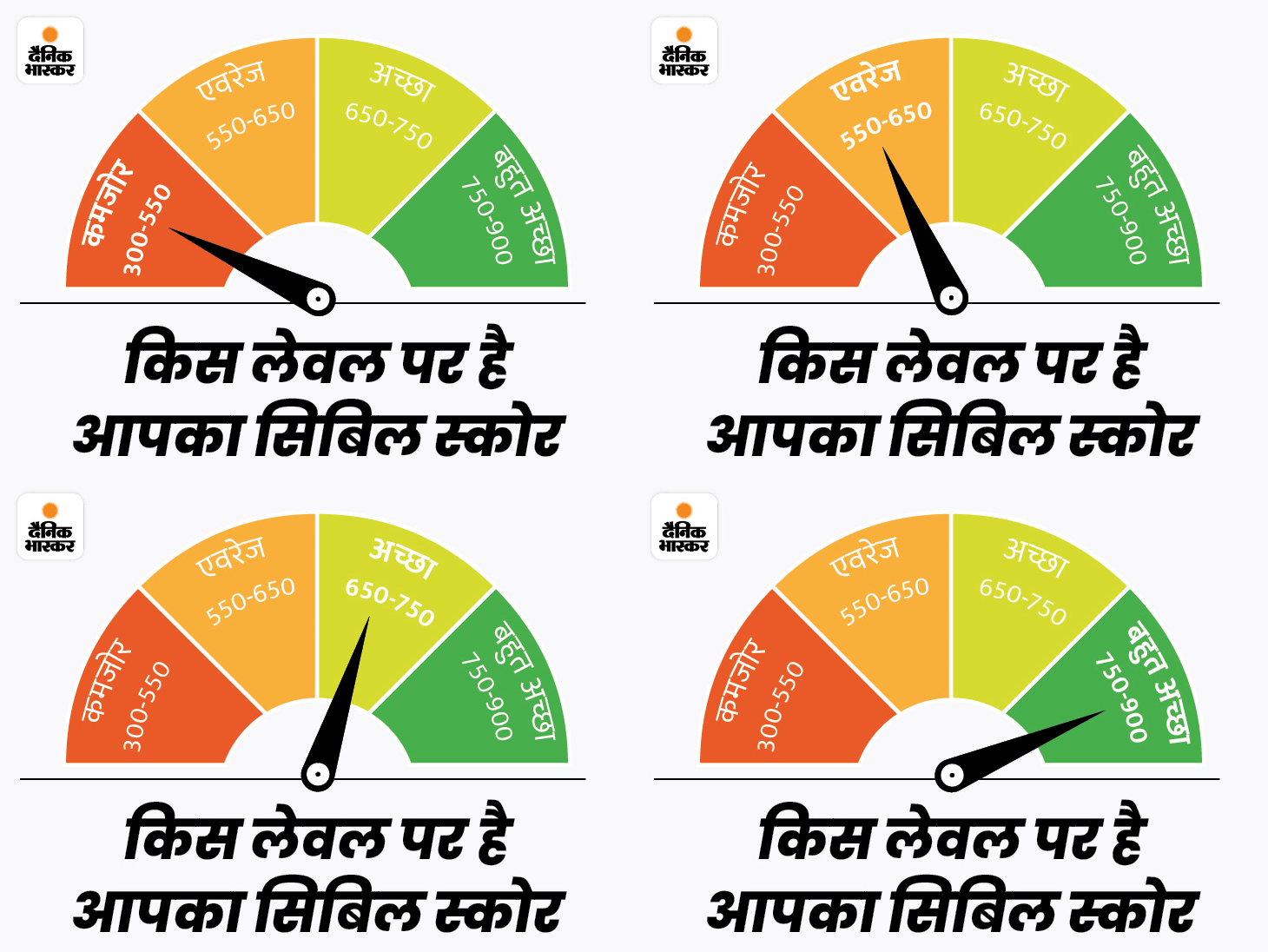
Credit score counts between 300 to 900.
Actually, the range of credit score is between 300 to 900. But, a score of 550 to 700 is considered good. Scores between 700 and 900 are considered very good.
How to check CIBIL score?
CIBIL Score can be viewed for free on the official CIBIL website www.cibil.com. But, this facility is available only once a year. To check CIBIL score from CIBIL website more than once, a monthly subscription plan of Rs 550 has to be taken. Apart from this, many banking service aggregators also provide the facility to check CIBIL score.
………………………….
Also read this news related to CIBIL score and credit limit…
Less use of credit limit will increase CIBIL score: Use only 30% limit, 4 important things which will maintain credit score.
We try to maintain a high CIBIL score to get loans and get new credit cards in future. For this, we ensure that loan and credit card payments are made on time. Despite this, many times the CIBIL score decreases. Read the full news…

