


The demands of the business community to postpone the transition process of Bangladesh from the list of least developed countries (LDCs) to developing countries in November 2026 did not get importance in the ‘Bangladesh Country Report 2025’ given to the United Nations. That is, there is no recommendation to delay the transition process. A recent report from the Ministry of Finance’s Department of Economic Relations to the Organization’s Committee for Development Policy (UNCDP) shows that the government has taken a sort of middle ground in the process.
According to the report, Bangladesh is firmly moving towards a sustainable transition from the list of least developed countries. The country’s three key benchmarks—per capita income, human resources, and economic and environmental fragility—have already been met. These criteria reflect the strong state of the country’s economic and social preparedness; Which ensures that Bangladesh has the ability to achieve transparent and consistent progress on the transition path in time.
However, the report also highlights warnings. It has been claimed that political instability, economic stress, global instability and domestic weakness – these challenges can affect the country’s economy and investment process. Continuity of policy reforms, increasing private sector productivity and securing international support are essential to address the challenge.
According to the rules of the Enhanced Monitoring Mechanism, all countries in transition are obliged to send such progress reports to the United Nations every year. Bangladesh Country Report 2025 is the continuation of that. On Tuesday, UNCDP will hold a virtual meeting with the Bangladesh government on this report. Apart from this, the situation of Bangladesh will be reviewed at the annual plenary meeting of UNCDP at the United Nations Headquarters in February.
UNCDP reviews the status of LDCs every three years. Bangladesh was first recognized as eligible to transition from an LDC in 2018 and the second and final recognition came in 2021. Now it is time for the final assessment of their continuity, the data of which shows that passing the criteria of all indicators, Bangladesh qualifies for transition from LDC.
However, in the changing situation in the country, the concern of businessmen is not unfounded. A delegation from the Office of the United Nations High Representative for the Least Developed Countries (UN-OHRLS) visited Bangladesh from November 10 to 13 to conduct an independent review at the government’s request. However, none of the reports seriously raised the issue of delaying the passage.
Despite concerns from the business community, the country report did not indicate a delay in transition. Rather, it has been claimed that the goal of sustainable progress and transition to developing countries can be achieved if proper preparation and effective policy implementation are ensured.
A response from the policy-making level of the government on the issue said that just as the matter of delaying the transition is not in the hands of the government, there will always be challenges in the transition from LDCs, although they can be overcome. Because, Bangladesh is still far above qualification in all three criteria.
As the report clearly states, preferential market benefits may be limited in the post-transition period. The European Union, the United Kingdom and Canada have extended benefits for three years, but conditions will be tougher in the longer term. Investment, production and R&D could suffer if the benefits for the pharmaceutical industry under TRIPS end. Over-dependence on the ready-made garment sector, stagnation in foreign investment, foreign exchange pressure, export risks, climate change impacts and global trade heat—all will face challenges for the country’s economy.
The mass uprising of July-August 2024 is also mentioned in the report. Regime change, administrative restructuring, fiscal deficit and slow investment have caused temporary stagnation. The dominance of a politically influential elite group and the laundering of $234 billion have long-term implications for the banking sector, foreign exchange reserves and macroeconomic stability. However, despite the violent transformation, Bangladesh’s economy is on the path to recovery faster than other countries.
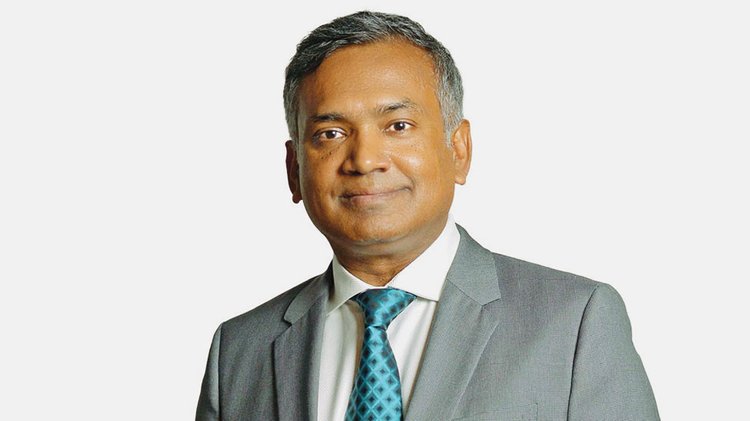
The government cannot take the decision of transition unilaterally
Dr. Mohammad Abdur Razzaq
Chairman, Research and Policy Integration for Development (RAPID).
The government cannot unilaterally decide on the sustainable transition of Bangladesh from the Least Developed Country (LDC) list; It is an institutional decision of the United Nations. According to international standards, Bangladesh will be officially promoted to the category of developing countries in November 2026.
The UN is currently reviewing Bangladesh’s progress, preparedness and capacity. A full assessment report will be given in January, considering post-transition risks, benefits and challenges. After receiving that report, the government can apply for a review of the transition process if necessary. The government’s role is mainly to advocate, lobby diplomatically and ensure preparedness in the international arena.
However, there is no denying that Bangladesh will lose some benefits after the transition, especially duty-free and quota-free market-benefits in exports. Therefore, enhancing competitiveness is essential to sustain exports and grow markets. It is also important to take advantage of the opportunity to reduce the production cost of the product.
There is no alternative but Free Trade Agreements (FTAs) or Preferential Trade Agreements (PTAs) with Europe, America and other major trading partners. These agreements will keep Bangladeshi products in the market even in the new tariff reality.
Apart from this, the government should focus on removing the internal structural weaknesses of the country. Corruption and extortion need to be reduced, as they increase production costs and have a negative impact on international competitiveness. Increasing the efficiency of the logistics sector is also essential, as port inefficiencies and road congestion are driving up export costs. Overall, the transition from LDCs is a recognition of Bangladesh’s progress but will also bring new challenges. Therefore, policy preparations, institutional reforms, and strengthening trade and diplomacy are now imperative.

