

30 May 1981. In the early morning of that day, due to low pressure created in the Bay of Bengal, there was quite a storm in Chittagong. In the midst of that rain, the then President Ziaur Rahman, who was staying at the circuit house in Chittagong, heard the sound of gunshots. Ziaur Rahman showed bravery as a Pakistani army officer in the 1965 India-Pakistan war. Rebelled against the Pakistani army in 1971 and participated in the War of Independence.
Known as a nationalist leader, Zia was an energetic personality. He did not have the nature of hide-and-seek. And so after hearing the sound of gunshots, he went out in his night gown to find the source of the gunshots. And just then his body was literally shattered by the rain of bullets!
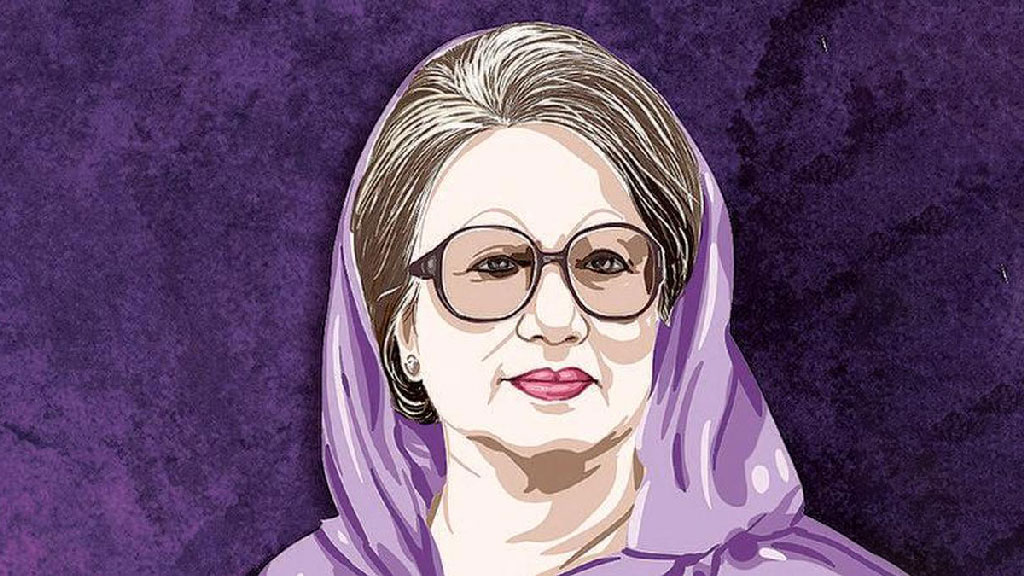
This dramatic situation motivated Begum Khaleda Zia, the wife of martyred President Zia, to enter the politics of Bangladesh. It is heard that he lost consciousness after hearing the news of Ziaur Rahman's murder. Two years and six months after that incident, Khaleda Zia was nominated as the BNP leader in place of Abdus Sattare. On January 13, 1984, he took charge of the Bangladesh Nationalist Party (BNP) founded by Ziaur Rahman.
When Ziaur Rahman died, it was a turbulent time in Bangladesh. During this period, Sheikh Hasina, the daughter of the first president of Bangladesh, Sheikh Mujibur Rahman, returned to Bangladesh on May 17, 1981. Khaleda Zia and Sheikh Hasina had very different backgrounds in politics. Khaleda Zia was the wife of a Bengali officer in the Pakistani military. And Sheikh Hasina was the daughter of Sheikh Mujib, the pioneer leader of the anti-Pakistan movement. But in 1984, these two leaders led two political alliances formed in opposition to the then President Ershad.
In the anti-Ershad movement, Khaleda Zia led the seven-party alliance, and Hasina led the fifteen-party alliance. Both alliances fought against Ershad. In 1986, Ershad organized a farcical election (which the BNP boycotted as announced but the Hasina-led Awami League changed its mind overnight and participated in). Later, however, angered by this fake election, the two alliances started working together and finally in 1990, Ershad had to step down from power.
BNP won the elections held in February 1991 after the fall of Ershad. Khaleda Zia, also known as Begum Khaleda Zia, became the first woman Prime Minister of Bangladesh. However, soon after he came to power as Prime Minister, nearly 5 lakh people died in a terrible cyclone. On this occasion, Hasina called the BNP government inefficient. Despite opposition, BNP won the 1996 elections as well. However, the Awami League accused the election of rigging and eventually the BNP relinquished power as part of a compromise. After that, Hasina became the Prime Minister of Bangladesh for the first time.
Khaleda and Hasina dominated the politics of Bangladesh from 1991 to 2006. Khaleda Zia returned to power with the support of Jamaat-e-Islami in 2001 and served as Prime Minister until 2006.
In the next 15 years, Sheikh Hasina was in power (during which there were accusations of repression of political dissidents, murders, disappearances and farcical elections), but BNP maintained its strong position in the field. Khaleda Zia was somewhat in the back row during this time (mainly due to illness). Mirza Fakhrul Islam Alamgir and Amir Khosru Mahmud Chowdhury were managing the activities of the party. They maintained the defensive attitude of the party. This attitude of BNP was manifested by boycotting the 2014, 2018 and 2024 elections.
On August 5, 2024, Khaleda Zia, after being released after the fall of Hasina's government (through the student movement), said she had no grudge against Sheikh Hasina, who is currently in exile. It indicates that he is observing the politics of the country and is waiting to see that Dr. How long did the interim government under the leadership of Muhammad Yunus last? Although BNP has boycotted elections in the past, it is true that in 2021, Hasina's government did not stop doctors from John's Hopkins Hospital in the US from coming to Dhaka. These doctors performed complex surgery on Khaleda Zia.
79-year-old Khaleda Zia has once again come to the center of discussion in the context of the possibility of BNP coming to power after Sheikh Hasina left Bangladesh. But this time he is more careful than before. Earlier this month, he went to London for treatment in an air ambulance sent by the Emir of Qatar. After many days, I met my eldest son Tariq Rahman there. Tareq is in exile after being tortured by the military during the 2006–08 caretaker government. Last week, Khaleda Zia was acquitted in a 2008 corruption case. During the Hasina government, he was sentenced to 10 years in this case.
Many have fallen in the politics of partition in Bangladesh, but Khaleda Zia has survived. And how effective he is will be tested once more when the interim government announces the election date.

