

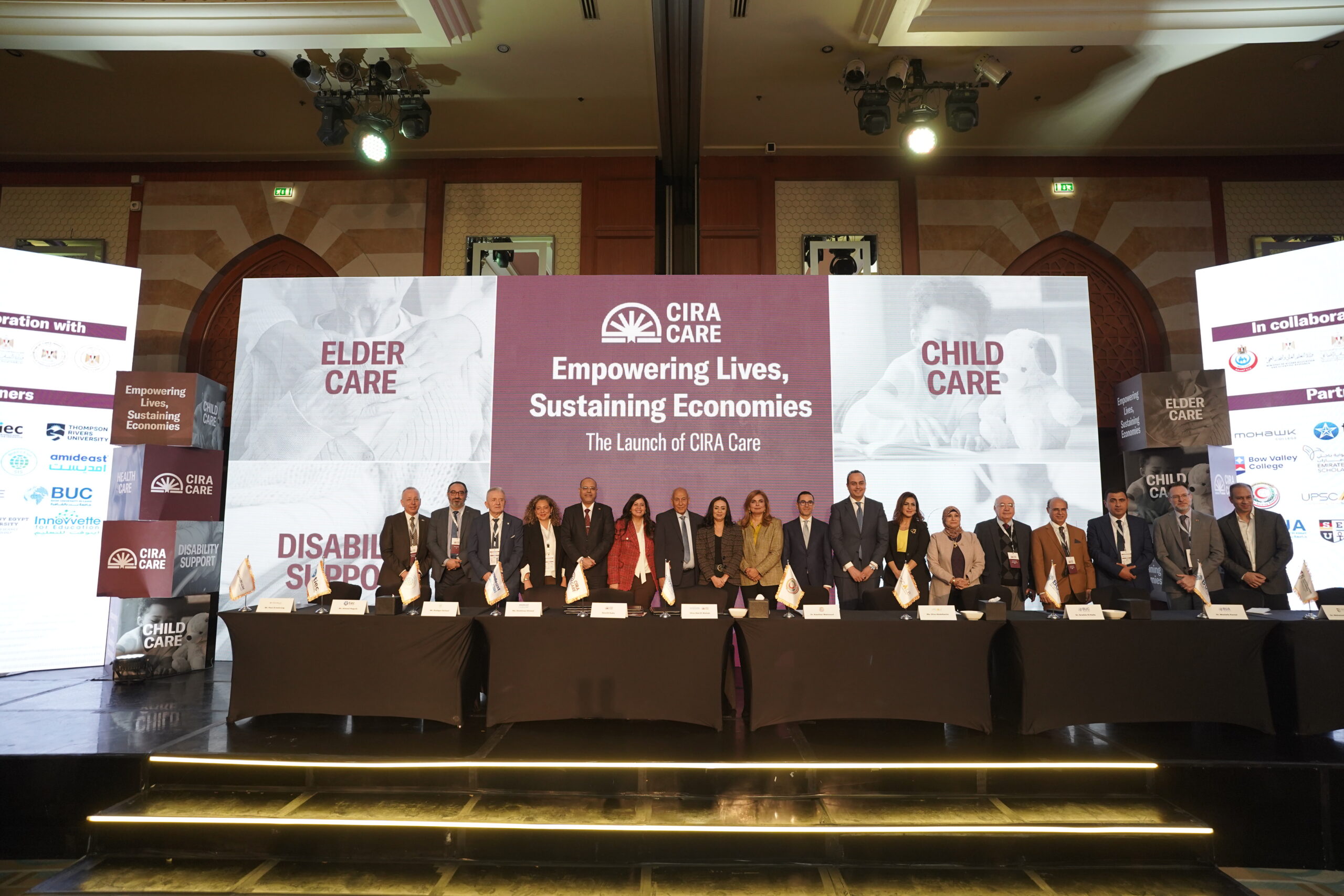

Arab FinanceExperts and officials in the field of care and medical economics emphasized Egypt’s need for a number of care specializations to fill the current gap in this sector, and that it is necessary to qualify human cadres to work in these specializations, whether in the local or foreign market.
They explained during the launch of the company “Sera Education” a company “Sera CareIt is the first initiative of its kind in the Middle East that aims to develop the pastoral economy in Egypt, which represents 11.5% of employment and provides 381 million jobs globally.
This transformative project focuses on addressing the basic pillars of the care economy: child care, care for the elderly, health care, and support for people with disabilities, with the aim of attracting foreign investments, developing local competencies, and placing Egypt at the forefront of countries exporting skilled labor in the field of care in accordance with the objectives of the initiative. The declared.
The volume of investment in the pastoral economy
For her part, Sarah Al-Qalla, CEO of Sera Technology, and Executive Vice President of “Sera Education”, said in exclusive statements to Arab Finance on the sidelines of the SeraCare Initiative launch conference that there is a great need in Egypt for child care services, elderly care services, support for people with disabilities, and health care, and that we We do not currently have trained personnel, especially with the increase in life expectancy, geriatric diseases, and chronic diseases that affect the elderly, which makes there a necessary need for medical care for this sector of the population.
Al-Kalla added that investment in the care economy currently amounts to $1.11 trillion, pointing out that the Sierra Care initiative specializes in the care economy and aims to place Egypt at the forefront of care services, as well as exporting distinguished care service providers, pointing out that cooperation has been carried out with international bodies to accredit and graduate distinguished cadres in this sector according to standards. International and that the initiative aims to graduate one thousand care services cadres annually.
Qualifying trained personnel
For his part, Mohamed Al-Kalla, CEO of Sera Education, said: “Today, we come together as partners in an ambitious vision that seeks to shape a better future for the pastoral economy in Egypt, and we look forward to building success stories that inspire future generations. Therefore, we consider “Sera Care” more than Just an initiative or project; it is an integrated vision based on a deep understanding of the needs of the growing care market, whether in Egypt or in the entire region. With the increasing demand for care services globally, we are working to be prepared with comprehensive and innovative solutions, focused on addressing the basic pillars of the economy. “Al-Raei, and places Egypt in a leading position as a major exporter of skilled personnel.”
While Dina Abdel Wahab, Founder and Managing Director of Innovate Education, said: “With the launch of the CIRA Care initiative, I feel deeply inspired by the possibilities that can change the lives of many, especially children and adults with disabilities. This initiative is not just about providing Services, but rather a step towards building a society in which education and care are integrated to advance everyone. By supporting teachers and caregivers, we work to create an environment that develops every child and celebrates every ability. Our goal is to promote an inclusive future It reflects the value of diversity, and spreading a positive impact that extends throughout Egypt and beyond.”
Government officials and a number of ministers who witnessed the initiative’s launch ceremony also confirmed their support for the initiative, as Engineer Hassan Al-Khatib, Minister of Investment and Foreign Trade, participated in the launch events of the CIRA Care Initiative for the Pastoral Economy, which aims to raise awareness about the importance of investing in human capital, in the presence of Dr. Khaled Abdel. Al-Ghaffar, Deputy Prime Minister for Human Development and Minister of Health and Population, Mohamed Gibran, Minister of Labor, and Dr. Maya Morsi, Minister of Social Solidarity.
Investing in human capital
The Minister of Investment said that investing in human capital is the basic foundation of any successful economic and social development, noting that the human being is the main focus of the development process, and is capable of transforming challenges into opportunities, and resources into wealth.
Al-Khatib added that Egypt, thanks to its enormous human wealth, possesses all the capabilities to achieve unprecedented development leaps, as the number of skilled workforce is about 31 million Egyptians, which is a young, educated and ambitious workforce, noting that wages in Egypt are considered very competitive compared to many other countries. This makes Egypt an ideal market for investors looking for high productivity at a reasonable cost, and makes Egyptian cadres the first choice for many global markets.
The Minister noted that countries that realized the importance of investing in human capital, and placed it at the top of their priorities, succeeded in achieving unprecedented development leaps, pointing to the country's belief that human capital is the real wealth that must be invested in.
Al-Khatib explained that the economic and social development plan for the fiscal year 2024/2025 came to place support for the human and social development sector as its top priority, as this sector accounts for 42% of government investments. This reflects the state’s awareness of the importance of building the Egyptian person and qualifying him to be able to compete in global markets.
The minister pointed out that the file of workers abroad is at the core of the state’s concerns, as exporting skilled Egyptian labor abroad represents a source of income and a means to enhance Egypt’s position on the global map, noting that Egyptians working abroad are ambassadors for our country, carrying with them Egypt’s good reputation and its great potential, as it According to the latest reports, the number of Egyptians working abroad exceeds 5 million people, distributed in various countries of the world, especially in the Arabian Gulf region.
Al-Khatib added that Egyptians abroad contribute to the economy of the countries in which they work, and they also contribute directly, significantly, and significantly to the economy of Egypt through their financial transfers, noting that in the years 2020/2021 and 2021/2022, remittances from Egyptians working abroad reached about ?? Billion dollars annually.
The minister pointed out that despite some challenges that Egypt faced in the following year, including problems related to the exchange rate, the reform measures that took place in March 2024 helped achieve great leaps, noting that during the first ten months of the current year 2024, remittances witnessed an increase of 45.3%. Reaching about $23.7 billion, compared to about $16.3 billion in the same period last year, as Egypt is among the first 7 countries in the world in terms of remittances from workers abroad.
Al-Khatib pointed out the possibility of doubling these numbers in the coming years, as Egypt possesses the skilled human resources required globally, which qualifies it to achieve greater leaps in this field, pointing out that Egypt has all the ingredients to double the rates of remittances of workers abroad, especially with the presence of qualified Egyptian cadres capable of competing. In global markets.
The minister pointed out that the human development file receives great attention from the political leadership, and according to Egypt’s 2030 Sustainable Development Agenda, building the Egyptian human being and enhancing his well-being is one of the most important axes of the work of the Egyptian government’s program “Together We Build a Sustainable Future,” noting that the state has developed a strategic vision for human building. Al-Masry, stressing its role as a major axis in comprehensive development, as this vision includes the health and education sectors, developing institutions to build capabilities, and policies to build a generation that is aware and capable of leadership, and also includes improving the environment to achieve sustainable development, as this axis was included In several strategic objectives, including sub-programs aimed at creating better education that contributes to providing future jobs, by raising the efficiency of the educational system, developing curricula, and upgrading the technical and vocational education system.
The Minister noted that this vision also includes developing a comprehensive and advanced health system, activating digital transformation in the field of health care and providing decent work for all by raising the skills of Egyptian workers, developing a technical and technical training system, facilitating the employment process, expanding the field of entrepreneurship and supporting independent professionals. In addition to improving the conditions of Egyptian workers abroad, with the aim of ensuring a decent life for all Egyptians and improving the human capital of young people.
Al-Khatib pointed out that Egypt includes within its reform agenda and action plan until 2027 several goals in this field, including reducing the unemployment rate to 6.5% and paying attention to technical and technological education through developing schools and technical institutes to keep pace with the needs of international markets, and launching many technical and vocational training programs. It is targeted that the total number of technical secondary schools reach 1,243 schools, and the number of applied technology schools reach 100 schools.
The minister explained that it is also aimed at developing the health sector, as Egypt has set several goals, including that the health insurance coverage rate for the population reach 85% and that the value of Egyptian exports of medicine and medical products reach 2 billion dollars.
Dr. Maya Morsi, Minister of Social Solidarity, said that according to a study prepared by the Ministry, Egypt needs 9 million care places at an investment cost of about 283 billion pounds over the next 10 years, while we currently need 2.2 million places at an investment cost of 18 billion pounds, and this will save 459 thousand. Job opportunity in this care sector.
Morsi explained that Ministerial Resolution No. 2021 currently regulates the work of the elderly’s companion so that it is included in the executive regulations for nursing homes.
Providing a decent work environment
Mohamed Gibran, Minister of Labor, said that encouraging investment requires a decent environment, skilled workers, fair wages, health care, and occupational safety.
He added that the Ministry of Labor is keen to issue the new labor law after presenting it to society, as the new law targets justice between both parties of production.
Related news

