

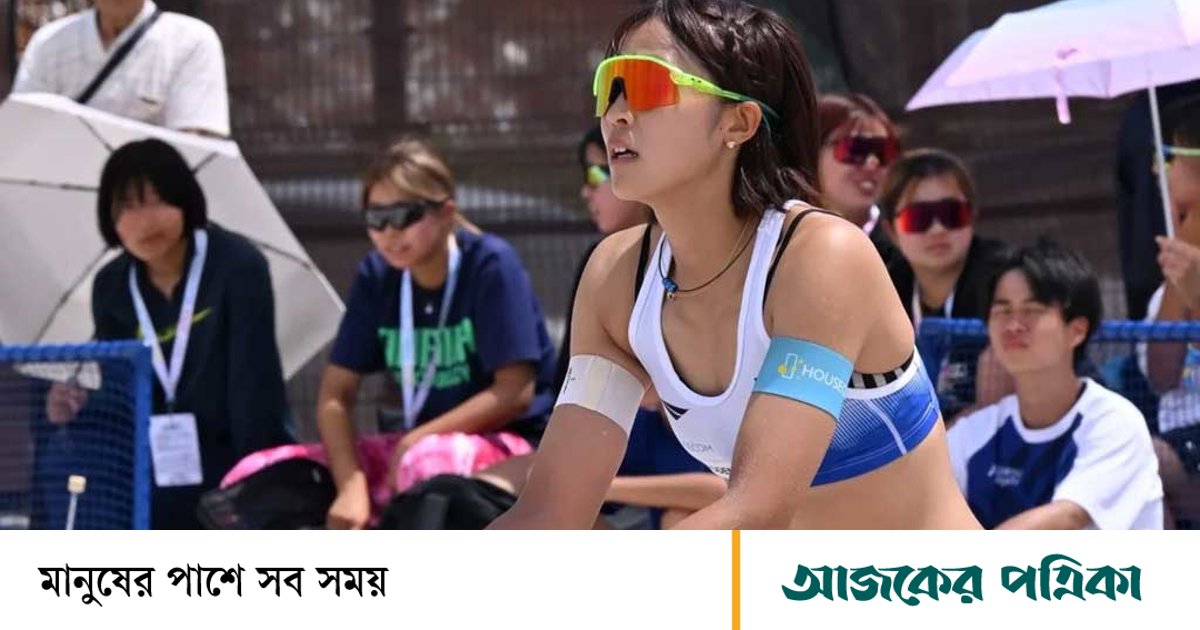
Two recent incidents involving offensive images of female athletes in sports and the ban on photographing spectators in stadiums have brought the privacy and security of female athletes into the spotlight in Asia.
The organizers of a swimming competition in China have been threatened with legal action after a photo of a female swimmer’s outfit was published on official platforms. On the other hand, there is a complete ban on taking pictures of spectators at beach volleyball tournaments in Japan. This is a drastic but rare move to protect athletes.
An offensive photo of an inadvertent clothing breach by a female swimmer participating in the annual ‘Shing-Quan Dishui Lake Swim-Crossing Challenge’ in China has been uploaded to the tournament’s official platform. The image was exposed there for over an hour to more than 10,000 users.
Victim swimmer Chen said that four days after the incident, the organizing organization Shanghai Triathlon Club called him to apologize, but the pictures still remain on the Internet.
Chen said in an interview, ‘I’ve seen on social media—people asking each other for these photos and many claiming to have them. I want to completely stop the promotion and spread of this picture.’
The organizers claimed that due to the large number of contestants, it was not possible to verify each picture separately. However, legal experts have rejected this defense of the organizers.
Li Weijie, a partner at Shanghai I-Land Law Office, said the incident clearly violated individual privacy rights. The organizers had a legal obligation to scrutinize uploaded images and should be subject to administrative fines or penalties.
As the debate rages in China, Japan’s sports governing body has taken a tough stance against sexually photographing or surreptitiously videoing female athletes.
The Japan Volleyball Association (JVA) has announced a complete ban on all types of recording devices, including smartphones, at the tournament premises after evidence of indecent filming on the first day of the ‘Japan Beach Volleyball Tour 2026’ held in Hekinan, Japan last week.
It has been reported that this ban will remain in place in the main phase held this week. The tough decision was taken on the basis of complaints from players participating in the tournament, which is organized as part of the team selection for the upcoming Asian Games.
The JVA said in a statement, “Our top priority is to ensure an environment where athletes can concentrate on their game without any mental worries.”
In Japanese beach volleyball, taking offensive photos of female athletes’ bodies has been a long-standing problem, but such strict bans are not usually seen, officials say. This is because the organizers rely heavily on social media and followers’ posts to promote the tournament.
Although Japan has a zero-tolerance policy in this regard, China’s sports arena has yet to develop a specific legal framework for digital privacy.
After a video leak of Olympic diving champion Guo Jingjing’s practice in 2010, no specific institutional measures have been taken except for a verbal request by the authorities to ‘strengthen management’.
16 years later, most competitions still have no binding protocols or rules. In 2024, however, the China Photographers Association issued a professional ethics guideline for sports journalists, calling on athletes to respect their privacy and not publish offensive images. But there is no reflection on the field.
Source: South China Morning Post

