

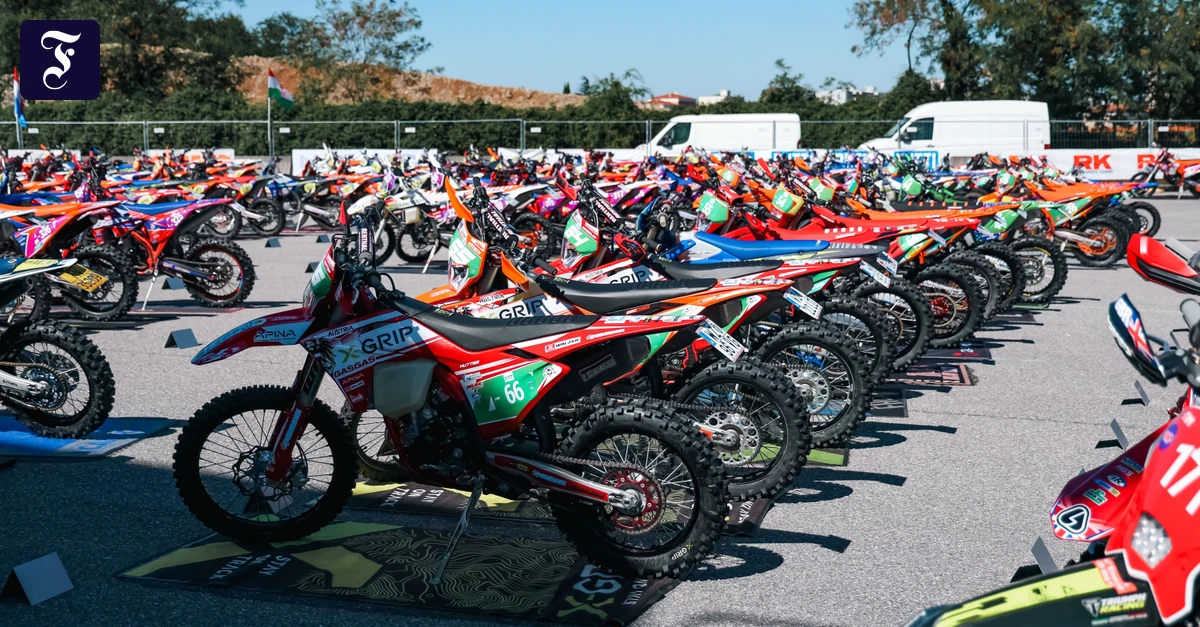
The Austrian motorcycle manufacturer KTM is confronted with serious allegations of possible trickery with off-road motorcycles. This has a direct impact on the capital market: the shares of the Indian parent company Bajaj Mobility temporarily lost more than seven percent on Wednesday. The trigger is media reports that KTM and its dealer network are putting enduro models on the market in a configuration that is formally road-legal, but does not actually correspond to the intended use – and is then often converted into a more powerful state that is not permitted for road traffic. Enduro motorcycles are off-road machines that are street legal. In the EU, this approval requires emissions and noise limits as well as performance restrictions that are type-tested.
According to research by ZDF, “Le Monde”, “Der Spiegel” and “El País”, among others, dealers sell vehicles in throttled form, but at the same time offer conversion to full performance for off-road and competition use. Users should often remove the throttling; Forum posts indicate dismantling before workshop appointments.
Studies by the Czech University of Life Sciences in Prague show that a de-throttled KTM 300 EXC TPI exceeds the road-legal exhaust and noise limits many times over. Peter Mock from the environmental association ICCT pointedly compares the CO₂ emissions of the dethrottled variant with those of an old diesel locomotive. The fine dust emissions are significantly above car levels.
KTM rejects the accusation
KTM, a leading supplier in Europe, rejects the accusation of illegal Motorcycles to put into circulation. They only deliver compliant vehicles and point out that enduro models are primarily sports equipment that are delivered in a road-legal condition – also because, according to the world association FIM, this is a prerequisite for participation in official competitions. Conversions for competition and off-road use are possible upon express customer request. Buyers would be advised that the conversion will result in the road approval no longer being valid and the vehicle may no longer be used on public roads. The responsibility for illegal use lies with the customer. KTM also indicates that this is not a manufacturer-specific practice.
A seller quoted by ORF explains that the throttled version makes no practical sense to drive; The dealer therefore offers the conversion, sometimes with conversion kits from the manufacturer. On paper, the machine remains throttled, but in fact it has full power – registration as a road vehicle would therefore be inadmissible. The research, coordinated by the whistleblower organization Climate Whistleblowers, includes retailers in seven other European countries. The illustration: Customers take home converted off-road motorcycles with false registration papers in an illegal condition. Drivers face high administrative penalties, license revocation and even criminal consequences, for example for insurance fraud. Dealers could be liable to prosecution if they do not clearly point out that the road registration has expired.
Federal Motor Transport Authority is investigating
The German one Federal Motor Transport Authority (KBA) has initiated an investigation. If deviations from the regulations are discovered, measures could be taken against the economic actors involved – including sales bans, recalls, fines or stricter market surveillance. From a legal point of view, there are three levels: firstly, the type approval conformity of the delivery condition, secondly, market supervision over dealer practices, thirdly, competition law issues if a provider gains competitive advantages through actually illegal usage advantages. The lawyer Remo Klinger, who specializes in climate lawsuits, speaks of gross illegality and illegal manipulation – a view that KTM firmly rejects.
No concrete figures for the affected motorcycles are given in the reports. According to the Federal Motor Transport Authority, around 234,000 motorcycles from KTM and other brands in the group are registered in Germany. According to Statistics Austria, there are around 11,000 enduros from KTM, Husqvarna and Gasgas in Austria. The slide in Bajaj Mobility’s share price signals that investors are expecting increased legal, compliance and reputational risks. In addition to potential fines and legal costs, temporary sales restrictions would be conceivable if the market supervisory authority identified structural grievances.
The case focuses on the delicate interface between sports and street use. In contrast to manipulative series coordination, the question is how clearly manufacturers and dealers differentiate legal street versions from competition set-ups – and whether this separation is maintained in practice. KTM strives to emphasize responsibility and compliance in delivery condition. Whether that is enough now depends on the findings of the market supervisory authority. Until then, the pressure on the manufacturer – and on the parent company’s course – remains high.

